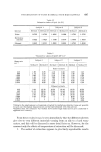
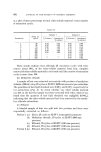
686 JOURNAL OF THE SOCIETY OF COSMETIC CHEMISTS hair samples were removed from the apparatus and any residual solvent was removed under vacuum. When the hair samples were free from solvent. the next stage of the extraction procedure was carried out. The samples of hair lipid from each stage of the extraction were weighed and examined separately to emphasize any differences that might exist and also to obtain information on the types of material likely to be present in hair lipids rather than to infer them from the properties of the composite samples. The experiment was carried out on samples of hair from three separate subjects and the extracts were examined gravimetrically, visually, by refractometry (using an Abbd refractometer) and by viscometry (using an Haake cone and plate viscometer). The results are given in full in Tables II-V. Table II Quantity of lipid Solvent Ether Methylene chloride Ethanol Subject 1 Method I 4.7% 0.6% 1.o% Method II 4.8% 0.6% 3.6% Subject 2 Method I 5.2% 0.8% 1.4% Method II Subject 3 Method I 4.9% 1.0% 0.5% 0.4% 3.6% 0.4% Method II 0.8% 0.4% •.6% Total extract 6.3% 9.0% 7.4% 9.0% 1.8% 2.8% Table III Appearance of lipid (Room temperature: 20øC) Subject 1 Sub' ect 2 Subject 3 Method I Method II Method I Method II Method I Method II Ether viscous viscous viscous viscous viscous viscous oil oil oil oil oil oil Methylene chloride Grey Grey Light Light Light Light brown brown brown brown brown brown grease grease grease grease grease grease Ethanol Light brown wax Dark brown hard wax Brown wax Dark brown hard •,Tax White Hard white -•rax

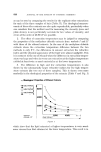
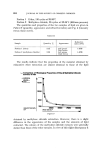
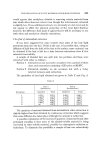
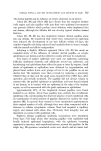
TtlE EXTRACTION OF FATTY MATERIALS FROM HAIR CLIPPINGS 687 Table IV Refractive index of lipid (14.5øC) !,__ Subject 1 Subject 2 Subject 3 -- , Solvent Method I Method II Method I Method II Method I Method II Ether I 1,4765 1.4758 1.4696 1,4698 1.4720 1.4715 Methylene i chloride ' 1.4822 1,1825 1,4738 1.4700 1.4808 1.4833 Ethanol I 1.4840 1.5010 1.4890 1.4800 1.4762 1.4818 Table V Viscometry values of lipid• (27øC) P ,, Subject 1 Subject 2 Subject 3 Shear rate I seG- 1 • .......... .I Method I Method II Method 5 Method II Method I Method II I Ether extracts 442 i 1.60 2.25 4.15 3.20 1.60 1.40 663 1.10 2.15 3.05 2.60 1.45 1.25 1 326 0.85 1.70 2.15 1.85 ] .20 0.90 1 990 1.00 1.30 1.$5 1.$5 1.05 0.75 3 980 0.85 1.05 1.55 1.25 1.00 0.70 5 970 , 0.80 0.95 1.20 1.10 0.90 0.70 11 940 0.70 0.85 0.95 0.95 0.85 0.60 -- __. .•- ß Ethanol extracts 442 9.20 42.30 19.30 64.40 16.50 19.30 663 11. lO 38.00 20.90 56.40 16.00 20.90 1 326 8.00 28.80 18.40 40.50 12.90 17.20 1 990 7.00 23.30 17.80 31.90 19.09 13.90 3 980 5.70 17.20 * * 8.60 ll.lO 5 970 * * * * 7.20 9.70 11 940 I * * * * 4.80 6.80 ß •Oxving to the small amounts of material extracted by methylene chloride it was not possible to carry out rheological measurements on the lipid obtained with this solvent. *Signifies that the structure was broken down under high shear rate to gi•ve a material of apparent low viscosity. From these results it may be seen immediately that the different solvents give rise to very different materials varying from an oily to a hard waxy nature, and this will be discussed in more detail later on. However, for the moment only the effects of temperature of extraction will be discussed. 1. The method of extraction appears to give fairly reproducible results
Purchased for the exclusive use of nofirst nolast (unknown)
From: SCC Media Library & Resource Center (library.scconline.org)