90 JOURNAL OF THE SOCIETY OF COSMETIC CHEMISTS tact, the organism could then become established in the cornea. Thus, cosmetics intended for the eye area must be free of these opportunistic pathogens when marketed. The removal of this hazard from such prod- ucts requires the use of preservative systems that are bac.teriostatic and even bactericidal to any microorganisms that might be introduced during subsequent consumer use (4, 5). The present investigation was conducted in order to assess the hazards that contaminated cosmetics might pose to consumers. The approach used was to find out under what experimental conditions contamination of the conjunctival sacs of rabbit eyes with viable Pseudomonas aerugi- nosa (DM-1167) results in infection of the corneal stroma, keratitis, and pyocyanic sequellae. EXPERIMENTAL Animals New Zealand White rabbits of either sex, weighing 3 to 5 kg, were used. Commercial rabbit pellets and water were allowed ad libitum. Cynamologus monkeys of 1 to 2 kg were used. They were fed monkey chow containing 25% protein. Inocula P. aeruginosa DM-1167, isolated from a contaminated bath oil, was the seed organism for viable cell preparations and for endotoxin. The viable cells were a saline wash of an 18-hr BHI Agar slant grown at 37øC and adjusted to 85% T at 550 nm with the B 8c L Spectronic 20 spectrophotometer (1.5 X 10 s cells/ml). Endotoxin • was prepared from cells grown in a synthetic medium (6), extracted with trichloroacetic acid (7), and purified by alcoholic frac- rionation (8). Exploratory Studies In exploratory studies to establish conditions for a positive control, it was demonstrated that ocular instillation* of even large numbers of P. aeruginosa was ineffective in consistently producing infection in intact rabbit eyes. This led to a variety of attempts to aid entry of the organism * 0.25 mg of (Lowry) protein/ml 0.12 mg of (Kjeldahl) nitrogen/ml LD•o= 1.2 mg of protein/kg intravenously. • In all experiments, the lids were held closed for I sec following instillation in the con- junctival sac.

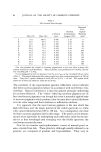
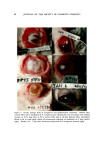
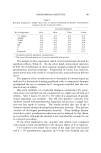
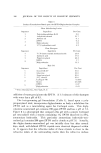
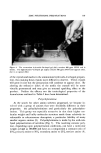
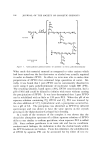
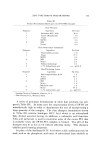
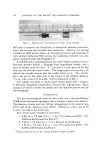
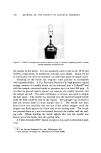
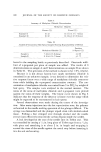
PSEUDOMONAS KERATITIS 91 into the cornea. When the cornea* was cut sharply with a scalpel partway into the stroma, the subsequent instillation of P. aeruginosa into the con- junctival sac routinely resulted in pseudomonas keratitis. It thus became apparent that the epithelium constituted an important protective barrier damage had to extend into the stroma to produce infection. Definitive Studies Experiments on Corneas This test was designed to determine the number of pseudomonas or- ganisms required to produce pseudomonas keratitis in the rabbit when instilled into the conjunctival sac, the time-course of events in the devel- opment of pseudomonas keratitis, and the toxicity of pseudomonas endo- toxin. Both eyes of each of 16 adult New Zealand White rabbits were admin- istered three parallel cuts with a scalpel through the epithelium and slightly into the stroma. Less than 1 min later, 0.05 ml from suspensions of P. aeruginosa to yield inocula ranging from 75 to 7.5 million cells (in increments of one order of magnitude) was instilled into each of 24 eyes. A control group of 4 eyes received no organisms and one group of 4 eyes received 0.1 ml of pseudomonas lipopolysaccharide, an endotoxin (7) purified by the method of Webster et al. (8). Results, summarized in Table I, show that as few as 75 organisms of this strain may in some cases produce significant corneal effects in rabbits. The number of organisms of this strain required to produce a positive response in 50% of the animals (EN5o) under these experimental condi- tions appea. rs to lie between 75 and 750. At 24 hours, the affected eyes displayed various degrees of corneal opacity, iritis, chemosis, injection of the lids, and white discharge. Al- though the aqueous humor appeared to be clear, microscopic examina- tion disclosed the presence of an abundance of leucocytes (hypopyon). By 48 hours, the lids became beefy red. Opacity in most cases involved the entire cornea. By 72 hours, all affected eyes showed perilimbal vas- cularization. Perforation of the cornea was observed in two animals in 13 days (Fig. 1). * In these experiments the cornea was anesthetized with Ophthaine© (Proparacaine HC1 ophthalmic soln. 0.5%, E. R. Squibb g: Sons, 909 Third Ave., N.Y., N.Y.) However, results with general anesthesia were found to produce the same effects.
Purchased for the exclusive use of nofirst nolast (unknown)
From: SCC Media Library & Resource Center (library.scconline.org)