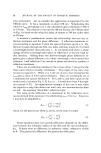
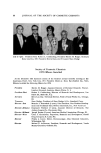
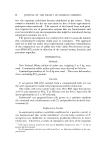
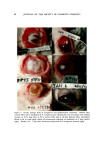
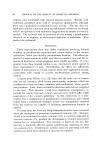
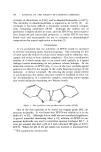
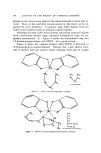
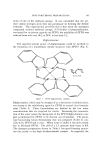
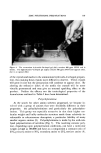
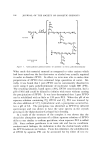
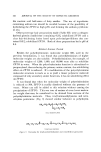
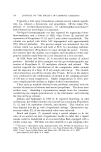
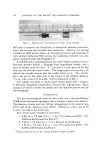
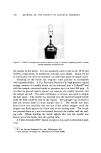
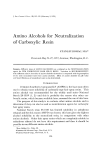
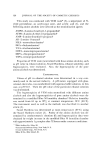
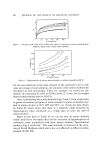
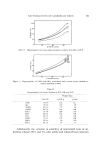
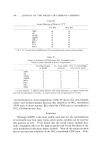
92 JOURNAL OF THE bOCIETY OF COSMETIC CHEMISTS Figure 1. Ocular damage from P. aeruginosa and pseudomonas endotoxin. Rabbit eyes: corneal effects after instillation ,of P. aeruginosa into conjunctival sacs of animals with incised corneas, at 24 hr (top left), at 48 hr (center left), and at 16 days (bottom left) intrasderal effects at 48 hr (top right) effects of intracomeal injection of endotoxin at 9 days (center right). Monkey c)c: 7 da)s after intracorncal injection of P. aerugino.•'a (bottom right)

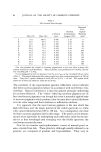
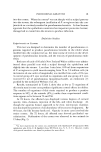
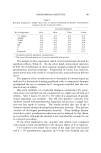
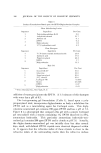
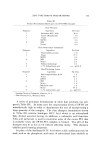
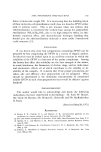
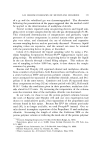
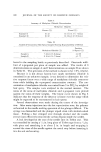
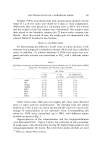
PSEUDOMONAS KERATITIS 93 Table ! Keratitis Produced in Rabbit Eyes (Cut to Stroma) Following Instillation of Pseudomonas aeruginosa into the Conjunctival Sacs Fractional Response No. of Organisms 24 hr 48 hr 72 hr a 6 days 7.5 million 4/4 4/4 4/4 4/4 750,000 4/4 4/4 4/4 4/4 75,000 3/4 4/4 4/4 4/4• 7,500 4/4 4/4 4/4 4/4• 750 3/4 4/4 4/4 4/4 75 1/4 1/4 1/4 1/4 0 0/4 0/4 0/4 0/4 Endotoxin 0,/4 0,/4 0,/4 0,/4 a All positives showed perilimbal vascularization. • One animal showed opacity on •/• cornea, associated with pannus. The animals in ,this experiment which received endotoxin showed no significant effects (Table I). On the other hand, intracorneal injection of 0.01 ml of endotoxin in three separate animals produced the typical pseudomonas keratitis syndrome. Progression of events was, however, much slower than with viable P. aeruginosa cells, and perforation did not Occur. The purpose of the second test was to determine if corneal injury (as indicated by fluorescein staining) produced with a com•nercial sha•npoo predisposed the eye to invasion by P. aeruginosa instilled into the con- junctival sacs of rabbits. One-tenth •nilliliter of a •narketed shampoo containing 13% potas-- sium oleate was instilled into the conjunctival sacs (right eyes) of each of 4 rabbits. After 4 hours, 0.1 ml (7 X 10 4 cells) of a suspension of pseudo- monas organis•ns was instilled. The left eyes (positive controls) were si•nilarly treated with pseudo•nonas organisms except that a scalpel inci- sion was first •nade in corneas. The results showed that one of •the 4 shampoo-treated ani•nals developed pseudo•nonas keratitis. The positive controls all developed pseudmnonas keratitis. These findings demon- strate that ocular pseudo•nonas infections can be induced by this (sha•n- poo) procedure, al,though the •nethod is not reproducible enough for use as a research procedure. In the third exploratory test, monkeys and rabbits were compared with regard to their susceptibility to the invasive effects of P. aeruginosa. Two monkeys were tested ,the corneas of the right eyes were incised and 6 X 10 • pseudomonas organisms (in 0.4 ml) were instilled into the
Purchased for the exclusive use of nofirst nolast (unknown)
From: SCC Media Library & Resource Center (library.scconline.org)