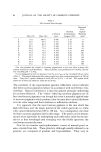
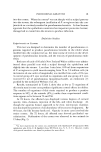
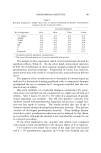
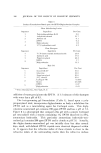
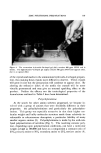
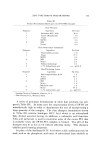
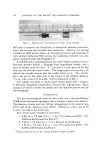
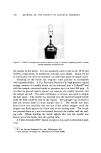
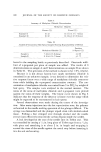
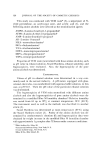
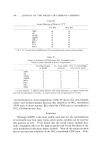
106 JOURNAL OF THE SOCIETY OF COSMETIC CHEMISTS Table I Product Formulations Based upon the ZPTO-Diglycolamine Complex Clear Hair-Setting Lotion Sequence Ingredient 1 Polyvinylpyrrolidone K-30 1 Anhydrous ethanol 2 Perfume oil fZPTO 3 }Diglycolamine 4 3.7% hydrochloric acid Clear Shampoo Sequence Ingredient 1 70-30 lauric-myristic diethanolarnide 1 Isostearic acid 1 Propylene glycol fZPTO 2 } Diglycolamine Hair Gel Sequence Ingredient 1 Eracol CD-18 a 1 Glycerine 1 Propylene glycol 1 95% ethanol J'CarboFol 940 2 •Water JZeTO 3 }Diglycolamine Per Cent 2.0 91.7 0.1 0.2 1.8 4.2 Per Cent 23.8 17.0 42.2 1.7 15.3 Per Cent 10 0 10 0 30 0 25 0 0 6075 23 6925 0.07 0.63 Witco Chemical Co., New York, N.Y. addition o15 water precipitates the ZPTO. A 1:1 mixture o15 this shampoo with water has a pH ot5 9.5. The hair-grooming gel 15ormulation (Table I), based upon a poly- propoxylated triol, incorporates diglycolamine as both a solubilizer 15or ZPTO and as a neutralizing agent 15or Carbopol resin. This digly- colamine neutralized gel contains 700 ppm ZPTO and has a pH of 7.5. Figure 6 is a photograph that compares this gel with a simple Carbopol gel neutralized with a system containing 1% ZPTO dissolved in 28% ammonium hydroxide. This particular ammonium hydroxide-neu- tralized gel contains 200 ppm ZPTO and is cloudy at pH 7.6. Actually, the diglycolamine-neutralized gel was initially clear but a15ter several days, small, well-defined ZPTO crystals were observed dispersed within it. It appears that the re15ractive index o15 these crystals is closer to the re15ractive index o15 the surrounding media than the re15ractive indices

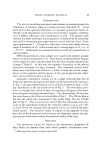
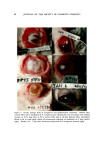
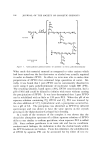
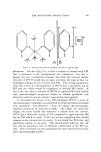
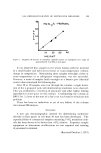
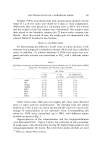
ZINC PYRITHIONE PREPARATIONS 107 ".•.....•. - ß e.!: ... : •dl..:: :.• .. • .• .• ., •:: ' '."' 2-'- • .•:• :_:.:•::• .': ......... . ........... ....,.j: ... . . .. .:•:-..:-. :•,:. ...... •.-••,..•:•- .... .. .:Z :•. "' , . '• • ..... ....•..: . • :• :,... •. }. ß .:• ,i.' '.• . • ...... :' ' "'•' ' .. • ._. •- .• .& .--.,-,•?.....::.... :::- . ::. . --:.:. -....:.: ..:-: :---.?..:':-: :.. • •. .'1 .... .. . ..... . •.•'.• :. '.,¾i ,..:.:. . :..•, , % ........ : - • -.•: ....... •,.... Figure 6. The an:monium hydroxide-Carbopol gel (left) contains 200 ppm ZPTO and is cloudy. The diglycolaminc-Carbopol gel (right) contains 700 ppm ZPTO and appears clear, due to an optical effect of the crystals and media in the ammonium hydroxide-Carbopol prepara- tion, thus making these crystals more difficult to observe. These crystals will grow in size but the preparation will continue to appear clear. By altering the refractive index of the media the crystals will be more visually pronounced and may give an unusual sparkling effect to the product. Neither the efficacy nor the toxicological properties of the for•nulations outlined in Table I have been determined. Polyethylenimine As the search for other amino solvents progressed, we became in- volved with a group of amines that were decidedly different in their properties: the polyalkylenimines and particularly the polyethylen- imines. This group was especially attractive in that their higher mo- lecular weight and bulky molecular structure made them relatively in- vulnerable to subcutaneous absorption, a particular liability of many smaller organic amines (8). Polyethylenimine is made by the acid-cata- lyzed polymerization of aziridine (Fig. 7). The resulting cationic poly- mer, depending upon polymerization conditions, can have a molecular weight as high as 100,000 and have as a composition a constant ratio of 25% primary amine to 50% secondary amine to 25% tertiary amine (9).
Purchased for the exclusive use of nofirst nolast (unknown)
From: SCC Media Library & Resource Center (library.scconline.org)