]. Soc. Cosmet. Chem., 23, 313-319 (May 23, 1972• Gas-Liquid Chromatographic Determination ot Castor Oil as Methyl Ricinoleate in Lipstick GEORDIE L. PAULUS, B.S.,* and MARGAREE H. CHAMPION, B.S.* Presented October 11, 1971, Joint Symposium of the Association of Ol•- cial Analytical Chemists-Society of Cosmetic Chemists, Washington, D.C. Synopsis--CASTOR OIL, which consists chiefly of the triglycerides of ricJnoleic acid, can be determined in a LIPSTICK as a function of Rs ricinoleic acid contenet. The ricingoleic acid glyceride is converted into its methyl ester by transesterification. The ester, isolated by ex- traction, is determined by GAS-LIQUID CHROMATOGRAPHY. The glc column used for the analysis of methyl ricinoleate is packed with 4% Carbowax 20M-terephthalic acid on Gas Chrom RZ. INTRODUCTION It has been reported that the ricinoleic acid glyceride content of naturally occurring castor oil varies from 82 to 87% (1-$). Gas-liquid chromatographic (glc) analyses conducted in our laboratories indicate that the ricinoleic acid glyceride content is 90%. The glc procedure developed in our laboratory for the determina- tion of glycerides of ricinoleic acid present in caster oil requires the transesterification of the ricinoleic acid glyceride contained in the lip- * Present address: Warner-Lambert Pharmaceutical Co., 170 Tabor Rd., Morris Plains, N. J. 07950. t Division of Colors and Cosmetics Technology, Food and Drug Administration, U.S. Department of Health, Education, and Welfare, Washington, D.C. 20204. 313

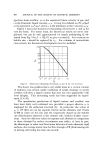
314 JOURNAL OF THE SOCIETY OF COSMETIC CHEMISTS stick sample to its corresponding methyl ester (4). The methyl ricinoleate is then isolated by extraction with ether and determined on a glc column packed with Gas Chrom RZ (No. 03724)* coated with 4% Carbowax 20M--terephthalic aci.d (No. 08220).* The glc analysis involves the use of di(2-ethylhexyl) phthalate as the internal standard. Recoveries obtained by adding known amounts of castor oil to lipstick samples ranged from 94 to 100%. EXPERIMENTAL Apparatus and Reagents Gas Chromatograph The analytical instrument* equipped with hydrogen flame detector was operated under the following conditions: Temperatures: detector 300øC, injection port 300øC, oven 250-260øC helium flow 100-120 ml/ min. Glc Column The column (6 ft X 1/• in. o.d. copper) was packed with 4% Carbo- wax 20M-terephthalic acid, on Gas Chrom RZ coated as follows: 1.0 g of Carbowax 20M-terephthalic acid was dissolved in 200 ml of CHCla and added to 24.0 g of 80-100 mesh Gas Chrom RZ. Gas Chrom RZ can be coated in a 6-in. crystallizing dish or in a 1-1. round-bottom boiling flask having a -f 24/40 female joint. If a dish is used, it is evaporated to dry- ness on the steam bath, with gentle swirling. If a flask is used, it is at- tached to a rotary evaporator and solvent is removed under reduced pres- sure while the temperature of the water bath is carefully raised to 50øC. A vacuum oven may be used to remove traces of solvent from the dry ma- terial. The dried material was packed in the column at 35-1b pressure, using a vibrator.* The column was programmed from 100 to 260øC at 4øC/min and conditioned overnight at 260øC with a helium flow of 120 ml/min. Refiuxing Apparatus This consisted of a 100-ml round-bottom flask with water-cooled re- fluxing condenser and heating mantle. * Applied Science Labs., State College, Pa. t F g• M Model 700, Hewlett-Packard Co., 1501 Page Mill Rd., Pal, o Alto, Calif. 94304. * Column-pak, Chemical Research Services, Inc., 14 Industrial Road, Addiso,n, Ill. 60101. is convenient.
Purchased for the exclusive use of nofirst nolast (unknown)
From: SCC Media Library & Resource Center (library.scconline.org)