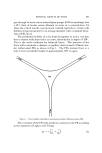
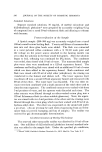
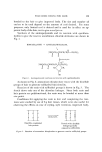
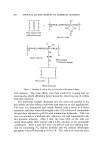
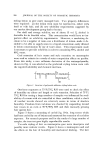
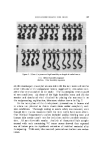
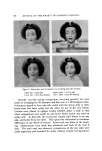
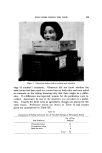
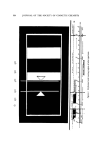
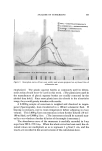
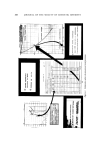
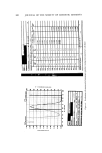
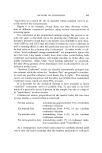
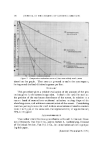
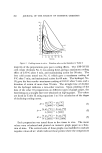
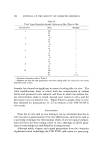
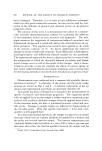
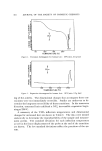
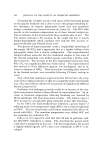
326 JOURNAL OF THE SOCIETY OF COSMETIC CHEMISTS styling lotion to give easily managed hair. Two property differences were required: (a) the lotion resin must be nonreactive, either withi itself or with hair, and (b) new solubility requirements suggested by our market development group had to be met. For shelf and storage stability, use of about 15 vol % alcohol is desirable for its biocidal value. This concentration would have no im- portant effect on solubility requirements. However, a marketing de- cision to be a supplier of resin--not a distributor of lotion--made it de- sirable to be able to supply resin in a liquid concentrate easily diluted to lotion concentration by use of water alone. This requirement made it necessary to provide solubility in solvent containing 40% alcohol and 60% water. Curl retention of hair tresses and style retention on mannequins were used as criteria in a study of resin composition effects on quality. From this study, a new sulfonate derivative of the aminopolyamide, shown in Fig. 4, was selected as the preferred styling lotion resin with the required solubility and chemical inertness. H• '• NHC (CH2)4 CNHCH2CH2N-- CH2CH2NH • [_ 0 0 CH2•HCH2SO0 'i x OH Figure 4. Structure of polyamide sulfonate styling lotion resin One-hour exposures at 75øF/75% RH were used to check the effect of humidity on either curl length or style retention. Selection of 75øF/ 75% RH for testing a large number of samples was influenced by avail- ability of a room with air controlled at these conditions, which a check of weather records showed are relatively severe in terms of absolute humidity. Freedom from tackiness was checked by suspending treated hair tresses in an oven at 90øF/90% RH and then manually pressing hair against hair. Figure 5 shows a mounting of curled 2-g, 10-in. long tresses which had been curled by use of lotions and measured for retention of curl after exposure. For research purposes and for the study of a large number of samples, the tress test gave highly reproducible results. Two-side styling of hair on mannequins gave more descriptive and possibly more realistic results. Figure 6 shows a mannequin used and the effects on the hair of humidity and mechanical shaking. The hair

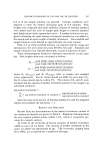
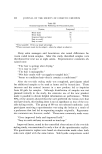
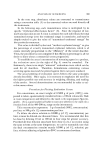
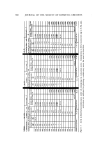
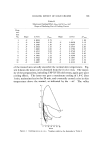
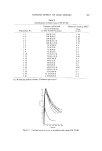
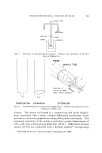
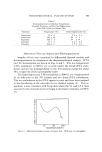
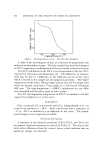
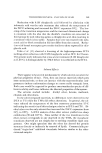
POLYAMIDE RESINS FOR HAIR 327 . .:.. ::: :. Figure 5. Effect of exposure at high humidity on length of curled tresses Top. Before humidity exposure Bottom. After humidity exposure on this mannequin was styled on one side with the new resin and on the other with one of the comparator lotions suggested by area salon man- agers who were consulted in the study. The mannequins were exposed to two conditions: (a) those of the high humidity room and (b) the motion and simulated wind obtained by placing the mannequin on the reciprocating, rapid-action, laboratory shaker shown in Fig. 7. In the next phase of the development, personal use in homes and in salons was planned to obtain observations under completely real- istic conditions. Thorough testing to assure safety was necessary even though there was no reason to think the resin might have toxic effects. Our Medical Department's studies included animal feeding tests and human skin contact patch tests for irritation and for possible sensitiza- tion. All gave favorable results. Analysis of shampooed hair samples treated with resin containing •4C tracer atoms showed that repeated use of lotion gave no significant retention of residual material after shampooing. •Vith safety thus assured, personal use studies were under- taken.
Purchased for the exclusive use of nofirst nolast (unknown)
From: SCC Media Library & Resource Center (library.scconline.org)