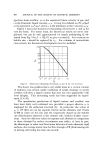
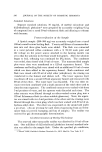
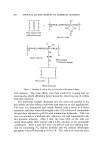
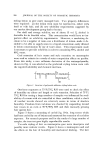
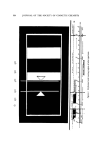
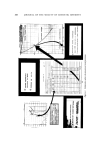
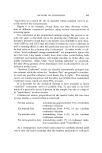
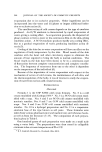
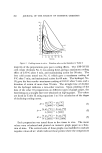
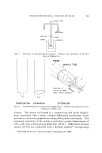
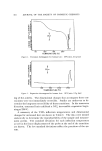
324 JOURNAL OF THE SOCIETY OF COSMETIC CHEMISTS s s s Hair prot•ein with sulfhy dryl groups C1 © N HC0(CH2)4CONHCH2 CH 0 H Reactive resin • c1 o I HCOH •sin molecule I CH• I s I s s I s s Hair protein S I (•sin molecule) Resin bonded by thioether linkage Figure 3. Bonding of resin to hair by fortnation of thioether linkages and elasticity. The same effects were then studied by treating hair on mannequins, which afforded a better means for observing ease of styling and style retention. The following example illustrates how the resin was applied to 2-g hair tresses and also defines conditions used later for in vivo applications. The tress was shampooed and rinsed, blotted with a towel to a moist condition, and then wetted thoroughly with a 9% solution of ammonium thioglycolate adjusted to pH 9.0 with ammonium hydroxide. The wet tress was wound on a medium-size, cold-wave rod and remoistened with this glycolate solution. After 5 min, the tress (still on the rod) was rinsed thoroughly, then wetted with a 1.5% solution of the polyamide conditioner. After 2 min, the tress was wetted with an oxidizing solu- tion (1) containing 7% sodium bromate and 4% sodium dihydrogen phosphate with pH adjusted to 6.5 to 7.0. The rods were removed after

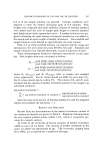
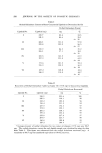
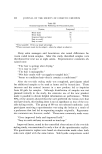
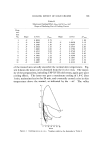
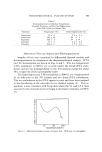
POLYAMIDE RESINS FOR HAIR 325 5 min and the tresses were then rinsed thoroughly, blotted to a moist condition with a towel, wound on curlers, and dried under a home-type dryer. To evaluate the durability of the improvement and shampoo resis- tance of the new conditioner, treated tresses were shampooed four times, each time with normal drying, and finally curled on standard curiers while wet. Comparator tresses were given identical treatments including the glycolate and bromate treatments, but with water only a,t the resin application step. Observers were asked to comment on coded samples of tresses. Resin-treated samples were readily identified by differences the observers described in terms of the stiffness or "springiness" of the treated tresses. Quantitative comparisons were made by wet curling five tresses that had been shampooed twice, combing them out after drying, and then measuring the curl length immediately and after exposure for 2 hours in a room at 75øF/75% RH. These data are summarized in Table I. Table I Effect of Conditioner on Curl Retention After 1 hr at After Combing 75 øF/75 % RH Control • 4•/• in. 7a/• in. Treated • 4•/• in. 6•/• in. "Average of five. An analytical procedure involving the determination of adipic acid by hydrolysis and gas chromatography made it possible to distinguish between polyamide conditioner and hair protein. By this method, the amount of conditioning resin on the hair after the original treatment and subsequent shampooings was accurately defined. Hair containing 0.18% resin after treatment still contained 0.16%, 0.15%, and 0.15% resin after 1, 2, and 4 shampoos, respectively. Thus, only a small amount of conditioner is lost after the first shampoo treatment and the balance is then retained. The initial loss may be due to unreacted conditioner not being thoroughly rinsed off or due to loss of conditioner bonded only by salt formation, not by the shampoo-resistant thioether linkages. Styling Lotion Resin The effects observed on curl or style retention, ease of combing, and improved body suggested use of the resin, or a similar polyamide, in a
Purchased for the exclusive use of nofirst nolast (unknown)
From: SCC Media Library & Resource Center (library.scconline.org)