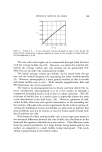
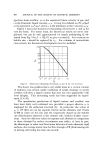
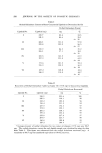
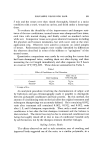
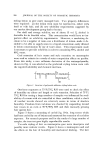
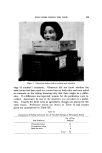
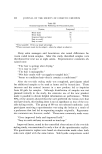
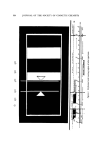
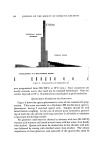
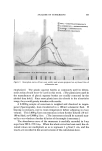
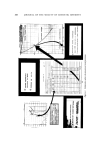
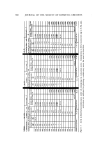
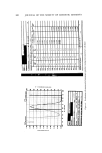
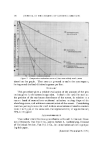
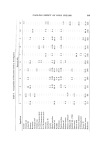
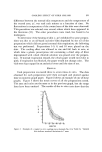
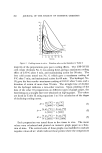
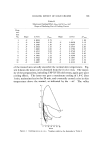
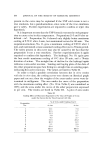
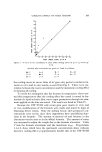
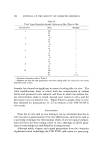
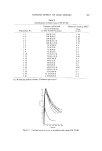
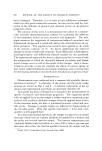
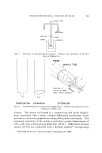
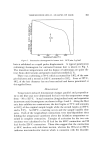
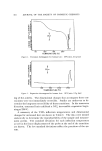
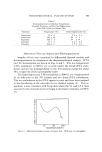
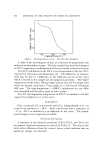
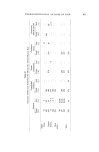
ANALYSIS OF SUNSCREENS 337 Figure 3. Absorption curves of four most widely used screens projected on erythemal flux of midsummer sun emphasized. The plastic squeeze bottles so commonly used in labora- tories today should never be used in this work. (The plasticizers used in the manufacture of plastic squeeze bottles are readily extracted by the alcohol they hold.) Since most plasticizers also absorb in the ultraviolet range, they would grossly interfere with results. A 0.5000-g sample of sunscreen is weighed and dissolved in isopro- panol (Spectrograde), then transferred to a 100-ml volumetric flask. If heating is necessary, cool to room temperature before adjusting to exact volume. This 5.000 g/liter concentration is then further diluted (10 ml/ 100 ml flask) to 0.5000 g/liter. (The instrument should be scanned man- ually to see whether a further dilution of the sample is necessary.) The absorbance curve of the sunscreen is carefully recorded in 5-rev. steps from 292.5-372.5 mt•. When the whole curve has been read, the ob- tained values are multiplied, so as to represent 1 g/liter/1 cm, and the results are recorded in the second column of the calculation sheet.

338 JOURNAL OF THE SOCIETY OF COSMETIC CHEMISTS
Purchased for the exclusive use of nofirst nolast (unknown)
From: SCC Media Library & Resource Center (library.scconline.org)