J. Soc. Cosmet. Chem. 23 371-381 (1972) ¸ 1972 Society of Cosmetic Chemists of Great Britain Inter-species reactivity variation in dermal R. E. DAVIES, K. H. HARPER and S. R. KYNOCH* Presented on 19th November 1968 in Eastbourne, Sussex, at the Symposium on 'Skin', organized by the Society of Cosmetic Chemists of Great Britain. Synopsis--The primary SKIN IRRITANT EFFECTS of a range of commonly used COSMETIC ingredients were assessed on HUMAN volunteers and compared with seven species of LABORATORY ANIMALS. INTRODUCTION Although the rabbit is the animal most frequently used in predictive assessments of potential dermal irritancy, its selection is seemingly based primarily upon historical and practical considerations, rather than upon sound published scientific evidence. Criticisms have come from morpholo- gists, physiologists and toxicologists. Our own attention to the possible unsuitability of the rabbit as a test species arose from observations made several years ago on the very severe response that was elicited by an anti-dandruff cream shampoo, at that time only available commercially in the U.S.A. Follow-up patch tests on the arms of human volunteers revealed only minimal signs of reaction, even under conditions of occlusion. Suffice it to state that this particular product has since enjoyed a long, and presumably profitable, commercial existence. Had reliance been placed solely on the results of the rabbit test, the product may not have been developed further. * Huntingdon Research Centre, Huntingdon, PE18 6ES. 371

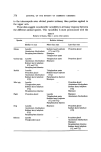
372 JOURNAL OF THE SOCIETY OF COSMETIC CHEMISTS If then the rabbit is considered an unsuitable test animal, what is the species of choice? In the rather few major publications on this subject there are considerable differences of opinion. A wide range of species are em- ployed in the different areas of dermatological research (1, 2), with each researcher tending to select a particular species for his own special studies (3-5). There is considerable support for use of the rabbit, possibly arising from the work by Draize (6) which established a standardized technique for pre- dictive patch testing. The predictive value of this test is supported by some authors (7, 8) but questioned by others (10, 11). It is apparent from the above publications that useful screening tests have been devised whereby a particular animal will effectively indicate, with particular types of preparations, those formulations that may elicit an undesirable irritant effect in man. However, it has yet to be demonstrated that any of those procedures is any more acceptable than the Draize rabbit test when subjected to the wide range of irritants that may be experienced in routine predictive patch testing. It is also apparent that there is, in general, a paucity of published studies in which two or more species have been compared (9). Comparisons, there- fore, must be made between the studies reported by different workers, and this is fraught with many disadvantages, not least of which is the enormous variability in the test procedures employed. It is not possible, therefore, to draw any meaningful conclusions concerning the most appropriate animal model to be used for predictive patch-testing. It was with this main objective in view that we decided to embark upon the following programme of re- search. EXPERIMENTAL The species selected for this study were the mouse (CF LP strain), the guinea-pig (Hartley Dunkin strain), the rabbit (New Zealand White strain), the Beagle dog, the piglet (Wessex, Large White, Landacre crossbreed), the miniature pig (Pitman Moore strain), the baboon (Papio cynocephalus and P. anubis), and man. The choice of potential irritants was made (after consultation with the Chairman of the Toxicology Sub-Committee of this Society) from representative chemicals used in cosmetics and toiletry formulations. The materials were as follows: (1) Lanolin (anhydrous lanolin, BDH), neat material--expected to be non-irritant, on the basis of previous human exposure.
Purchased for the exclusive use of nofirst nolast (unknown)
From: SCC Media Library & Resource Center (library.scconline.org)