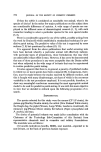
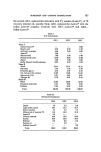
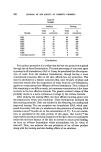
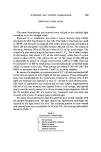
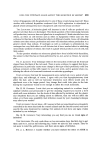
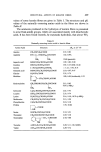
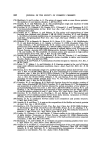
384 JOURNAL OF THE SOCIETY OF COSMETIC CHEMISTS (3) The function of a vehicle in increasing product penetration and/or substantivity to the skin. (4) The function of a sunscreen vehicle to augment and replace skin lipids, essential in returning erythematous skin to normal. The vehicle thus may not only influence the total concentration of sun- screen on the skin surface, but also its skin penetration, substantivity to skin, washability, and the rate and extent to which the treated skin is damaged and returns to normal. Early pilot studies (2) compared the sunscreen effect of oil-based products containing sunscreens, and o/w emulsions containing no screening agents versus untreated skin. These studies indicated that some sun protec- tion was given by the o/w emulsions. The most dramatic effects were in promoting normal skin recovery with less peeling. It may be significant to note that two effective emulsions contained a known moisturizing lipid. However, the inclusion of this lipid in the oil-based products did not seem to give the same result. This study indicated the importance of using a lipid moisturizer in conjunction with water in sunscreen and after-sun treatment products. A private report by Klauder (3) also emphasized post-treatment im- provement using two o/w emulsions. A uniformly greater improvement was shown with the product containing a lipid moisturizing agent (4). Moisturizing is not the complete answer to the problem of treating dry and sunburnt skin. Skin undergoing erythematous changes has a demand for oil as well as water. Skin lipids play a major role in maintaining a normal condition in the stratum corneum, (1) as a partially occlusive barrier to excessive moisture loss, (2) as binding agents to hold the cornified epithelial cells in place, and (3) as lubricants for the laminae to give a feeling of softness and pliability to the whole stratum corneum (5). In order to further evaluate vehicle importance in sunscreen preparations, a clinical study was initiated (8), six vehicles being used with the same sun- screen. The sunscreen was Dipsal (di-propylene glycol salicylate) and it was used at 35/0 concentration in all six formulations. Three formulations were o/w emulsions: GS/1, G8/2 and G8/3 (Table I). One of these formulations contained 55/0 Lantrol © (the liquid de-waxed fraction of lanolin), another a control with 55/0 isopropyl myristate replacing the Lantrol % and a third containing 55/0 of an iodine Lantrol © complex. The other three were oil-based formulations derived from the formula- tions in Military Specification 11262C. The first, G8/4, contained Lantrol •,

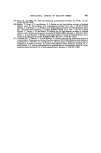
SUNSCREEN AND TANNING PREPARATIONS 385 the second, G8/5, replaced this derivative with 2•o sesame oil and 3•o of 70 viscosity mineral oil, and the third, G8/6, replaced the Lantrol © with the iodine Lantrol © complex. Controls were G8/7--Lantrol © and G8/8-- iodine Lantrol © Table I O/w formulations G8/1 G8/2 G8/3 Phase I Iodized Lantrol© • m 5.00 Stearic acid 2.50 2.50 2.50 isoPropyl myristate 4.00 9.00 4.00 oeantrol © 5.00 -- • Silicone fluid 1.00 1.00 1.00 Dehydroacetic acid 0.10 0.10 0.10 Dipsal 3.00 3.00 3.00 Halby dilauryl thiodipropionate 0.05 0.05 0.05 Phase II Water 52.31 52.31 52.31 Glycerine 1.50 1.50 1.50 Propylene glycol 4.50 4.50 4.50 3 % Carbopo1934 solution 15.00 15.00 15.00 Sequestrene N•14 0.01 0.01 0.01 Tegosept M 0.18 0.18 0.18 Phase III Water 10.00 10.00 10.00 Potassium hydroxide 0.65 0.65 0.65 Perfume 0.20 0.20 0.20 Total 100.00 100.00 100.00 Table II Oil-based formulations G8/4 G8/5 GS/6 Dipsal 3.0 3.0 3.0 Light amber petrol 36.5 36.5 36.5 Stearyl alcohol 3.5 3.5 3.5 Mineral oil of viscosity 70 11.8 14.8 11.8 Lantrol © 5.0 • • Calcium stearate 10.0 10.0 10.0 Kaolin 30.0 30.0 30.0 Perfume 0.2 0.2 0.2 Sesame oil -- 2.0 -- Iodized Lantrol © • -- 5.0 Total 100.0 100.0 100.0
Purchased for the exclusive use of nofirst nolast (unknown)
From: SCC Media Library & Resource Center (library.scconline.org)