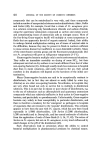
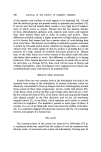
420 JOURNAL OF TIlE SOCIETY OF COSMETIC CHEMISTS POTENTIALLY PATHOGENIC BACTERIA FOUND IN PHARMACEUTICAL PRODUCTS Organisms that contaminate medicaments and cause disease to patients are nearly all Gram-negative bacilli. One of them, Salmonella, is an 'absolute' pathogen, which causes clinical infection in healthy persons when given by a natural route. It causes a diarrhoeal disease, but outbreaks attributed to pharmaceutical products have been relatively infrequent. The main source of salmonellae is infected vertebrate animals, and it is therefore not surprising that medicaments of animal origin, such as thyroid extract, should occasionally be contaminated with them. The reason why carmine should contain salmonellae is less clear, particularly since the same serotype (Salm. cubana) was isolated from cochineal insects from both Peru and the Canary Islands, and from dye manufactured in several countries (21, 22). The evidence that arthropods have an independent role in the epidemiology of salmonella infection has been summarized by -Wilson and Miles (30). Salmonellae have also been isolated repeatedly from natural products of wholly vegetable origin, presumably as a result of contamination from an animal source, and outbreaks of infection in hospital patients have followed the feeding of dietary supplements of brewer's yeast and cotton-seed protein (31, 32). It is clear, therefore, that salmonellae might be introduced into medicines in any organic natural product. The rest of the organisms found in medicines that cause disease are 'conditional pathogens', that is to say, they are harmless to completely healthy adults unless injected into the tissues or into normally sterile areas of the body such as the bladder, but may cause serious disease in the very young and in persons who are susceptible because of pre-existing disease. But only some of the conditionally pathogenic Gram-negative bacteria are found frequently as contaminants in pharmaceutical products. These are mainly 'free-living' types that do not form part of the normal body flora (Fig. 1). Enterobacteria that are found in the normal bowel, such as Escherichia coli, Proteus spp., and possibly some of the klebsiellas, may cause disease but have a limited ability to survive and multiply outside the body. They are seldom found in medicines. Other enterobacteria, notably members of the enterobacter and serratia groups, and some of the klebsiellas, are almost entirely free-living, are less often found in the normal body flora, and appear as contaminants in a wide range of fluids in hospital.

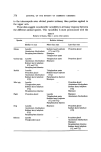
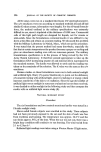
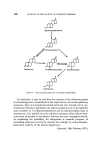
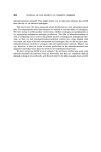
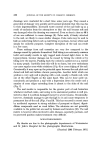
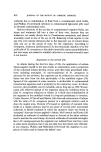
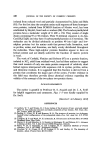
MICRO-ORGANISMS IN PHARMACEUTICAL AND COSMETIC PREPARATIONS 421 Normal flora of man Free living Enterobacteria Pseudomonads Flavobacteria Acinetobacter Esch. coif Proteus group Klebs/•11o Enterobacter $erratia • P$. aerug/nosa • Other fluorescent Ps. cepoc• ? other • F/. mem•gosepticurn ß , Acinetobacter ( ,4. an#ratus ] ( ,4. ca/coaceticus) _ (,4./•voffi) Figure 1. The groups of Gram-negative bacilli that cause septic infection in man. Ps. aeruginosa is widely but not universally distributed in nature, is a pathogen of plants as well as of animals, and is found in the faeces of only some 4-65/o of normal persons (25, 33). Other pseudomonads that are entirely free-living include the 'cold-tolerant' fluorescent types, which cause disease only when injected into the bloodstream or the meninges. A free- living pseudomonad that is also an important cause of infection in hospitals is Ps. cepacia (syn. Ps. multivorans, 'EO-I', Ps. kingO. This organism was first described as a plant pathogen (34), later as a normal inhabitant of the soil (35), and more recently as a cause of urinary-tract infection, wound infection and bacteraemia, in every case introduced in contaminated fluids containing disinfectant substances (3-5, 36, 37). Fl. meningoseoeticum is one of a large series of rather similar yellow- pigmented water organisms which has been recognized mainly because of its remarkable ability to cause severe generalized sepsis in young infants. One other free-living Gram-negative bacillus, variously described as 'Bacterium anitratum', Acinetobacter anitratus, Ac. bvoffi and Ac. calco- aceticus (38) is a soil organism but was also found on the skin of some 30•o of normal persons (39). It is an occasional source of sporadic infections in man but has not yet been definitely incriminated in outbreaks due to con- taminated pharmaceutical preparations. Free-living Gram-negative bacteria have very simple requirements for nutrients and grow over a wide range of temperatures. All of them will multiply in mineral-salts medium with a single organic compound as carbon and energy source. Among the pseudomonads at least, the range of
Purchased for the exclusive use of nofirst nolast (unknown)
From: SCC Media Library & Resource Center (library.scconline.org)