J. Soc. Cosmet. Chem. 23 405-413 (1972)¸ 1972 Society of Cosmetic Chemists of Great Britain Nail formation and some disorders nail P. D. SAMMAN* Presented on loth March lt•71 at the Symposium on 'Appendages of the skin', organized by the Society of Cosmetic Chemists of Great Britain in Eastbourne, Sussex. Synopsis---The flat NAIL of some primates, including man, is unique and is usually formed from one area of the nail fold invagination called the MATRIX. This is deeply placed below two layers of EPIDERMIS and is therefore well protected from injury. Alternative .methods of nail formation more closely resemble the formation of a mammalian claw and may be re- gressions to a more primitive state. Conventional nail cosmetics are well tolerated but modifications to improve their stability or their ease of application have caused DAMAGE to nails on a number of occasions. The use of FORMALDEHYDE as a nail HARDENER has also caused trouble and should be abandoned. Leakage of a few tints from nail varnish, resulting in a yellow pigmentation of the nail, not readily removed, has caused distress in some patients. Damage caused by nail COSMETICS is much less than damage caused by patients themselves either by biting, playing with the nails or over-active MANICURE. The deep position of the matrix has disadvantages when it comes to treatment of naturally occurring DISEASES as it is very difficult to reach with medicaments. The mechanism of nail formation is a subject of debate. The fact that the nail is formed from an invagination of epidermis situated on the dorsum of the distal phalanx is not in dispute. The dispute is concerned with the extent of the invagination which takes part in nail formation. The generally held and traditional view is that the nail is formed only from the proximal part of the floor extending from the junction of floor and roof behind to the anterior margin of the half-moon (lunula) in front. A small *Westminster Hospital and St John's Hospital for Diseases of the Skin, London, W. 1. 405

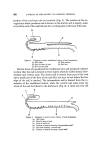
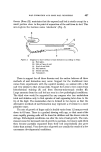
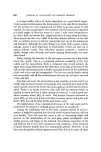
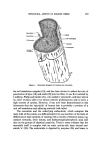
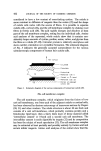
406 JOURNAL OF THE SOCIETY OF COSMETIC CHEMISTS portion of the roof may also be involved (Fig. 1). The portion of the in- vagination which produces nail is known as the matrix and is largely under cover of the roof of the nail fold and the overlying skin at the base of the nail. b e d Figure 1. Diagram to show traditional theory of nail formation: (a) Nail plate. (d) Nail matrix. (b) Skin at base of nail. (e) Nail bed. (c) Roof of nail fold. Barton Lewis (1) questioned the traditional view and produced evidence to show that the nail is formed in three layers which he called dorsal, inter- mediate and ventral nails. The dorsal nail is formed from part of the roof and a small part of the floor of the nail fold, but may be lost before the free edge of the nail is reached.. The intermediate nail is formed from the re- mainder of the traditional matrix, while the ventral nail arises from the whole of the nail bed distal to the half-moon (Fig. 2). A third and very old c b Figure 2. Diagram to show Lewis's theory of nail formation: (a) Nail plate. (b) Skin at base of nail. (c) Roof of nail fold. (d) Portion of matrix forming 'intermediate nail'. (e) Nail bed forming 'ventral nail'. (f) Portion of matrix forming 'dorsal nail'.
Purchased for the exclusive use of nofirst nolast (unknown)
From: SCC Media Library & Resource Center (library.scconline.org)