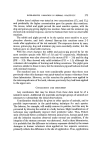
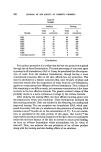
422 JOURNAL OF THE SOCIETY OF COSMETIC CHEMISTS compounds that can be metabolized is very wide, and these compounds include a number of unexpected substances such as disinfectants. Adair, Geftic and Gelzer (40), for example, found that a strain of Ps. aeruginosa grew in a solution containing only benzalkonium chloride and sodium chloride, using the quaternary ammonium compound as carbon and energy source and contaminating traces of ammonium salts as nitrogen source. Most of the free-living Gram-negative bacilli will multiply at room temperature in fluids that are apparently devoid of organic material. Indeed, their ability to undergo limited multiplication making use of traces of nutrient adds to the difficulties, because they may be present in fluids in numbers sufficient to cause serious disease but insufficient to cause detectable turbidity. Many of the enterobacter-serratia group and the fluorescent pseudomonads (but not Ps. aeruginosa) will grow at refrigerator temperature (3-5øC). Gram-negative bacteria multiply only in moist environmental situations. They suffer an immediate mortality on drying of some 99•o, but their subsequent survival on dry surfaces is not much different from that of other non-sporing bacteria (41). Although usually much less numerous in hospital dust than in moist situations, and rarely found in the air, their actual numbers in dry situations will depend on the heaviness of the initial con- tamination. Many Gram-negative bacteria are said to be exceptionally resistant to disinfectants, but in fact they are almost as easily killed by some (e.g. chlorine) as are other non-sporing bacteria. Nevertheless, in hospitals they are very often found not only to survive but to multiply in disinfectant solutions. This is in part due to misuse or poor choice of disinfectants, e.g. to the use of substances such as chloroxylenols and quaternary ammonium compounds which are relatively ineffective in their action in Gram-negative bacteria, and particularly on pseudomonads. Unfortunately, Gram-negative bacteria vary widely in their susceptibility to particular disinfectants, and there is therefore a tendency for the 'emergence' as pathogens in hospitals of organisms that are resistant to the 'popular' disinfectants. This certainly appears to have been the case with Ps. cepacia, which has now been found repeatedly in 1/5000 chlorhexidine, 1/30 Savlon (1/2000 chlorhexidine, 1/200 cetrimide) and in Detergicide, and has caused outbreaks of infection from the application of each of these fluids (3-5, 36, 37, 42). The action of Savlon on Ps. cepacia, but not on Ps. aeruginosa, is very much influenced by small changes in the pH of the disinfectant (43). Such observations lead to pessimism about the ability to control bacterial multiplication in pharmaceutical products by chemical means.

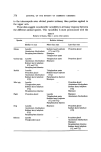
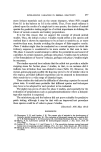
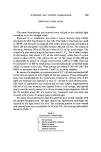
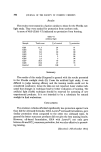
MICRO-ORGANISMS IN PHARMACEUTICAL AND COSMETIC PREPARATIONS 423 The flee-living Gram-negative organisms are so metabolically diverse that it may be only a matter of time before one will appear that is able to multiply in the chosen bacteriostat. CONTAMINATED MEDICAMENTS THAT ARE OF CLINICAL SIGNIFICANCE Solutions for injection Multiple-dose containers are now seldom used in Great Britain, and serious trouble from the injection of fluids in single-dose containers is fortunately rare. It would be wrong to assume, however, that it never occurs, or that when it does it is easily detected. Between October 1970 and March 1971, there were some 350 cases of bacteraemia in hospitals in the United States, caused by two different 'free-living' enterobacteria but all associated with the intravenous injection of fluids from a single commercial source (44, 45). The organisms had multiplied on the outer surface of the synthetic cap liner, and were introduced into the body of the fluid only by manipulation of the cap. The association of these cases with the contamin- ated product appears not to have been recognized for some months, and in a number of hospitals was established only by retrospective investigation. A much smaller outbreak due to intravenously administered glucose saline occured in Britain in 1966, but no account of it has been published. In this case also, bottles of fluid were contaminated with several different enterobacterial strains, but the organisms were in the fluid itself, and in numbers insufficient to cause turbidity. Liquid medicines and topical applications This subject is discussed in detail by Hooper (27). A general improve- ment in the bacterial quality of liquid medicines is a desirable objective, and would remove one--though probably not the most important--of the sources from which hospital patients become colonized with Ps. aeruginosa. If Hooper's conclusions are correct, and the main source of contamina- tion is the pharmacy water and the aqueous stock solutions, this should be relatively easy to achieve. It would have the additional advantage of removing a potential source of cross-contamination of other fluids, notably disinfectants and lotions, made up in the pharmacy.
Purchased for the exclusive use of nofirst nolast (unknown)
From: SCC Media Library & Resource Center (library.scconline.org)