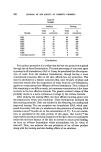
418 JOURNAL OF THE SOCIETY OF COSMETIC CHEMISTS outbreak due to nebulization of fluid from a contaminated stock bottle, and Phillips (7) attributed infection to contaminated lignocaine jelly used to lubricate endotracheal tubes. Serious infections of the eye due to contaminated irrigation fluids, eye drops and ointments fall into a class of their own, because they are numerous, are nearly always due to Pseudomonas aeruginosa, and almost invariably result in loss of the eye (8-10). Relatively trivial injuries to the eye (11), even minute abrasions due to the improper use of contact lenses (12), can act as the portal of entry for the organisms. According to Crompton, Anderson and Kennare (13), the intraocular injection of as few as 60 cells of Ps. aeruginosa in the rabbit invariably causes panophthalmitis, but how many are needed to establish infection in a corneal wound in man is not known. Deposition on the normal skin In infants during the first few days of life, the application of certain Gram-negative bacilli to the skin results in colonization, and a proportion of the colonized infants develop serious and often fatal generalized infec- tions including meningitis. In carrier-epidemics of Ps. aeruginosa in nurseries for the newborn, the organism can be isolated not only from the faeces but also from the skin particularly of the umbilical region (14). Spread of the organism in some nurseries is attributable to contaminated resuscitation apparatus and is probably by the respiratory route. In others, however, this possibility can be excluded, and as long ago as 1901 Wasser- mann (15) observed spread of the organism along the umbilical artery in fatal Ps. aeruginosa infections in infants. It is likely that multiplication of the organism in the umbilical wotmd is a frequent preliminary to invasion. Cooke, Shooter, O'Farrell and Martin (16) observed colonization of infants with the strain of Ps. aeruginosa present in a detergent solution used to clean the napkin area, Victorin (17) traced an epidemic of neonatal otitis media to a similar solution, and we are aware of several other unrecorded outbreaks in British hospitals in which the causative strain was found in 'antiseptic' skin-care lotions applied to babies. McCormack and Kunin (18) attributed an outbreak of umbilical sepsis to Serratia in the saline solution used to moisten the cord stump. In several outbreaks of neonatal meningitis due to Fl. meningosepticum the organism was isolated from ward tap water or other moist situations, but it was not clear how the infants were infected in one instance, Plotkin and McKitrick (19) found the organism in con- tainers of saline used to cleanse the babies' eyes.

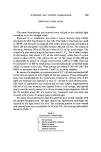
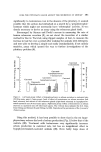
MICRO-ORGANISMS IN PHARMACEUTICAL AND COSMETIC PREPARATIONS 419 Bacteria present in liquid soaps and hand creams used by members of the hospital staff may be a serious source of danger to patients. In an epidemic of septicaemia due to Klebsiella in patients with intravenous catheters (20), the causative strain was found in the communal hand cream used by the staff. Ingestion Salmonellae are the only intestinal pathogens known to have been acquired by the ingestion of oral medicaments, and gastro-enteritis has followed the administration of thyroid tablets (10) and of capsules of carmine (21, 22). In the latter case, the infecting dose appears to have been about 30 000 salmonellae, but the infection rate was not recorded. Sal- monella (including typhoid) and dysentery infection may be conveyed from one patient to another in barium enema fluids by reflux of faecal matter into the reservoir (23). Recent evidence suggests that the presence in liquid medicines for oral use of other Gram-negative bacilli such as Ps. aeruginosa may also be undesirable, even though they do not cause intestinal disease. Septic infections with Ps. aeruginosa in general hospital wards are usually sporadic, and many of them appear to be auto-infections with bacteria from the patient's own bowel (24, 25). Hospital patients have much higher carrier- rates of this organism than do healthy persons outside hospital, and acquire many new strains during their stay in hospital (25). In studies of the faecal acquisition of Ps. aeruginosa at St Bartholomew's Hospital, London (26), strains appeared seldom to be acquired by 'contact' from other patients or from environmental sources in the ward. On a number of occasions they could be traced to the food, but on one occasion they were found in a medicament for oral use, peppermint water. Four patients were known to have received this, and one became colonized the medicine contained at most 14x 10 a organisms ml -•. This might not have been considered of importance had the Public Health Laboratory Service Working Party not also found Ps. aeruginosa in 15 of 33 samples of peppermint water from a number of different hospitals, and in a number of other aqueous mixtures (27). Buck and Cooke (28) found that the ingestion of at least 106 Ps. aeru- ginosa is necessary for intestinal colonization of normal persons, and that colonization is transient unless an antibiotic is given at the same time see also (29).
Purchased for the exclusive use of nofirst nolast (unknown)
From: SCC Media Library & Resource Center (library.scconline.org)