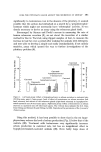
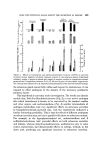
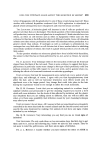
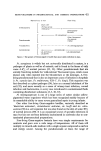
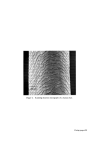
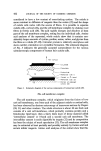
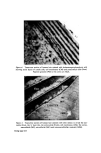
DOES THE PITUITARY GLAND AFFECT THE SECRETION OF SEBUM? 397 but the evidence to date suggests that they do not account for the differ- ences between the results. For a possible explanation the relative responses have to be carefully examined in relation to the doses given. in the first paper of Nikkari and Valavaara (22) the production of sebum in hypophysectomized female rats treated with 1 mg of testosterone per day for 3 weeks was still far short of that in normal rats of the same age. In their second paper (23), no com- parison of the response to testosterone propionate of hypophysectomized- castrated rats with that of castrated rats with intact pituitaries can be made, because no such controls were set up. It seems probable, therefore, that the responses of hypophysectomized rats claimed by these authors, using considerably larger doses of testo- sterone than Ebling et al., were much less than would have been produced in animals with intact pituitaries. Similarly, the responses obtained by Thody and Shuster (24) were less in hypophysectomized-castrated rats than in castrated rats with intact pituitaries. All the data are consistent with the view that some increase in sebaceous secretion can be produced by testosterone in the hypophysectomized rat, but that the response is con- siderably less than in animals with intact pituitaries. If we accept the view that the pituary is necessary for the sebaceous glands fully to respond to testosterone, the question arises of what pituitary 1.5 ' 1-0 2- .c: 0 U nt reated hormone Growth Growth hormone+ hormone+ testosterone testosterone so • •0 u, U nt reared 51 Growth 20 • hormone :'4• :, .•• • 0 Figure 2. Effect of growth hormone plus testosterone on secretion of sebum (left hand columns) and mitosis in the sebaceous glands (right hand columns) in hypophysectomized- castrated rats. Comparisons between 9, 13 and 12 pairs of litter-mates respectively. The vertical lines indicate the S.E. From Ebling et al (20). Reproduced by permission of the Journal of Endocrinology.

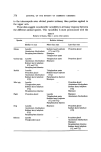
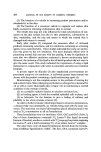
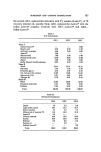
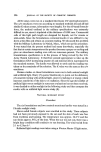
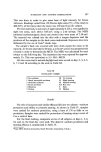
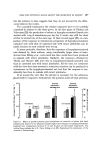
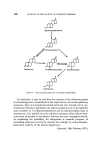
398 JOURNAL OF THE SOCIETY OF COSMETIC CHEMISTS hormones are concerned. We have tested in our sebum production assay a 'sebotropic' preparation made according to the method by Woodbury et al (18, 19), and it proved completely incapable of restoring the response of hypophysectomized-castrated male rats to testosterone. But, on the other hand, we have been able to restore this response (Fig. 2) with a growth hormone preparation (Squibb lot no. GH3) (20), a prolactin preparation (Squibb ovine luteotrophin, lot 5 3273-002R) which appeared to be free of somatotrophic activity (20), and a thyrotrophic hormone preparation (Ferring SF1 822), with very slight growth hormone activity (21). It was of particular interest that the growth hormone preparation was incapable of restoring the response of the preputial gland to progesterone (14), so that its action appeared to be distinct from the 'sebotrophic' activity as defined by Woodbury, Lorincz and Ortega (18, 19). We must assume, therefore, either that all our hormone preparations contain a true sebotrophic (as distinct from preputiotrophic) factor as an impurity, or that they all contain 'sebotrophic' amino-acid sequences within their molecules. What is the nature of the action of the pituitary hormones? A clue to this has arisen from our studies with adrenocorticotrophic hormone (28). In view of the demonstration that preparations of somatotrophin, prolactin and thyrotrophin were able to facilitate response of the sebaceous gland to testosterone, it seemed appropriate to discover whether adrenocortico- trophic hormone (ACTH), a peptide of known constitution with 39 amino acid residues, could act in like fashion. ACTH proved incapable of exercising the permissive action, but the experiments produced the surprising result that given by itself it was capable of increasing both sebaceous secretion and the incidence of mitosis in the sebaceous glands in hypophysectomized- castrated male rats, though to levels no higher than those of castrated rats with intact pituitaries (Fig. $). No significant changes in the weight of preputial glands or the seminal vesicles were produced. We already knew, and Thody and Shuster (24) agree, that sebum production is less in hypo- physectomized-castrated than in castrated rats and it is a reasonable assumption that this reduction is due to lowered adrenocortical activity. So we might reasonably expect that the administration of ACTH to hypo- physectomized-castrated rats might restore sebaceous activity to the level of castrates, by stimulating the production of adrenal steroids of low andro- genicity to which the sebaceous gland might be sensitive, were it not for one fact. This is that the powerful androgen, testosterone, is by itself incapable of doing this, unless a pituitary hormone other than ACTH is present. The dilemma can be solved by a single assumption, namely that although
Purchased for the exclusive use of nofirst nolast (unknown)
From: SCC Media Library & Resource Center (library.scconline.org)