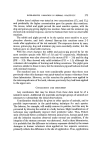
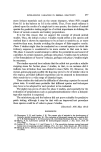
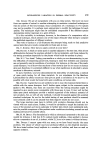
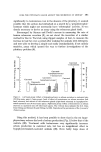
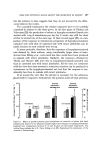
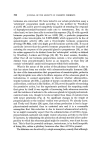
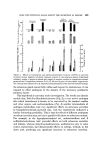
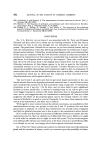
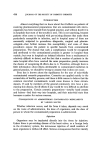
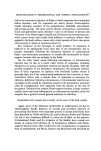
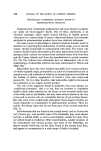
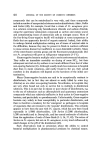
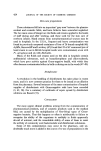
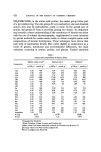
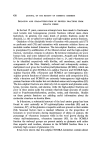
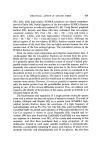
DOES THE PITUITARY GLAND AFFECT THE SECRETION OF SEBUM? 399 500 0 50 0 1-5- -- 1-0- 0.5- - Figure 3. Testosterone ACTH+ Testosterone 0.• rag/24 h testosterone ACTH+ Testosterone Untreated• Untreated Untreated ACTH ACTH - 60 -50c .o - •o• •o .• - i.• 10 • Effects of testosterone and adrenocorticotrophic hormone (ACTH) on secretion of sebum (lowest diagram, left-hand columns), mitosis in the sebaceous glands (right-hand columns), weight of preputial glands and weight of seminal vesicles in hypophysectomized- castrated rats. Comparisons between 15, 10, 17, 20 and 14 pairs of litter-mates respectively. The vertical lines indicate the S.E. Reproduced by permission ooe the Journal of EndocrinoZogj. the sebaceous gland cannot fully utilize and respond to testosterone, it can respond to other androgens in the absence of the necessary permissive pituitary factor. This hypothesis is currently under investigation. The results are already crystal clear. Both 5 •-dihydrotestosterone (Fig. •), a very active androgen into which testosterone is known to be converted by the seminal vesicles and other organs, and androstenedione (Fig. •) another intermediate of androgen metabolism, had very significant effects on sebaceous secretion in hypophysectomized-castrated rats. And the experiments indicated a further interesting possibility. This is that the effects of different androgens on sebum secretion may not run in parallel with those on sebaceous mitosis. For example, in the hypophysectomized rat, androstenedione and 5 a-dihydrotestosterone had powerful effects on both sebaceous secretion and mitosis, whereas dehydroepiandrosterone, androsterone and, to some extent, testosterone, had demonstrable effects on mitosis, without, in the doses used, producing any significant increases in sebaceous secretion.

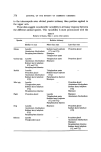
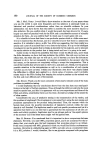
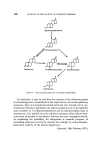
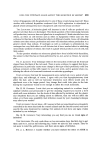
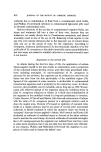
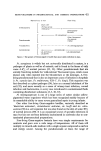
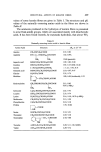
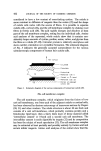
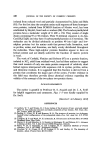
400 JOURNAL OF THE SOCIETY OF COSMETIC CHEMISTS oN// Testosterone Dehydroepiandrosterone AndrostenediO•OH H H 5•dihydrotestosterone / AndrostanedJone o/ HO/• And rosterone Figure 4. Some possible pathways of androgen metabolism. In conclusion, it may be said that the response of the sebaceous glands to steroids appears to be mediated at the target site by one or more pituitary hormones. Since in hypophysectomized-castrated rats, though not in cas- trated rats with intact pituitaries, the sebaceous glands seem to be markedly more sensitive to 5 (t-dihydrotestosterone and to androstenedione than to testosterone, it is possible that the pituitary hormone either affects inter- conversion of steroids or the balance between free and conjugated steroid. In considering the possibility, for therapeutic or cosmetic purposes, of controlling sebaceous activity by steroids, for example, by anti-androgens, these facts could be of the utmost importance. (Rec'eived: 12th February 19•1)
Purchased for the exclusive use of nofirst nolast (unknown)
From: SCC Media Library & Resource Center (library.scconline.org)