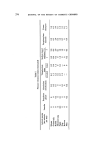
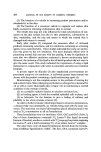
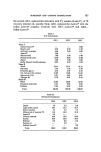
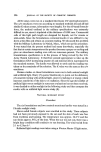
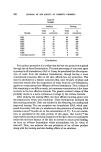
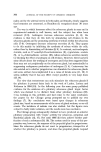
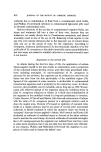
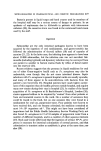
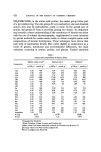
388 JOURNAL OF THE SOCIETY OF COSMETIC CHEMISTS Table IV Sunlight Sunburn Tanning Total % Total % Sample score protection score stimulation GS/1 53 70 36 450 G8/2 52 70 39 487 G8/3 44 75 40 500 G8/4 15 92 35 437 G8/5 11 94 25 312 G8/6 10 95 23 287 G8/7 176 0 6 75 G8/8 146 17 9 112 Untreated control 176 0 8 100 Conclusions For sunburn protection it is evident that the best sun protection is gained through the oil-based formulations. The same percentage of sunscreen agent is present in all formulations, G8/1-6. It may be speculated that the evapora- tion of water from the emulsion formulations, though leaving a more concentrated sunscreen film on the skin, affords less sun protection. This may be attributed to a thinner sunscreen film, since 20 parts oil phase and sunscreen remain after the evaporation of water from the o/w formulation, against no evaporation from 100 parts oil-base formulation. Thus, volume of film remaining is one-fifth as much, yet sunscreen concentration is five times as much in the less effective formula. The greater residual volume of film probably results in a more continuous coverage by the oil-base formula. After studying the tanning effect, the most efficient tanning agents were the preparations which were emulsions. These formulations increased the skin tanning potential. Their use resulted in less blistering, less peeling and improved tanning. The one exception was formulation G8/4, which com- pared favourably with the o/w emulsions in the promotion of tanning. G8/4 contains Lantrol © lanolin oil, at the concentration of 5%. It is our conten- tion, as speculated in the early portion of this paper, that Lantrol © has improved the moisture retention properties of the skin. Since it is essential to return the moisture balance of the skin to normal to assure good healing, we have an oil-base formulation which accomplishes this by virtue of Lantrol ©. Thus, one achieves the sun protection of an oil-base product along with the tanning and skin healing effects of an emulsion.

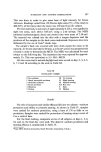
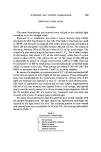
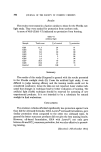
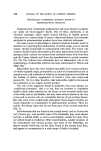
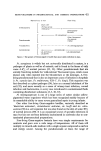
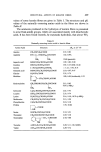
SUNSCREEN AND TANNING PREPARATIONS 389 ARTIFICIAL LIGHT STUDY Procedure The same formulations and controls were utilized in the artificial light procedure as in the sunlight study. Exposure to uv irradiation was from a xenon mercury lamp (XeM, developed by Hill Top Research, Inc.) (9). The bulbs in this lamp are rated at 700 W, and the lamp is equipped with a filter which excludes all radiation below 260 nm and passes very little between 260 and 270 nm. The output of this lamp, between 280 and 320 nm is about 6.5• of the total energy. The output of a pure xenon lamp in this area is about 1.5•o. The ir (heat) output of this lamp is only about 5.2•o of the total energy, while that of a pure xenon is about 38.5•o. The output •W cm -2 in the range of 280-320 nm is adjustable by means of voltage control from 6 500 to I 1 000. This can be increased to 22 000 by employing a second individually controlled lamp which is present in the unit. With settings providing 8 345 •W cm -•' the MED on untanned skin is between 7 and 1/5 s on most subjects. By means of a template, an exposure area of I 17 x 43 mm was marked off on the lateral aspects of both thighs of the test subjects. These rectangular areas were subdivided into five equal areas of about 23 x 43 mm. One of the eight test materials was applied to a strip 15 x 43 mm on each of these areas. The order of application was randomized on each subject. Approximately 0.05 ml of the test material was applied from a I ml syringe, and spread thinly over this area by means of a 15 mm wooden tongue depressor. One ooe the l0 marked areas did not receive any treatment and one area was covered with a piece of opaque paper masking tape. The lamp was positioned so that the exposure area would coincide with the marked treatment area. The light shutter was opened and each thigh was exposed to the light source for 60 s. The erythema present in each treated and exposed area was scored after 24, 48 and 72 h. The scoring scale used is shown in Table V. Table V Scoring scale--artificial light 0 No erytherna 0.5 Barely perceptible erythema 1 Slight erytherna 2 Moderate erythema 3 Marked erythema
Purchased for the exclusive use of nofirst nolast (unknown)
From: SCC Media Library & Resource Center (library.scconline.org)