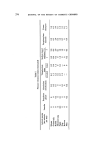
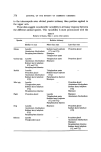
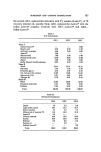
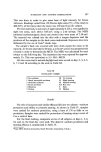
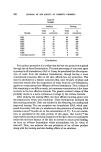
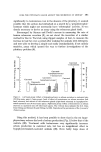
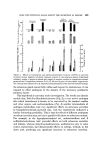
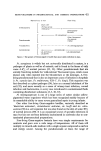
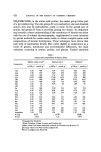
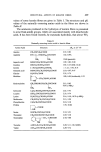
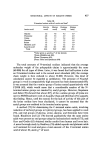
INTER-SPECIES VARIATION IN DERMAL REACTIVITY 373 (2) Propylene glycol (M & B Ltd), neat material--expected to be practically non-irritant. (3) Aluminium chlorhydrate--uncertain reactivity. (4) Thioglycolate paste (mixture of calcium thioglycolate 15•o, calcium carbonate 60•o, calcium hydroxide 5}/o--in water) pH value of l 1-- expected to be a reactive material. (5) Sodium lauryl sulphate (at 1 •o and 5•o concentrations)--a reference material with known irritant effects on the skin. (6) Paraphenylene diamine (50•o aqueous slurry)--expected to be a reactive material. (7) Medicated cream shampoo (neat material)--subject of previous studies in rabbit and man referred to above. Selection of the test procedure was a relatively simple process. As far as we are aware there is, at the present time, only one test method that has any legal status and that is the method of testing primary irritant sub- stances described in the Federal Register (12). In brief, this consists of applying the test material to the skin of groups of six albino rabbits for 24 h under occlusive conditions as prescribed reaction in the skin is then assessed at 24 h and 72 h. In the absence of alternative procedures, and also as a test of the method itself, we decided to adopt this test, modified as appropriate, as the standardized method of assessment. RESULTS Primary irritation indices (PII) (12) were calculated for each material when applied to groups of six animals of each species (Table I). The values given for man, dog and baboon are only estimated values in that abraded sites were not included. Lanolin elicited minimal reaction in the piglet, but gave no observable response in the other species. Propylene glycol elicited minimal reaction in the rabbit, piglet and man only. .dluminium chlorhydrate produced a characteristic response with hyper- keratinization resembling a chemical burn in most species (rabbit, mouse guinea-pig, dog and man), but gave no reaction in the pig or baboon. Thioglycolate paste proved considerably more irritant to the abraded, as compared with the intact, skin sites. Unfortunately, abraded sites were not examined in man or baboons and this prevents exact comparisons be- tween the species. Nevertheless, it is apparent that the rabbit, dog and guinea-pig were more sensitive than the other species.

374 JOURNAL OF THE SOCIETY OF COSMETIC CHEMISTS
Purchased for the exclusive use of nofirst nolast (unknown)
From: SCC Media Library & Resource Center (library.scconline.org)