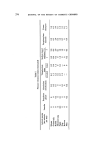
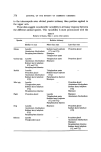
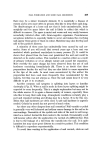
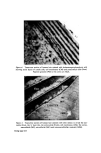
436 JOURNAL OF THE SOCIETY OF COSMETIC CI-IEMISTS the characteristic Allw6rden reaction. Furthermore, it has been found that removal of this material by ethanol extraction increases the rate of papain/ bisulphite disintegration of the fibre (58). Examination of sections of metal-coated fibres demonstrated that the cell membrane material is a layer of electron-transparent, non-stainable material approximately 2.5 nm thick on the surface of the fibre. This layer, which is probably the lipid portion of a unit cell membrane, is completely removable by ethanol extraction and may be regarded as originating from the components of the 'epicuticle' described by previous workers. In fact, it has recently been shown (60) that the rate of sorption of n-propanol by wool is increased greatly by preliminary extraction with ethanol, which removes lipid and some protein from the cell membrane complex. This has led to the suggestion that the bimolecular lipid layer of the cell membrane complex, which surrounds each cell within the fibre, presents the major barrier to the diffusion of molecules into the intracellular keratin. END GROUPS OF KERATIN FIBRES In view of the complexity of the histology of wool and hair it is not surprising that the fibres contain a number of both N- and C-terminal amino acids. Methods for quantitative determination of the former are now well defined although techniques for determining the latter are still not as precise. As such groups, as well as the side-chain amino and carboxyl groups, can be involved in reactions with many reagents, they are of considerable importance. Sanger's procedure (61) has been used to identify the N-terminal amino adds. After treatment with 1-fluoro-2,4-dinitrobenzene (FDNB) the fibres are hydrolysed, and chromatographic separation of the substituted amino acids from the hydrolysate shows that, with fibres as dissimilar as human hair and Lincoln, New Zealand Romney, and Australian Merino wools, the terminal groups are always provided by the same seven amino adds, namely, glycine, threonine, valine, alanine, serine, glutamic add and aspartic acid (Table III). Kerr and Godin (65) showed similar end groups to be present in human and horse hair, and H•/hnel (66) found the same end groups in hair, callus, nails, and psoriasis scales. Woodin (67) investigated feather keratin and found the same seven amino acids to be N-terminal and in amounts roughly similar to those of wool.

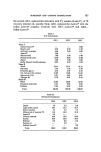
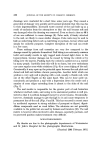
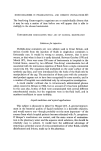
STRUCTURAL ASPECTS OF KERATIN FIBRES 437 Table Ill. N-terminal amino acids of wools and hair* Amino acid Lincoln Merino Romney Human wool'• wools woolõ hairõ Glycine Threonine Valine Alanine Serine Glutamic acid Aspartic acid Total 5.2 7.8 4.5 3.9 4.8 5.6 4.9 4.0 2.4 1.7 2.4 4.0 1.2 1.5 1.2 1.0 1.2 1.7 1.2 1.0 1.2 1.1 1.2 1.0 0.6 0.5 0'6 0.5 16.6 19.9 16.0 15'4 *Value given as/2mole g-X of dry keratin. •'From Middlebrook (62). :•From Thompson (63). õFrom Tibbs and Speakman (64). The total amounts of N-terminal residues indicated that the average molecular weight of the polypeptide chains is approximately the same (60 000) for all types of fibres. Later, it was found that half-cystine is also an N-terminal residue and is the second most abundant (68) the average chain weight is then reduced to about 36 000. However, this kind of calculation cannot be regarded as satisfactory. The presence of N-acetyl groups in wool in comparatively high amounts has been demonstrated (69). It was assumed that the e-amino group of lysine reacted quantitatively with FDNB (62), which would mean that a considerable number of the N- terminal amino groups are masked by acetyl groups. However, Siepmann and Zahn (70) showed that about 20• of the e-amino groups of lysine are inert to FDNB and later work of Asquith, Chan and Otterburn (71) supports this finding. Hence, until the reasons for the lack of activity of this part of the lysine residue have been elucidated, it cannot be assumed that the acetyl groups are confined to the terminal amino group. A method (72) for determining the C-terminal amino acids, involving reduction of carboxyl groups to hydroxyl groups, has been applied to wool (73), and end groups of glycine, serine, alaninc, and threonine have been found. Blackburn and Lee (74) showed qualitatively that the same amino acids were present as end groups using the hydrazinolysis method (75), and Kerr and Godin (65) obtained similar results from human and horse hair. A more thorough study by Bradbury (76) added aspartic and glutamic acids as C-terminal for wool and gave a total amount of the C-terminal amino acid of about 10 vmole g4 of wool.
Purchased for the exclusive use of nofirst nolast (unknown)
From: SCC Media Library & Resource Center (library.scconline.org)