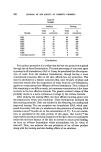
386 JOURNAL OF THE SOCIETY OF COSMETIC CHEMISTS All K values were run on a standard Beckmann D U spectrophotometer. The o/w emulsions were run according to standard methods (6) and all had similar Kvalues at max. (absorption wave length). For the oil-based formula- tions, the method outlined in the military specifications was extremely difficult to use, since it stipulated a film thickness of 0.001 mm. Commercial cells of this light path length are designed for liquids, not for creams or semi-solids. Since the formulations contained kaolin it was difficult to lay down a thin film and obtain an accurate reading. We discussed this problem with the Military Laboratory in Natick, Mass., which set up this procedure. It was stated that the present method had many drawbacks, especially the fact that at certain temperatures the product becomes opaque on cooling and gives an absorbance reading even with no sunscreen present. The military transmittance specification is in the process of being revised by the U.S. Army Natick Laboratory. It therefore seemed appropriate to take up the formulation G8/5 (containing sesame oil and mineral oil) in isopropanol in the standard manner. The kaolin was allowed to settle and the reading was taken on the remainder of the solution. The K value was the same as the o/w emulsions. Human studies on these formulations were run in both natural sunlight and artificial light. Harry (7) quotes Stambovsky to point out the deficiency of sunscreen testing with artificial light, since it is lacking in ir energy which increases sensitivity of the skin to uv radiation. Since the age-old conflict of artificial light versus sunlight in sunscreen evaluations has not been resolved, it was decided to utilize sunlight in the following study and then compare the results with an artificial light source study (9). ]•ATURAL SUNLIGHT STUDY Procedure The six formulations and two controls mentioned earlier were tested in a Florida sunlight study. Eleven adult female subjects were enrolled in this study. These subjects had not been previously exposed to the sun and the skin of each was free from erythema and tanning. The temperature was approx. 26.6øC and the sun shone approx. 95•o of the time. When the sun was not out, there was a bright hazy condition still conducive to sun burning. The wind varied from 3.1 to 6.2 km h -x. Reflected light readings were taken using a Weston Master Hlight meter.

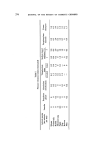
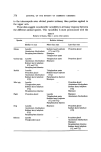
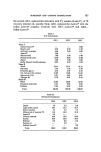
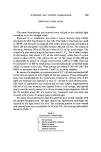
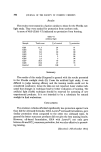
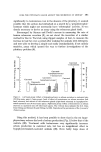
SUNSCREEN AND TANNING PREPARATIONS 387 This was done in order to give some base of light intensity for future reference. Readings varied from 150 Weston light units (5•o of the time) to 400 (95•o of the time) when the meter was 150 mm from the subject. The test materials, in amounts of approximately 0.125 g, were applied to eight test areas, each about 5.08 cm 2, using a 2 ml syringe. The MED (minimal erythematogenic dose) and control sites were areas of 2.54 cm 2. The material was rubbed into the skin with a tongue depressor and the positions of the samples on the back were randomized. Exposure sites were delineated by the use of Duke* elastic tape. The subject's back was covered with terry cloth except the areas to be exposed. At 10 min intervals for 40 min, a 2.54 cm • section was progressively covered in order to determine the MED. The MED was calculated for each subject on the following day. The treatment sites were exposed for approxi- mately 3 h. This was equivalent to 5.5-18.0 x MED. All sites were read in natural daylight and were scored on days 1, 3, 4, 5, 6, 7, 8 and 10 according to the scale in Table III. Table III Scoring scale--sunlight 0 No erythema 1 Barely perceptible erythema 2 Moderate erythema 3 Severe erythema 4 Blistering 5 Peeling 00 No tanning 01 Slight tanning 02 Marked tanning RA Raw area S Scab H Healing Results The role of sunscreen and vehicle efficacy falls into two classes--sunburn protection and ability to promote tanning. As shown in Table IV, samples were ranked for sunburn protection, using a base of 176 as little or no protection. Samples were ranked for promotion of tanning using a score of 8 as a control base. For the final ranking, composite scores of all subjects on days 1, 3, 6, 10, and on the final day were used. The data for sunburn protection and tanning efficacy is summarized in Table IV. *Tape MFG (Duke Laboratories• South Norwalk, Connecticut, U.S.A.).
Purchased for the exclusive use of nofirst nolast (unknown)
From: SCC Media Library & Resource Center (library.scconline.org)