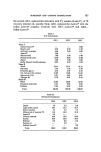
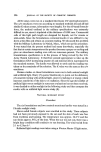
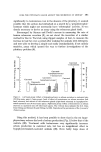
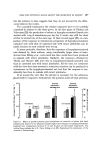
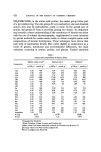
INTER-SPECIES VARIATION IN DERMAL REACTIVITY 375 Sodium lauryl sulphate was tested at two concentrations (1% and 5%) and predictably the higher concentration gave the greater skin reactions. The mouse, rabbit and piglet proved the most sensitive species, with the dog and guinea-pig giving slightly less reaction. Man and the miniature pig showed only minimal response, and in the baboon there were no observable reactions. The rabbit and piglet proved to be the species most sensitive to para- phenylene diamine, and both showed flare-up skin reactions some 2-3 weeks after application of the test material. The responses shown by man, mouse, guinea-pig, dog and miniature pig were essentially similar, but the baboon gave no observable reactions. With the cream shampoo the rabbit and guinea-pig proved by far the most sensitive species with PII's of 5.0 and 4.5 respectively. Moderately severe reactions were also observed in the mouse (PII = 3.6) and the dog (PII = 3.3). Man showed only mild irritation (PII = 1.1), although the volunteers did complain of burning and itching sensations. The piglet gave reactions similar to those in man, but the miniature pig and baboon showed only minimal response. The reactions seen in man were considerably greater than those seen previously when this shampoo was patch-tested on human volunteers from these laboratories. However, on this occasion the patches were applied to the inter-scapula area of the back, whereas previously they had been applied to the upper arm. CONCLUSIONS AND DISCUSSION Any conclusions that may be drawn from these data must be of a tentative nature. Additional test materials and larger groups of animals are necessary to substantiate the initial observations. Consideration should also be given to other species of animals, and to possible improvements in the patch-testing technique for each species. The baboon, for example, will readily remove its patches, but this may be prevented by dressing the animal in a body harness. Slight modifications of technique may significantly improve their predictive value. Thus, Finkel- stein (13) found better correlation between animal tests, human patch tests and the irritation reactions observed under normal use conditions, if the integrity of the stratum corneum was destroyed. And in these laboratories, it is probable that the difference in irritancy responses elicited by the cream shampoo in human volunteers when applied on two separate occasions, primarily reflects the difference in the site of application. Thus, applications

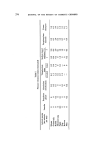
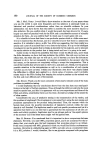
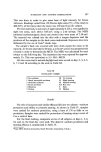
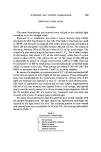
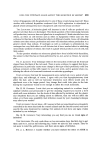
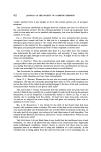
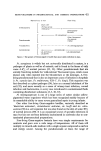
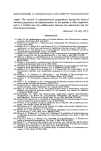
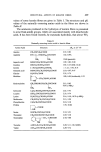
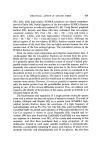
376 JOURNAL OF THE SOCIETY OF COSMETIC CHEMISTS to the interscapula area elicited greater irritancy than patches applied to the upper arm. These data suggest considerable variability in irritancy response between the different animal species. This variability is most pronounced with the Table II Relative irritancy, Man v. seven other species Species Relative irritancy Similar to man More than man Less than man Mouse Lanolin Sodium lauryl sulphate Propylene glycol Aluminium chlorhydrate (1 •o and 5 •o) Paraphenylene diamine Shampoo Thioglycolate paste Guinea-pig Lanolin Thioglycolate paste Propylene glycol Aluminium chlorhydrate Shampoo Sodium lauryl sulphate (1 •o and 5 •) Paraphenylene diamine Rabbit Lanolin Thioglycolate paste -- Propylene glycol Sodium lauryl sulphate Aluminium chlorhydrate (5 •) Sodium lauryl sulphate Paraphenylene diamine (1 •o) Shampoo Mini pig Lanolin -- Propylene glycol Thioglycolate paste Aluminium chlorhydrate Sodium lauryl sulphate Sodium lauryl sulphate (5 %) (1 •) Paraphenylene diamine Shampoo Piglet Propylene glycol Lanolin Shampoo Thioglycolate paste Aluminium chlorhydrate Sodium lauryl sulphate (1% and 5 %) Paraphenylene aliamine Shampoo Dog Lanolin Aluminium chlorhydrate Sodium lauryl sulphate Paraphenylene diamine Baboon Lanolin Thioglycolate paste Propylene glycol Sodium lauryl sulphate (1•) Propylene glycol Aluminium chlorhydrate Shampoo Paraphenylene diamine Sodium lauryl sulphate (1 •o and 5 •)
Purchased for the exclusive use of nofirst nolast (unknown)
From: SCC Media Library & Resource Center (library.scconline.org)