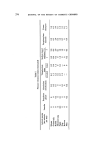
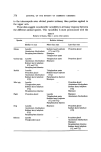
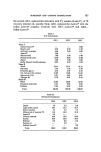
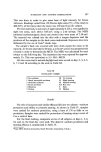
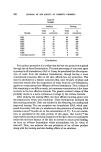
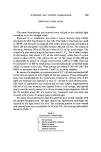
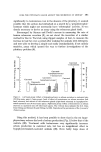
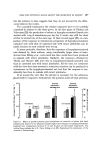
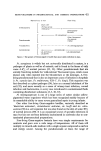
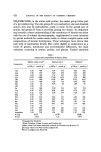
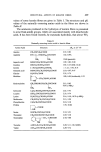
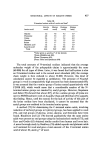
INTER-SPECIES VARIATION IN DERMAL REACTIVITY 377 more irritant materials such as the cream shampoo, where PII's ranged from 0.1 in the baboon to 5.0 in the rabbit. Thus, if too much reliance is placed upon the results of a single test in one species, the choice of animal species for predictive testing might be of critical importance in defining the future of certain cosmetic and toiletry preparations. It is for this reason that we support the concept of phased animal studies. Thus, the initial or phase 1 studies would utilize a test species and method that is shown by experience to be at least as sensitive as, or more sensitive than man, thereby avoiding the dangers of false-negative results. Phase 2 studies might then be conducted on a second species in which the irritancy response is considered to be more similar to that seen in man. The phase 2 research would attempt to define the potential in-use hazard of a product. In certain instances, perhaps only phase 1 studies may be advised, or for formulations of'known' irritancy, perhaps only phase 2 studies might be necessary. The studies reported here indicate that the rabbit test provides a reliable stepping stone for further phase 2 studies, in that, in no instance did it indicate less irritation than was elicited in man (Table H). However, the mouse, guinea-pig and possibly the dog may prove to be of similar value in this respect, provided sufficient experience can be amassed to demonstrate their reactivity to a wide range of chemical types. These studies also indicate the difficulty of choosing a species for second phase tests. It would seem probable that different species and techniques may have to be adopted for each product to be evaluated. The piglet may prove of value for phase 2 studies, and especially for the evaluation of preparations such as paraphenylenediamine where a delayed- type skin reaction is suspected. The miniature pig and the baboon did not prove suitable for predictive patch testing, although it may be that with an improved test procedure these species could be of value in phase 2 studies. (Received: loth May 1971) REFERENCES (1) Newcomer, V. D. and Landau, J. W. The current role of animals in the development of topically applied preparations. In: The evaluation of therapeutic agents and cosmetics (Ed. by T. H. Sternberg and V. D. Newcomer), 102-124 (1964) (McGraw-Hill, Inc., lqew York). (2) Brown, V. K. Laboratory animals for dermatological research. J. Inst. Anita. Tech. 17 122 (1966). (3) Justice, D. B., Travers, 3. J. and Vinsen, L. 3. The correlation between animal tests and human tests in assessing product mildness. Proc. Sci. Sect. Toilet Goods Ass. 3S 12 (1961). (4) Hood, D. B. In: Abstracts of papers of Fourth Annual Meeting of the Society of Toxicology 15 (1965).

378 JOURNAL OF THE SOCIETY OF COSMETIC CHEMISTS (5) Pirila, V. The pig as test animal in experimental contact sensitization. Personal com- munication (1967). (6) Draize, J. H. Dermal toxicity. In: Appraisal of the safety of chemicals in foods, drugs and cosmetics 46-59 (1959) (Assoc. Food and Drug Officials U.S., 29 13009 Austin, Texas). (7) Levenstein, I. The need for rabbit skin studies in evaluating cosmetic safety. J. $oc. Cosmet. Chem. 15 377 (1964). (8) Levenstein, I. and Wolven, A. Evaluating the dermal toxicity test of the F.D.A. Amer. Perfum. Cosmet. 80 64 (1965). (9) Roundabush, R. L., Terhaar, C. J., Fassett, D. W. and Dziuba, S. P. Comparative acute effects of some chemicals on the skin of rabbits and guinea-pigs. Toxicol. Appl. Pharmacol. 7 559 (1965). (10) Rieger, M. M. and Battista, G. W. Some experiences in the safety testing of cosmetics. J. Soc. Cosmet. Chem. 15 161 (1964). (11) Carter, R. O. and Griffith, J. F. Experimental bases for the realistic assessment of safety of topical agents. Toxicol. Appl. Pharmacol. 7 Suppl. 2 60 (1965). (12) Federal Register of United States of America, 17 September 1964, Testing procedures for hazardous substances, paragraph 191.11. Method of testing primary irritant substances. Published by the Office of the Federal Register, United States Government Printing Office, Washington D.C., 20402. (13) Finkelstein, P., Laden, K. and Miechowski, W. Laboratory methods for evaluating skin irritancy. Toxicol. ,4ppl. Pharmacol. 7 Suppl. 2 74 (1965). DISCUSSION M•,. A. G. McG}m: I have to differ with you on a conclusion you draw. As I under- stand it you say that one should choose an animal that is likely to give an oxtremely severo reaction. A better choice is possible with the work that you have described, permitting the choice of an animal in which the response resembles more closely that seen in man. Some of the tests you described brought out this point. MR. D^vms: May I explain my conclusion in a little more detail? If you have to solect a testing programme to assess the potential usage of an entirely new product, you need to be certain that the initial test will at no time give you a false negative result. Inter- pretation of the results is then based on the knowledge that this species always gives a reaction which is greater than that seen in man. The test would indicate products with very low or very high irritation potential. The results of this initial test would assist the choice of further testing procedures and it might then be advisable to use a species whose responso is more similar to that seen in man. You might permit further testing of totally unacceptable products, if, in your initial test, you use a species incorrectly presumed to be closely similar to man. DR. A. J^RRETr: Some of the differences seen in tho various species might represent the difficulties and problems of epilation. The more difficult it is to epilate an animal the more damage you are likely to inflict on tho epidermis and tho more sensitive you are rendering that epidermis to an irritant. Thioglycolato not only breaks down the di- sulphide bonds of your hair, but also grossly damages the disulphide bonds of the keratin layer. With the abrasivo technique employed here there will be some variation in the depth of tho incision. If tho cut extends into tho lower level of tho stratum corneum it may cause damage to the areas of protein-bound phospolipids, and this will grossly interfere with tho ponetration of irritant materials.
Purchased for the exclusive use of nofirst nolast (unknown)
From: SCC Media Library & Resource Center (library.scconline.org)