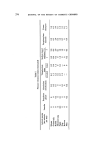
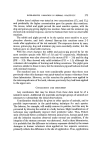
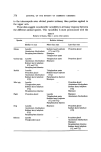
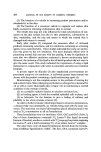
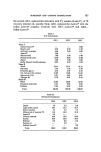
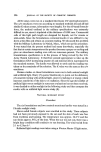
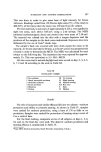
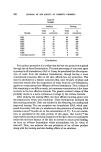
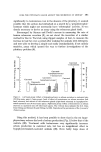
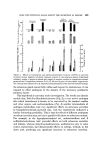
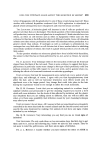
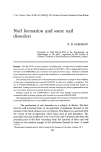
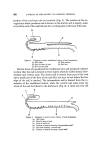
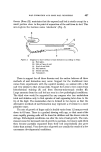
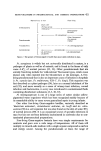
MICRO-ORGANISMS IN PHARMACEUTICAL AND COSMETIC PREPARATIONS 421 Normal flora of man Free living Enterobacteria Pseudomonads Flavobacteria Acinetobacter Esch. coif Proteus group Klebs/•11o Enterobacter $erratia • P$. aerug/nosa • Other fluorescent Ps. cepoc• ? other • F/. mem•gosepticurn ß , Acinetobacter ( ,4. an#ratus ] ( ,4. ca/coaceticus) _ (,4./•voffi) Figure 1. The groups of Gram-negative bacilli that cause septic infection in man. Ps. aeruginosa is widely but not universally distributed in nature, is a pathogen of plants as well as of animals, and is found in the faeces of only some 4-65/o of normal persons (25, 33). Other pseudomonads that are entirely free-living include the 'cold-tolerant' fluorescent types, which cause disease only when injected into the bloodstream or the meninges. A free- living pseudomonad that is also an important cause of infection in hospitals is Ps. cepacia (syn. Ps. multivorans, 'EO-I', Ps. kingO. This organism was first described as a plant pathogen (34), later as a normal inhabitant of the soil (35), and more recently as a cause of urinary-tract infection, wound infection and bacteraemia, in every case introduced in contaminated fluids containing disinfectant substances (3-5, 36, 37). Fl. meningoseoeticum is one of a large series of rather similar yellow- pigmented water organisms which has been recognized mainly because of its remarkable ability to cause severe generalized sepsis in young infants. One other free-living Gram-negative bacillus, variously described as 'Bacterium anitratum', Acinetobacter anitratus, Ac. bvoffi and Ac. calco- aceticus (38) is a soil organism but was also found on the skin of some 30•o of normal persons (39). It is an occasional source of sporadic infections in man but has not yet been definitely incriminated in outbreaks due to con- taminated pharmaceutical preparations. Free-living Gram-negative bacteria have very simple requirements for nutrients and grow over a wide range of temperatures. All of them will multiply in mineral-salts medium with a single organic compound as carbon and energy source. Among the pseudomonads at least, the range of

422 JOURNAL OF THE SOCIETY OF COSMETIC CHEMISTS compounds that can be metabolized is very wide, and these compounds include a number of unexpected substances such as disinfectants. Adair, Geftic and Gelzer (40), for example, found that a strain of Ps. aeruginosa grew in a solution containing only benzalkonium chloride and sodium chloride, using the quaternary ammonium compound as carbon and energy source and contaminating traces of ammonium salts as nitrogen source. Most of the free-living Gram-negative bacilli will multiply at room temperature in fluids that are apparently devoid of organic material. Indeed, their ability to undergo limited multiplication making use of traces of nutrient adds to the difficulties, because they may be present in fluids in numbers sufficient to cause serious disease but insufficient to cause detectable turbidity. Many of the enterobacter-serratia group and the fluorescent pseudomonads (but not Ps. aeruginosa) will grow at refrigerator temperature (3-5øC). Gram-negative bacteria multiply only in moist environmental situations. They suffer an immediate mortality on drying of some 99•o, but their subsequent survival on dry surfaces is not much different from that of other non-sporing bacteria (41). Although usually much less numerous in hospital dust than in moist situations, and rarely found in the air, their actual numbers in dry situations will depend on the heaviness of the initial con- tamination. Many Gram-negative bacteria are said to be exceptionally resistant to disinfectants, but in fact they are almost as easily killed by some (e.g. chlorine) as are other non-sporing bacteria. Nevertheless, in hospitals they are very often found not only to survive but to multiply in disinfectant solutions. This is in part due to misuse or poor choice of disinfectants, e.g. to the use of substances such as chloroxylenols and quaternary ammonium compounds which are relatively ineffective in their action in Gram-negative bacteria, and particularly on pseudomonads. Unfortunately, Gram-negative bacteria vary widely in their susceptibility to particular disinfectants, and there is therefore a tendency for the 'emergence' as pathogens in hospitals of organisms that are resistant to the 'popular' disinfectants. This certainly appears to have been the case with Ps. cepacia, which has now been found repeatedly in 1/5000 chlorhexidine, 1/30 Savlon (1/2000 chlorhexidine, 1/200 cetrimide) and in Detergicide, and has caused outbreaks of infection from the application of each of these fluids (3-5, 36, 37, 42). The action of Savlon on Ps. cepacia, but not on Ps. aeruginosa, is very much influenced by small changes in the pH of the disinfectant (43). Such observations lead to pessimism about the ability to control bacterial multiplication in pharmaceutical products by chemical means.
Purchased for the exclusive use of nofirst nolast (unknown)
From: SCC Media Library & Resource Center (library.scconline.org)