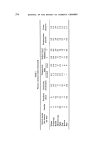
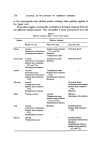
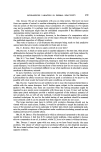
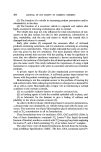
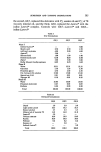
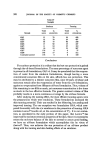
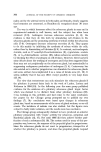
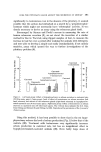
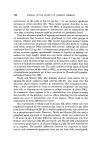
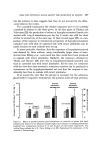
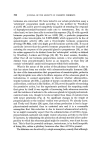
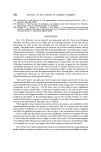
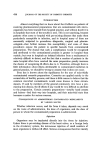
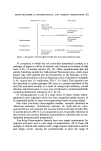
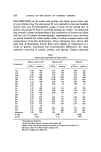
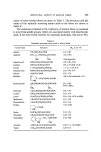
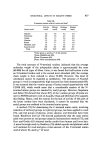
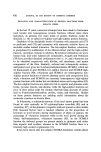
376 JOURNAL OF THE SOCIETY OF COSMETIC CHEMISTS to the interscapula area elicited greater irritancy than patches applied to the upper arm. These data suggest considerable variability in irritancy response between the different animal species. This variability is most pronounced with the Table II Relative irritancy, Man v. seven other species Species Relative irritancy Similar to man More than man Less than man Mouse Lanolin Sodium lauryl sulphate Propylene glycol Aluminium chlorhydrate (1 •o and 5 •o) Paraphenylene diamine Shampoo Thioglycolate paste Guinea-pig Lanolin Thioglycolate paste Propylene glycol Aluminium chlorhydrate Shampoo Sodium lauryl sulphate (1 •o and 5 •) Paraphenylene diamine Rabbit Lanolin Thioglycolate paste -- Propylene glycol Sodium lauryl sulphate Aluminium chlorhydrate (5 •) Sodium lauryl sulphate Paraphenylene diamine (1 •o) Shampoo Mini pig Lanolin -- Propylene glycol Thioglycolate paste Aluminium chlorhydrate Sodium lauryl sulphate Sodium lauryl sulphate (5 %) (1 •) Paraphenylene diamine Shampoo Piglet Propylene glycol Lanolin Shampoo Thioglycolate paste Aluminium chlorhydrate Sodium lauryl sulphate (1% and 5 %) Paraphenylene aliamine Shampoo Dog Lanolin Aluminium chlorhydrate Sodium lauryl sulphate Paraphenylene diamine Baboon Lanolin Thioglycolate paste Propylene glycol Sodium lauryl sulphate (1•) Propylene glycol Aluminium chlorhydrate Shampoo Paraphenylene diamine Sodium lauryl sulphate (1 •o and 5 •)

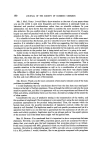
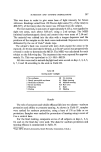
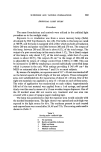
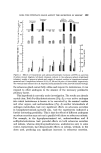
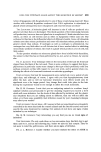
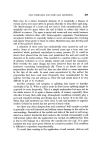
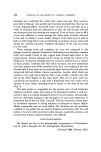
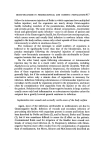
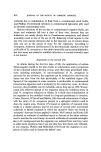
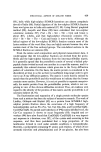
INTER-SPECIES VARIATION IN DERMAL REACTIVITY 377 more irritant materials such as the cream shampoo, where PII's ranged from 0.1 in the baboon to 5.0 in the rabbit. Thus, if too much reliance is placed upon the results of a single test in one species, the choice of animal species for predictive testing might be of critical importance in defining the future of certain cosmetic and toiletry preparations. It is for this reason that we support the concept of phased animal studies. Thus, the initial or phase 1 studies would utilize a test species and method that is shown by experience to be at least as sensitive as, or more sensitive than man, thereby avoiding the dangers of false-negative results. Phase 2 studies might then be conducted on a second species in which the irritancy response is considered to be more similar to that seen in man. The phase 2 research would attempt to define the potential in-use hazard of a product. In certain instances, perhaps only phase 1 studies may be advised, or for formulations of'known' irritancy, perhaps only phase 2 studies might be necessary. The studies reported here indicate that the rabbit test provides a reliable stepping stone for further phase 2 studies, in that, in no instance did it indicate less irritation than was elicited in man (Table H). However, the mouse, guinea-pig and possibly the dog may prove to be of similar value in this respect, provided sufficient experience can be amassed to demonstrate their reactivity to a wide range of chemical types. These studies also indicate the difficulty of choosing a species for second phase tests. It would seem probable that different species and techniques may have to be adopted for each product to be evaluated. The piglet may prove of value for phase 2 studies, and especially for the evaluation of preparations such as paraphenylenediamine where a delayed- type skin reaction is suspected. The miniature pig and the baboon did not prove suitable for predictive patch testing, although it may be that with an improved test procedure these species could be of value in phase 2 studies. (Received: loth May 1971) REFERENCES (1) Newcomer, V. D. and Landau, J. W. The current role of animals in the development of topically applied preparations. In: The evaluation of therapeutic agents and cosmetics (Ed. by T. H. Sternberg and V. D. Newcomer), 102-124 (1964) (McGraw-Hill, Inc., lqew York). (2) Brown, V. K. Laboratory animals for dermatological research. J. Inst. Anita. Tech. 17 122 (1966). (3) Justice, D. B., Travers, 3. J. and Vinsen, L. 3. The correlation between animal tests and human tests in assessing product mildness. Proc. Sci. Sect. Toilet Goods Ass. 3S 12 (1961). (4) Hood, D. B. In: Abstracts of papers of Fourth Annual Meeting of the Society of Toxicology 15 (1965).
Purchased for the exclusive use of nofirst nolast (unknown)
From: SCC Media Library & Resource Center (library.scconline.org)