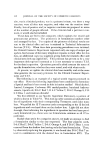
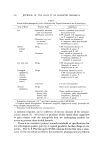
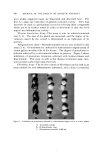
546 JOURNAL OF THE SOCIETY OF COSMETIC CHEMISTS and consequently is readily bound by it. The bisulfate ion has a high affinity for the resin and consequently readily elutes the bound copper- EDTA. An efficient method of isolating the copper-EDTA is to pass solutions of it through a column of the ion exchange resin. In practice this was impossible with some products. Lipid materials in some products coated the resin particles, interfering with ion exchange. Extraction with n-butanol to remove the lipids aided the column chromatography. Some products contained water-soluble gels which so increased the viscosity that even on high dilution column chromatography was itnpractical. Interferences by lipids and gels were eliminated by using a batch tech- nique for absorption of the copper-EDTA by the resin. In the final method, an aqueous dispersion of the product was shaken with a large excess of the resin. After absorption of the copper-EDTA, the resin was washed with water to remove extraneous matter and packed into a chro- matographic column. Copper-EDTA was then eluted with sodium bi- sulfate solution and the absorbance of the eluate was determined. Prior extraction with butanol was found to be unnecessary when this method was used. EXPERIMENTAL Reagents and Equipment The reagents used were AG1-X8 ©* anion exchange resin chloride (50- 100 mesh) and a 1% solution of sodium bisulfate, reagent grade. Equip- merit included chromatographic columns of sufficient volume to hold 20 ml of the resin, 10-ml hypodermic syringes, and a microsyringe filter holder (Cat. No. XX$002500)* with prefilter and a GS filter.* The copper-EDTA used in these experiments was the disodium salt containing 4 moles of water of crystallization.* Method An amount of sample equivalent to 30 mg of copper-EDTA was weighed into a 300-ml Erlenmeyer flask. Next, 20 ml of AG1 resin and sufiScient water to make 100 ml were added. The flask was placed on a shaking apparatus and agitated overnight. The sample was then col- lected on a coarse sintered-glass funnel and washed with 200 ml of water. * Cat. No. 1401431, BioRad Laboratories, 220 Maple Ave., Rockville Cen, tre, N.Y. 11570. ? Millipore Corp., Bedford, Mass. 01730. • Geigy Chemical Corp., Ossining, N.Y.

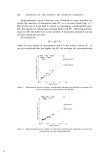
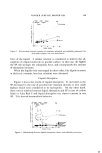
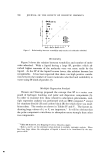
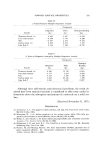
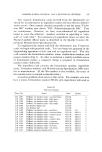
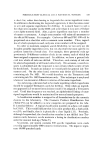
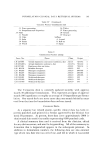
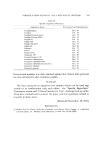
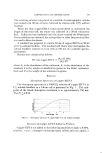
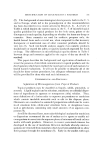
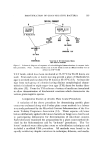
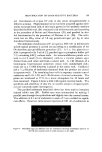
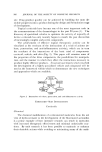
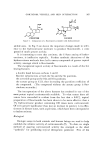
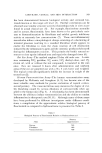
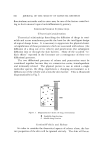
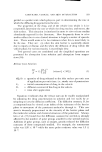
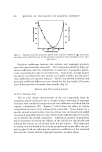
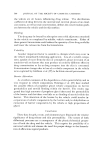
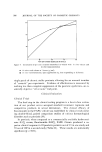
COPPER-EDTA DETERMINATION 547 The resulting solution was placed in a suitable chromatographic column and washed with 100 ml of water, followed by elution with 1.0% sodium bisulfate. When the blue copper-EDTA band moved down to one-fourth the length ot• the resin bed, the eluate was collected in a 50-ml volumetric flask. Collection was continued until the eluate reached the 50-ml mark. If any turbidity was obtained, the syringe filter or other fine porosity filter was used to filter the eluate. A standard was prepared to contain 30 mg ot• copper-EDTA in 50 ml of 0.1 70 sodium bisulfate. The standard and eluate were read against the sodium bisul[ate solution in 5-cm cells at 750 nm in a suitable spectro- photometer. Results were calculated as follows: Per cent copper-EDTA = (A,•) (S) (100) (As) where A•, is the absorbance of the unknown, As is the absorbance of the standard, S is the weight of standard in grams in the 50-ml volumetric flask, and U is the weight of the unknown in grams. RESULTS Absorption Spectrum of Copper-EDTA The absorption spectrum of a 0.0612% solution ot• copper-EDTA in 1% sodium bisulfate in a 5.0-cm cell is presented in Fig. 1. The mid- point of the broad absorption maximum is at approximately 750 nm. The E• % is 0.94. Wavelength , nm Figure 1. Absorption spectrum of copper-EDTA in 1% sodium bisulfate Recovery of Copper-EDTA Added to Products Copper-EDTA was added to the following materials to make a 0.30% solution: water. a shampoo containing lauryl sulfate and coco amine, a
Purchased for the exclusive use of nofirst nolast (unknown)
From: SCC Media Library & Resource Center (library.scconline.org)