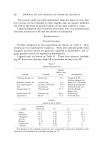
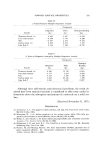
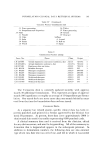
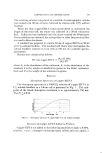
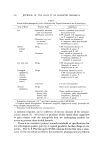
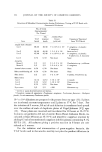
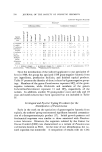
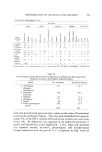
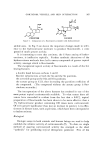
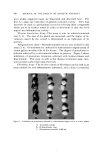
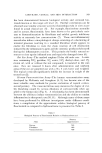
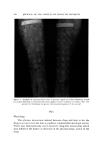
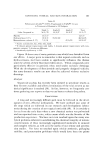
548 JOURNAL OF THE SOCIETY OF COSMETIC CHEMISTS silicone lotion, and a cream containing a gelling agent. These were assayed as described above. The results are given in Table I. Table I Recovery of Added Copper-EDTA Sample Recovery Aqueous solution 96.4, 101.8 99.1 Shampoo 96.4, 99.5, 99.0 98.3 Silicone lotion 101.9, 104.2 103.1 Gel cream 101.2, 98.8 100.0 Average recovery 100.0 DISCUSSION The recovery of copper-EDTA added to a variety of products (Table I) is satisfactory. It is quite probable that the use of other methods such as the determination of copper by atomic absorption following ashing might result in a greater precision. However, this type of approach would not result in a measure of the stability of the entire molecule. Batch technique is a relatively inefficient method of ion exchange. This technique was utilized in the work described above so that a single inethod could be used for a variety of products. If the product under in- vestigation is relatively free of interferences such as lipids and gels, a sample may be applied directly to the ion exchange column, thereby resulting in a significant saving of time. (Received December 13, 1971) REFERENCES (I) Gerstein, T., Personal communicati,on, November 1, 1970. (2) Martell, A. E., an,d Calvin, M., Chemistry o[ the Metal Chelate Compounds, Prentice Hall, Inc,, Englewood Cliffs, N.J., 1952, p. 538.

]. Soc. Cosrnet. Chem., 23, 549-564 (August 17, 1972) Methods for Isolating and Identifying Objectionable Gram-Negative Bacteria and Endotoxins from Topical Products j. R. EVANS, M.S., M. M. GILDEN, B.S., and C. •A •. BRUCH, Ph.D.* . Presented December 13-14, 1971, New York City Synopsis--Because the MICROBIAL CONTAMINANTS in TOPICAL PRODUCTS have been the cause o/ nosocomial infections, the detection of the presence of clinically impor- tant organisms has become an accepted aspect of industrial and regulatory microbiology for these products. Since 1968, 1550 GRAM-NEGATIVE isolates have been speciated from raw ingredients and finished products. The basic ISOLATION scheme employs a sterility test in a broth to ncutralize preservatives followed by isolation of specific microbial groups on selective enrichment media. Pseudomonas sp. represent 50% of the isolates, while Klebsiella sp. were the next most frcquently encountered (11%) group. INTRODUCTION Since October 1968, this laboratory group has speciated or char- acterized approximately 1650 microbial isolates, primarily gram-negative bacteria, from topical products and the manufacturing environments for such products. This laboratory activity has coincided with the increased concern over gram-negative bacteria as opportunistic pathogens. These organisms are now the major cause of sepsis and death in burn patients, in patients exposed to radical surgery or ionizing radiation, in patients undergoing drug therapy which modifies the leukocytic, inflammatory, *Drug Microbiology Branch, Division of Drug Biology, Food and Drug Administration, Washington, D.C. 20204. 549
Purchased for the exclusive use of nofirst nolast (unknown)
From: SCC Media Library & Resource Center (library.scconline.org)