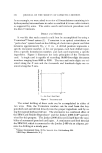
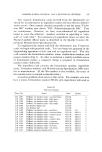
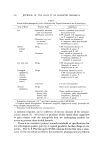
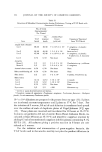
580 JOURNAL OF THE SOCIETY OF COSMETIC CHEMISTS the vehicle are all factors influencing drug release. The distribution coefficient of drug between the internal and external phases of an emul- sion system, as well as total concentration, defines the concentration gradi- ent between the vehicle and the skin surface. Binding The drug may be bound by adsorption onto solid adjuvants contained in the vehicle or complexed by soluble, vehicle constituents. Either of these general interactions could reduce the quantity of free drug available and lower the release rate from the formulation. Volatility Another important factor to consider is changes which may occur in the vehicle immediately following application. Loss of a volatile compo- nent, uptake of water from the skin or atmosphere, phase inversion of an emulsion--all are factors that may produce an entirely different effective drug concentration s.o far as drag transport into the skin is concerned. Concentration changes due to loss of a volatile component in the vehicle were exploited by Coldman et al. (22) to facilitate steroid penetration. Barrier A Iteration As a further ,extension of the dependence of skin penetrability and in vivo response to vehicle composition, Ostrenga et al. (27) have studied the possible effects of propylene glycol vehicle composition on barrier permeability and st.eroid binding within the barrier. The results sug- gested that high amounts of propylene glycol decreased the permeability of the barrier and that there was little or no binding of steroid within the barrier. This alteration of the barrier by the vehicle could involve in- corporation of vehicle components by the barrier and/or dehydration or extraction of barrier components by the vehicle at high proportions of glycol. Conclusion These data for gels, cream, and ointments have illustrated the relative significance of drug release and skin penetrability. The nature of both diffusional processes are a consequence of the physical-chemical proper- ties of both the drug and t,he vehicle. This negates the possibility of a universal vehicle and stresses the need for proper design in the formula- tion of efficacious topical products.

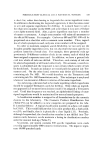
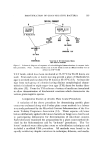
CORTICOID, VEHICLE, AND SKIN INTERACTION 581 VEHICLE-SKIN INTERACTIONS Vehicle Effects The human epidermis exists in a constant state of flux due to its in- teraction with the external environment. The temperature, relative hu- midity, and rate of movement ol/the air at the skin surface are probably the most important natural, external factors that influence the physical state of the skin. Application of a cream, lotion, ointment, or any phar- maceutical vehicle may induce changes in the skin that are reflected by an alteration in skin permeability. The mechanism by which a given ve- hicle may affect skin permeability most likely will involve one or more of the following: effect on the hydration state of the stratum comeurn, effect on the skin temperature, or solvent effects on the stratum comeurn. Hydration Idson has reviewed the effects of emollient creams and moisture on the skin (28). A water content of 10 to 20% must be maintained in the s[ratum corneum layer of the skin in order to maintain its normal softness and pliability. Below this critical level, the stratum corneum becomes brittle and readily cracks. This water deficiency in the cornified epi- thelium can only be remedied by restoring the normal water content. Fats and other oily materials do not alleviate this condition unless they are sufficiently occlusive to reduce the water loss into the air and permit the buildup of the moisture in the skin. The water-binding properties of stratum comeurn appear to resttit from the presence of certain water- soluble substances present in the horny layer (29). Occlusion It is recognized that maceration of the skin by soaking in water or by occluding the skin surface by covering with an impermeable material promotes drug absorption and reduces resistance to skin irritants. A topically applied vehicle has the potential to either increase or decrease the quantity of water in the upper layers of the epidermis. Powers and Fox (30) have shown that water-insoluble oily materials such as petro- latum, lanolin, and isopropyl myristate significantly retard the rate ot• loss of water from the skin surface while certain emulsifiers and humectants (e.g., propylene glycol and glycerin) increase the rate ot• moisture loss. It has been demonstrated in many studies that significant increases in permeability can be induced in vivo by increasing the hydration state
Purchased for the exclusive use of nofirst nolast (unknown)
From: SCC Media Library & Resource Center (library.scconline.org)