582 JOURNAL OF THE SOCIETY OF COSMETIC CHEMISTS normal human skin. For example, Wurster (31) found that the absorp- tion rate through human skin for a group of salicylate esters was greatest under hydrous conditions. The magnitude of the hydration effect on the penetration rates of the three compounds was proportional to the oil/ water distribution coefficients and water solubilities. The technique of using thin, plastic films as occlusive dressings for topically applied drugs has been exploited to the greatest extent with the topical corticosteroids. Scholtz (32) and other's have shown that this is a valuable new technique in improving the efficacy of corficosteroids in a number of dermatoses. McKenzie (8, 9) used the vasoconstriction ac- tivity of topically applied corticosteroids to demonstrate that the pene- tration of these compounds under occlusion was apparently 100-fold greater than that obtained by simple topical application. Temperature El•tects One can conclude from the evidence in the literature that there is a real and direct relationship between temperature and skin premeability, but temperature effects in topical therapy probably are of minor im- portance. It is true that a solvent which has a low boiling point will cool the skin as it evaporates. This effect is transitory, however, and the normal skin temperature is quickly restored after the liquid has com- pletely evaporated. An occlusive covering on the skin will tend to in- crease the skin temperature by a few degrees by preventing evapora- tion of sweat and also by reducing loss of heat by radiation. However, the permeability change produced by an increase in temperature by occlusion probably is slight relative to the permeability changes restfir- ing from increased hydration of the stratum comeurn. Penetration Enhancers The possibility that a safe, nontoxic substance might someday be found that can be used to temporarily abolish the barrier property of the skin is one that has intrigued clinical investigators (and chemical warfare experts) for many years. Such an agent would have obvious potential in the practice of dermatology. It would also open the door for the use of topically applied drugs to elicit systemic effects. We use the term "pene- tration enhancer" to apply to agents that apparently have a direct effect on the Pe?meab!lit•y of the skin barrier. While some substances ob- viously act by direct chemical insult on the skin, the exact mechauism by which others work is rather obscure. In many cases reported in the literature, the increased percutaneous absorption of drugs observed with

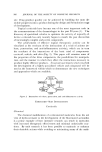
CORTICOID, VEHICLE, AND SKIN INTERACTION 583 concomitant use of penetration enhancers probably can be partially at- tributed to an action other than a specific barrier effect. It is extremely difficult to separate the effect of an agent on a single parameter, such as skin integrity, from its other effects on the drug and its delivery system. While a large number of materials have been reported to act as penetra- tion enhancers, only a few have been found that appear to significantly enhance penetration without severe skin damage or irritation. It should be noted that, from the standpoint of both effectiveness and safety, per- haps the best peneiration enhancer of all is water. The effect of skin hydration on percutaneous absorption has been previously discussed in this report. Since 1964, dimethyl sulfoxide (DMSO) has been exten- sively investigated as a potential penetration enhancer. It has been shown, in numerous in vitro and in vivo experiments, to enhance the percutaneous pentration of many drugs (33, 34). DMSO seems to exert its effect on skin permeability by producing structural changes, such as swelling of the stratum comeurn, and by possible replacement of water as the continuous membrane phase of the skin barri.er. The Shin The skin is an effective barrier to the penetration of a wide variety of substances. This barrier function is of the utmost importance in man's physiological adaptation to his environment and has obvious applications to the practical problems of topical therapy with drugs. The absorp- tion of drugs depends primarily upon their physical properties and, to a lesser degree, their chemical properties, as well as on the normal or ab- normal state of the skin. Absorption Pathways Penetration through the stratum corneum is not primarily inter- cellular or appendageal. The hydrated stratum corneum seems to be best described as a dense, effectively homogeneous phase into which small molecular weight, polar n, onelectrolytes dissolve with strong chemical interaction and through which diffusion occurs remarkably slowly. For substances which pen'etrate relatively rapidly, the major pathway through the skin for steady-state conditions is directly through the cells of the stratum corneum. The entire stratum corneum functions as the rate- limiting barrier in the skin. Once through the stratum comeurn, dif- fusion in the dennis increases rapidly. Percutaneous absorption of the steroids and probably other large molecules appears to occur via appendages as well as through the un-
Purchased for the exclusive use of nofirst nolast (unknown)
From: SCC Media Library & Resource Center (library.scconline.org)