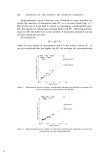
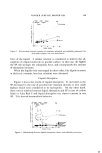
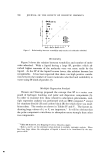
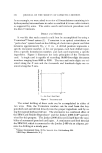
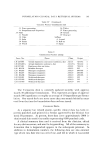
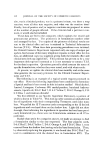
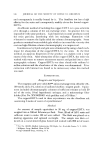
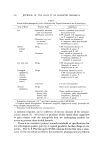
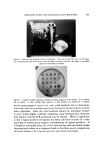
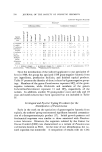
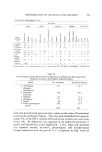
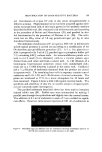
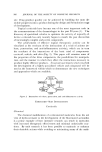
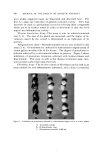
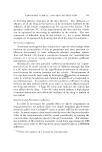
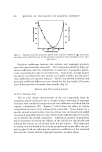
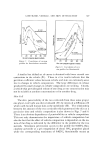
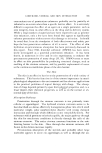
588 JOURNAL OF THE SOCIETY OF COSMETIC CHEMISTS Figure 10. Lidex (fiuocinonide) Cream 0.05% effective adjunctive therapy in psoriasis. Male, age 5•, psoriasis of 8 years' duration before (top) and after (bottom) •5 days' treatment with Lidex Cream 0.05% q.i.d. without occlusion

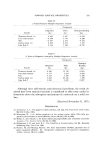
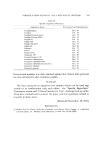
CORTICOID, VEHICLE, AND SKIN INTERACTION 589 concern if this presentation were made a few years ago. Although all are important factors which must be considered, they are certainly secondary to the primary goal of achieving optimal therapeutic efficacy. Attention has been directed to the interaction of the basic triad of components (corticoid, vehicle, and skin), their resultants (release, penetration, and interaction), and their cuhnination in a highly effective therapeutically active product. (Received December 13, 1971) REFERENCES (1) Vickers, C. F. H., Corticosteroids, Practitioner, 21/2, 43-51 (1969). (2) Doffman, R. I., Biological activity of topical corticoids, Brit. J. Dermalol., 82, Supp. 6, 45-8 (1970). (3) Lerner, L. J., Bianchi, A., Turkhcimer, A. R., Singer, F. M. and Borman, A., Anti-in- flammatory steroids: Potency, duration and modification of activities, Ann. N.Y. Acad. Sci., 116, 1071-7 (1964). (4) Ringlet, A., Activities of Adrenocorticosteroids in Experimental Animals and Man, in Dorfman, R. I., Methods in Hormone Research, Academic Press, New York, Vol. •1, 1964 pp. 234-80. (5) Berlincr, D., Biotransformation of corticostcroids as related to inflammation, Ann. N.Y. •Icad. Sci., 116, 1078-83 (1964). (6) Berliner, D., Gallegos, A. J., and Schneebeli. G. L., Early morphological changes pro- duced by anti-inflammatory steroids on tissue culture fibroblasts, J. Invest. Dermatol., 48, 44-9 (I•67). (7) Ruhmann, A. G., and Berliner, D. L., Effect of steroids on growth of mouse fibroblasts in vitro, Enctocrinology, 76, 916-27 (1965). (8) McKenzie, A. W., Percutaneous absorption of steroids, Arch. Dermatol., 86, 611-3 (1962). (9) McKenzie, A. W., and Stoughton, R. B., Method for comparing percutaneous absorption of steroids, Ibid., 86, 608-10 (1962). (10) Place, V. A., Burdick, K. H., and Giner Velazquez, J., Precise evaluation of topically ap- plied corticosteroid potency, Ibid., 101, 531-7 (1970). (11) Stoughton, R. B., Vasoconstrictor activity and percutaneous absorption ooe glucoeorti- costerolds, a direct comparison, Ibid., 99, 753-6 (1969). (12) Tregear, R. T., Physical Functions of Skin, Academic Press, Inc., New York, 1966. (13) Stougbton, R. B., Dimethyl sulfoxide induction of asteroid reservoir in human skin, Arch. Dermatol., 91,657-60 (1965). (14) Katz, M., and Poulsen, B. J., Absorption of Drugs Through the Skin, in Brodie, B., and Gillette, J., Handbook of Experimental Pharmacology, 28/1, Springer-Verlag, Berlin, 1971, pp. 104-62. (15) Faber, L., unpublished data, 1970. (16) Higuchi, T., Physical chemical analysis of percutaneous absorption process from creams and ointments, ]. Soc. Cosmet. Chem., 11, 85-97 (1960). (17) Scheuplein, R. J., Blank, I. H., Brauner, G. J., and MacFarlane, D. J., Percutaneous ab- sorption of steroids, ]. Invest. Dermatol., 52, 63-70 (1969). (18) Ostrenga, J. O., Significance of vehicle composition. I. Relationship between topical vehicle composition, skin penetrability, and clinical efficacy, ]. Pharm. Sci., 60, 1175-9 (1971).
Purchased for the exclusive use of nofirst nolast (unknown)
From: SCC Media Library & Resource Center (library.scconline.org)