890 JOURNAL OF THE SOCIETY OF COSMETIC CHEMISTS at 1220 cm -•. Excellent correlation of the method with the cationic titra- tion method was claimed over the range of 16-19%. It was reported that the method could also be used to determine sodium and triethanolamine salts of sulfated fatty alcohols. Schwarz (22) stated that the analyst must have some idea of the com- ponents to determine how to proceed with the shampoo analysis. He made use of the titrations of Epton (23) and Barr et al. (24) before and after acid hydrolysis, and the hydroxyl number of the fatty alcohol or the acid number of the fatty acid thus liberated. He advised the use of gas chro- matography to determine carbon-chain distribution of the acid or alcohol. He also discussed the practicality of column chromatography, solvent ex- traction, thin-layer and paper chromatography. An ir spectrum might be useful if the mixture is not too complex. A very serious problem to analysis of shampoos, he pointed out, is that the raw materials used in the surfactants are not l•ure. Schwarz stated that, in the analysis of shampoos, a compromise must be made between the cost and the expenditure of time and the desired results. It was Schwarz' opinion that often the results obtained are not worth the expenditure (22). Thin-layer chromatography (tlc) has been used for the separation of ionic and nonionic surfactants, free fatty alcohols, and free amines in shampoos (25). Other workers (26, 27) have used tlc for separating zinc l•yrithione from other shampoo ingredients. Gas chromatography has been used to determine triethanolamine lauryl sulfate (28) and free propylene glycol in shampoos (29). Fairchild (30) suggested a shampoo separation scheme in 1967. The sample was dissolved in water and extracted with petroleum ether. When the water in the aqueous fraction was reduced to a small amount, the cellu- lose precipitated out and could be removed from triethanolamine lauryl sulfate. The two fractions were then dried and determined quantitatively. The methylene blue test of Jones (31) was used to confirm the alkyl sulfate. Other identifications were made by ir spectroscopy. The petroleum ether-soluble components were separated on an alumina column with increasingly polar solvents. Infrared was used to identify the material eluted. The nonionic surfactants were eluted with some of the super- amide and soap in the ethanol fraction. Because of this, the scheme is not as complete as one would like, but it goes a long way toward solving some of the problems previously encountered. There is also some question about the completeness of the separations between some of the fractions. Perfumes in shampoos have been determined qualitatively and quanti- tatively by uv spectrophotometry (32).

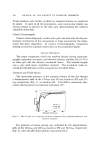
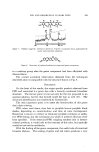
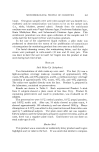
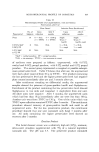
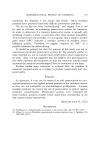
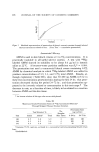
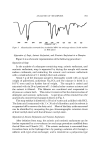
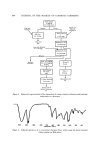
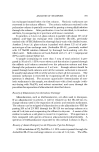
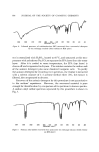
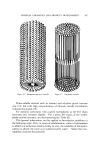
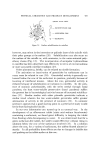
ANALYSIS OF SHAMPOOS 891 From the foregoing, one might conclude that there is no single univer- sal method which can be used to analyze all kinds of shampoos. A more rewarding approach, in our opinion, would be to use a combination of extraction and column chromatographic techniques to separate the in- gredients, without changing their chemical properties, and identifying the separated ingredients with some physical or chemical methods. Infrared spectroscopy appears to be the quickest tool for identification in most of the cases. PROPOSED METHOD OF SHAMPOO ANALYSIS The suggested procedure given below is one approach which might be taken to determine the composition of a shampoo: General Information by Examination of the Infrared Spectra of Solids A thin film of a partially dried sample (previously heated in a vacuum oven at 70 øC for 4 hours) is deposited on a (disposable) silver chloride optical window and the ir spectrum is recorded. Then, the ir spectrum of a water-free sample deposited as a thin film on a salt plate is recorded. Figure 2 is a representative spectrum of the water-free nonvolatiles from a commercial shampoo. The presence of polyols and many types of sur- factants can be recognized from the ir spectra of the sample. •.•oo •0o0 2500 2000 1800 1600 1400 1:200 1000 800 600 FREQUENCY (CM -I) Figure 2. Infrared spectrum of water-free nonvolatiles of a commercial shampoo (thin film on KBr plate) Quantitative Estimation of Total Soap and Anionic Sulfated (or Sulf onated) Surf actants The soap and artionic surfactants present are determined at an early stage of analysis to decide what further procedures to use. Absence of either soap or artionic surfactants may simplify the analysis by permitting
Purchased for the exclusive use of nofirst nolast (unknown)
From: SCC Media Library & Resource Center (library.scconline.org)