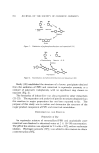
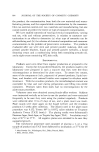
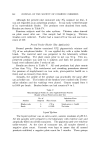
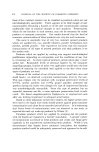
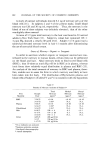
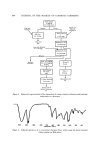
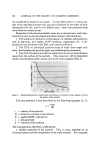
894 JOURNAL OF THE SOCIETY OF COSMETIC CHEMISTS Figure 4. I Sample I •n Na2CO 3 Ext. EtOEt-Acet.
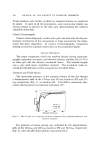
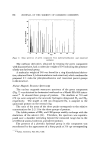
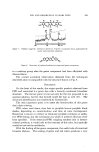
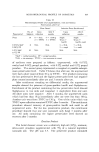
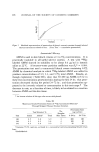
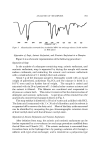
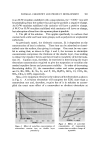
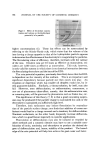
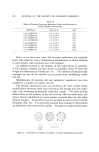
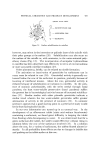
Dried Soap and Residue I Fdtrate Arnoinc and (norgenies Nonlomc I 1 Surfactants Ext CHCl 3 1,1 IPA-H20 I Fatty Acid I Amberlite IR-120 Stnp w•th 2•NaOH I In 1:1 IPA-H20 I Amberlite IR-45 Ion Exchange Effluent I I I Neut. with H2S041 Nonionic ISat. with Na2CO31 Surfactant ! at 60øC. I IPA Layer- Evap I 1:1 Ether-Acetone Purification Sodium Salt of Arnoinc Surfactant (It) Strip with 2N HCI I Evap to Dryness Alkanolamlne HCI (ir) Schematic representation of the separation of a soap, anionic surfactant, and nonionic surfactants in a shampoo 20OO 1goo 16oo FREQUENCY (CM -I) 14•3 1200 lo00 Figure 5. Infrared spectrum of a commercial shampoo from which soap has been removed (dried residue on KBr plate)

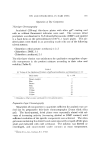
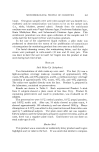
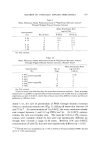
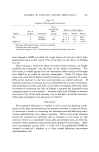
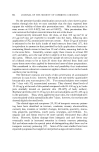
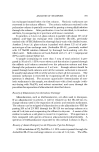
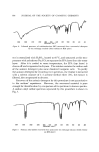
ANALYSIS OF SHAMPOOS 895 ion exchanger located below the first column. Nonionic surfactants are recovered in the column effluent. The artionic surfactant retained in the polyamine column is partially recovered by passing a strong alkali solution through the column. After purification it can be identified, in its sodium salt form, by comparing its ir spectrum with known materials. In practice, a 2.4-cm i.d. glass column is packed with about 125 ml of sulfonic acid-type ion exchange resin (Amberlite IR-120), previously washed with 1N HC1 followed by thorough back-wash with distilled water. Another 2.4-cm i.d. glass column is packed with about 125 ml of poly- amine-type of ion exchange resin (Amberlite IR-45), previously washed with 1N NaOH solution followed by thorough back-washing with dis- tilled water. Both columns are back-flushed with 2 1. of 1:1 isopropanol (IPA)-water mixture before use. A sample (containing no more than 3 •neq of total anionics) is pre- pared in 50 ml of 1: 1 IPA-water solvent and the solution is passed through the sulfonic acid column mounted over the polyamine column and then through the polyamine column at 2 ml/min. Enough solvent should be passed through both columns until all the nonionic surfactant is removed. It usually takes about 600 ml of the solvent to elute all the nonionics. The nonionic surfactant is recovered by evaporating off the solvent and its ir spectrum is obtained. For accurate quantitative determination of non- ionic surfactants in the sample, one should start with a fresh sample (with- out drying with Na•.COa and solvent extraction) and carry through the procedure for separation of alkanolamide described above. Recovery of Alkanolamine from the Cationic Exchanger Alkanolamines, such as triethanolamine, are often used in shampoos. If an alkanolamine is present, it will be retained on the IR-120 ion ex- change column used in the separation of anionic and nonionic surfactants. The column can be stripped of alkanolamine as the alkanolamine. HC1 by passing 200 ml of 2N HC1 through the IR-120 ion exchange column at a rate of 5 ml/min and evaporating the effluent to dryness. A smear of the residue is made on a salt plate to record its ir spectrum. This spectrum is then compared with spectra of known alkanolamine-hydrochlorides. A spectrum of triethanolamine separated by this method is shown in Fig. 6. Recovery of Anionic Detergent from the Polyamine- Type Ion Exchanger A 300-ml solution of 2% NaOH in 1: 1 IPA-water is passed through the Amberlite IR-45 ion exchange column at a rate of 3 ml/min. The efflu-
Purchased for the exclusive use of nofirst nolast (unknown)
From: SCC Media Library & Resource Center (library.scconline.org)