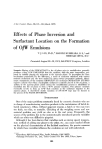
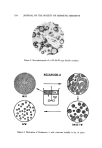
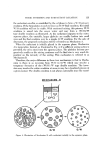
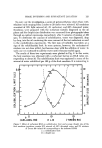
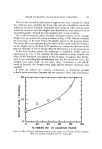
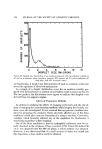
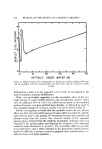
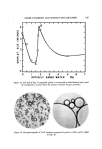
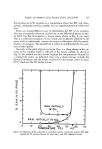
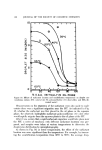
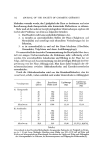
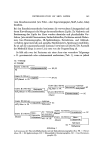
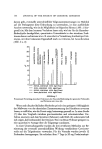
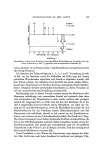
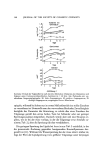
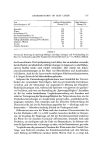
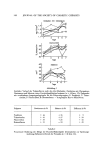
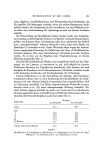
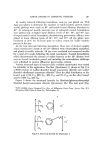
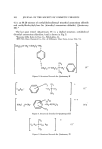
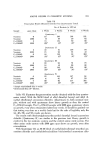
PHASE INVERSION AND SURFACTANT LOCATION 135 o re- 0 I I I t A o o I 2 25 4 5 6 7 INITIALLY ADDED WATER (%) Figure 12. Left end of Fig. 1.1 expanded (point A corresponds to solubilization limit point B corresponds to a point where the primary emulsion became unstable) Figure 13. Microphotographs of O/W emulsions prepared at points A (left) and B (right) in Fig. 12

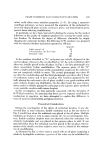
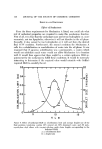
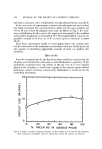
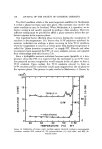
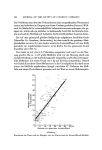
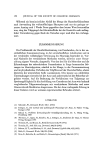
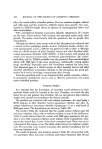
130 JOURNAL OF THE SOCIETY OF COSMETIC CHEMISTS The third condition which is the most important condition for Mechanism A is that a phase inversion must take place. This inversion may involve the entire emulsion or may be localized. When Mechanism A is operative, an in- tensive mixing is not usually required to produce a fine emulsion. However, sufficient mixing must be provided to effect a phase inversion before the sur- factant migrates to the aqueous phase. One important factor affecting phase inversion during the manufacture of emulsion is the temperature. It is known that O/W emulsions stabilized by nonionic surfactant can undergo a phase inversion to form W/O emulsions when the temperature is raised to a certain point. This limiting temperature is called the "phase inversion temperature" or simply PIT. Shinoda and other investigators have measured the PIT's of many nonionic systems and reported their relationships with other factors (7,8). Since a hydrophilic nonionic surfactant becomes more lipophilic at a tem- perature above the PIT, it is expected that the surfactant in an O/W emul- sion prepared at room temperature would migrate to the oil phase to form a W/O emulsion. Upon cooling, this W/O emulsion reinvert to form an O/W emulsion and the surfactant would again migrate from the oil phase to the aqueous phase. This process is quite similar to Mechanism A. Hence, by 20 • Iõ- o o I I I I I I I I TORQUE -• C• G. • 0 C 0 -.-RESISTAIIIIIII ' I 20 30 40 50 60 TEMPERATURE {*C) PIT I00 50õ o Figure 14. Calibration of torque meter readings against electrical resistance measurements (emulsion contains 30% mineral oil, 5% polyoxyethylene (6) oleyl ether, and 65% de- ionized water )
Purchased for the exclusive use of nofirst nolast (unknown)
From: SCC Media Library & Resource Center (library.scconline.org)