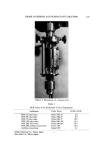
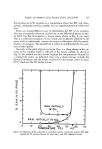
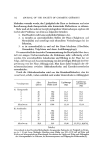
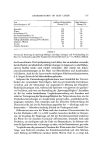
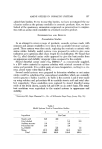
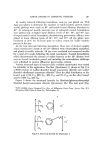
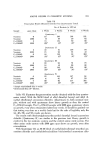
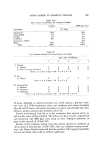
AMINE OXIDES IN GOSMETIG SYSTEMS Table VII Preservation Results Obtained with the Four Quarternaries Tested --- No.•f Bacteria (X 106)/ml 163 Sample ppm Quat 1 Week 4 Weeks 5 Weeks 8 Weeks _ -- Quaternary I Nonionic 0 18 106 109 121 Nonionic 2000 9 80 26 62 C•s DMAO 0 74 104 89 82 C•s DMAO* 2000 (0) • (0)" (0) • (0)" Quaternary II Nonionic 0 22 94 106 94 Nonionic 2000 15 92 56 43 C•8 DMAO 0 24 108 89 124 Cs DMAO" 2000 (0) • (0) • (0) • (0) • Quaternary III Nonionic 0 20 92 79 76 Nonionic 2000 12 40 29 20 C•s DMAO 0 16 102 116 90 C•, DMAO •' 2000 (0) •' (0) • (0)" (0) • Quaternary IV Nonionic 0 16 142 167 94 Nonionic 2000 4 61 67 54 c. r)M^o 0 is 02 1•4 •02 c. r)Mao ß 2000 (op (o) • (o)0 (o)0 Sample reinoculated after 4 weeks. Determined from 10 -• dilution. Table VII illustrates the preservation results obtained with the four quarter- naries tested. With the 50:50 blend of alkyl dimethyl benzyl and alkyl di- methyl ethylbenzyl ammonium chlorides (Quaternary I), both nonionic sam- pies, without and with quaternary show heavy growth as does the control C•s DMAO sample. The C•s DMAO sample with 2000 ppm quaternary shows no growth, even when reinoculated after four weeks. It should be pointed out that testing was done on a weekly basis but for the sake of legibility only the 1st, 4th, 5th, and 8th weeks are shown. The results with diisobutylphenoxyethoxyethyl dimethyl benzyl ammonium chloride (Quaternary II) are similar to the previous test. Heavy growth is evident in the two nonionic systems and the control amine oxide system. The other amine oxide system with 2000 ppm quat shows no growth, even after reinoculati.on. With Quaternary III, an 80:20 blend of methyldodecylbenzyl trimethyl am- monium chloride and methyldodecylxylylene bis(trimethyl ammonium chlo-

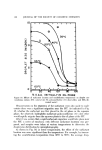
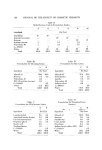
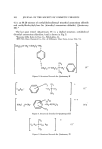
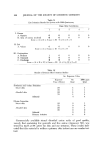
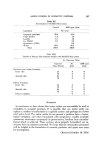
164 JOURNAL OF THE SOCIETY OF COSMETIC CHEMISTS ride), the results follow a familiar pattern. The two nonionic samples, without and with quat, and the control C•s DMAO system have growth. The quat- treated C•s DMAO sample shows an absence of microorganisms before and after reinoculation. With octyldodecyl dimethyl ammonium chloride (Quaternary IV) results are the same. Three systems, both nonionic and untreated amine oxide, show growth. The amine oxide formula with the quaternary has no growth after reinoculation. Although not shown, more recent work in this laboratory has indicated that a second system containing lanolin alcohol, acetylated lanolin alcohol, gly- cerol monostearate, and C•s DMAO was preserved with as little as 500 ppm total of a 50:50 mixture of alkyl dimethyl benzyl and alkyl dimethyl ethyl- benzyl ammonium chlorides (BTC 2125M ). A third system with mineral oil, stearic acid, glycerol monostearate, cholesterol, polyoxyethylene (24) choles- terol ether, and C•s DMAO emulsifier was also protected from microbiological attack with 1000 ppm of the same quaternary. Additionally, testing against fungi, specifically Aspergillis niger and Penicillium noraturn has been done. Two thousand ppm of a 50:50 mixture of alkyl dimethyl benzyl and alkyl dimethyl ethylbenzyl ammonium chlorides in the test system has given pro- tection for 8 weeks, including a reinoculation after 4 weeks. From the preceding work it was determined that readily available, relative- ly inexpensive quaternaries can be used as effective preservatives for amine oxide emulsified products. Irritation Studies It is essential that the formulators of cosmetics avoid substances in their products which would be harmful to the user. Therefore, we tested the skin lotion for eye and primary skin irritation. All eye and primary skin irritation studies were carried out according to the Draize methods. The product was evaluated with and without quaternary, the quat being a 50:50 mixture of alkyl dimethyl benzyl ammonium chloride and alkyl di- methyl ethylbenzyl ammonium chloride (Quaternary I) at a total level of 2000 ppm active. The formulations are shown in Table VIII. The results (Table IX) indicated that the control system without quat did not cause irritation, either with or without washout, in any of the rabbi.t eyes. Table X results showed that the system with 2000 ppm quaternary did pro- duce a very mild, transient irritation, some redness of the conjunctivae, clear- ing on the second day, in two of the three unwashed eyes. There was no in- volvement of the cornea or iris. The third rabbit showed no irritation whatso- ever. The eyes that were washed 4 seconds after product installation did not show any irritation at all. The results of primary skin irritation studies (Table XI) showed that with- out quaternary there was some erythema and eschar formarl.on after 24 and
Purchased for the exclusive use of nofirst nolast (unknown)
From: SCC Media Library & Resource Center (library.scconline.org)