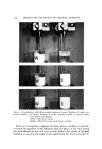
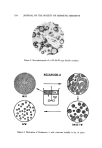
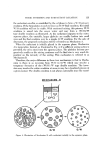
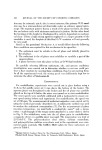
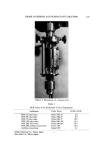
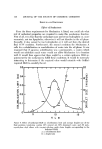
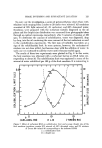
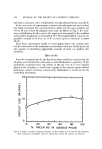
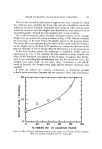
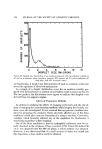
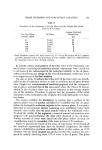
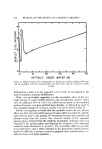
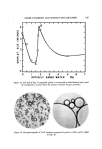
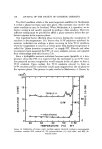
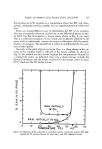
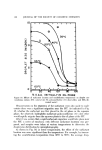
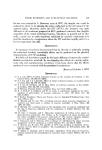
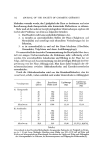
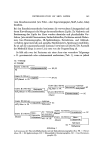
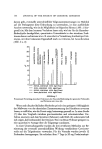
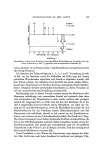
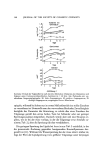
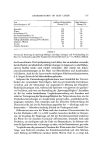
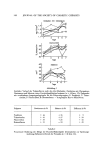
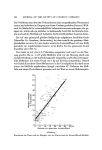
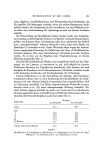
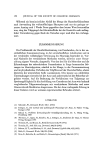
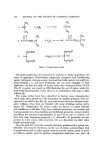
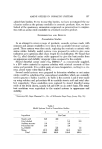
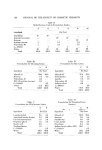
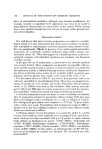
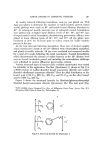
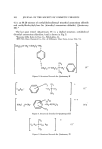
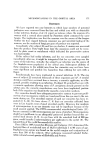
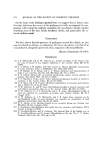
PHASE INVERSION AND SURFACTANT LOCATION 123 cation could affect many emulsion properties (1-3). By using a successive centrifuge technique, we have measured the migration of the surfactant be- tween the dispersed phase and the continuous phase, and found it to be an im- portant factor affecting emulsification. In particular, we have been interested in finding the reasons for the marked difference in the quality of emulsions produced by varying the initial surfac- rant location. To illustrate the degree of difference obtainable by simply changing the surfactant location, the following O/W emulsion was prepared with two identical beakers and mixers operated at 150 rpm. % by Wt. Light mineral oil 30 P•lyoxyethylene (6) oleyl ether 5 Deionized water 65 100 In the emulsion identified as "W," surfactant was in .tiallv dispersed in the aqueous phase whereas in the one identified as "0," the polyoxvethylene oleyl ether was initially placed in the oil phase. In Fig. 1, the first photograph was taken immediately before emulsification. The aqueous phase of the "W" shows a slight turbidity because at the concentration employed, the surfactan* was not completely soluble in water. The second photograph was taken 60 sec after the emulsification and the third photograph was taken after 2 hours of continuous mixin• and % hour standing. The emulsion prepared by ini- tially placing the surfactant in the oil phase yielded a very good emulsion with quite uniform droplet size distribution. On the other hand, the same formu- lation made by initially placing the surfactant in the aqueous phase produced a very unstable emulsion with coarse droplets. In this investigation, we were primarily concerned with the formation of O/W final emulsions. By assuming that there are two separate emuls ficat on mechan sms in operation, we have attempted to explain this difference in terms of aqueous solubilization and phase inversion. Theoretical Consideratior•s During the investigation of the effects of surfactant location, it was dis- covered that, in some instances, double emulsions such as the one shown in Fig. 2 would form when the surfactant was placed in the oil phase. Multiple emulsions are known to exist in many systems (4). In our investigation, how- ever, double emulsion droplets were not observed when the surfactant was relatively hydrophilic and was placed in the aqueous phase to start. It was speculated that when the surfactant was first placed in the oil phase, the for- mation of the double emulsion might in some way be related to the mechan- ism of emulsification. As illustrated in Fig. 3. when water is mixed with an oil phase containing a relatively hydrophilic surfactant, a port'on of the water can be solubilized by

124 JOURNAL OF THE SOCIETY OF COSMETIC CHEMISTS Figure 2. Microphotograph of a (W/O)/W t.vpe double emulsion o/w (w/o) / w Figure 3. Illustration of Mechanism A •vith surfactant initially in the oil phase
Purchased for the exclusive use of nofirst nolast (unknown)
From: SCC Media Library & Resource Center (library.scconline.org)