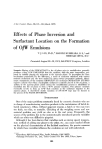
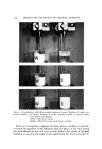
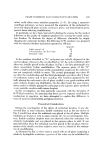
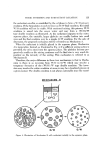
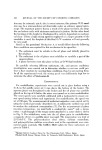
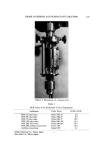
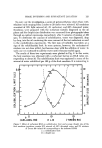
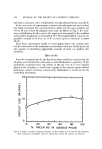
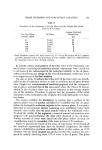
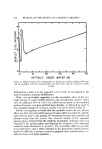
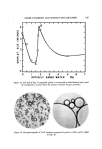
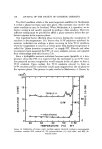
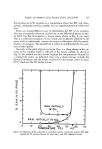
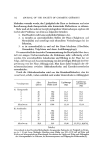
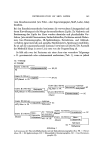
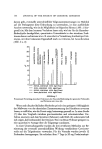
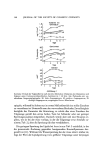
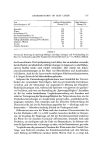
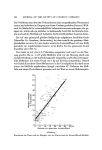
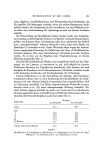
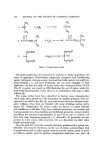
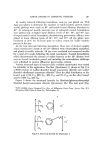
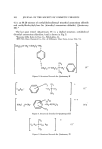
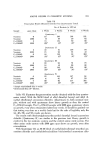
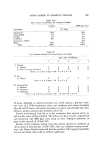
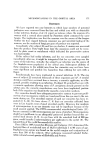
PHASE INVERSION AND SURFACTANT LOCATION 137 first heating an O/W emulsion to a temperature above the PIT and subse- quently cooling the emulsion rapid]y, one can expect formation of a fine emul- sion. There are several different ways of determining the PIT of an emulsion. One may measure the electrical conductivity or use differential thermal analy- sis (9,10). For this investigation, a torque meter, shown in Fig. 5, was used. This is a relatively inexpensive device which can be directly attached to the mixer shaft to continuously monitor the torque on the mixer while the emulsi- fication is in progress. The emulsification system is not disturbed by the pres- ence of other probes. Normally, at the point of phase inversion, there is a sharp change in the vis- cosity of the emulsion which is reflected in the torque reading. As shown in Fig. 14, this method was first checked against the measurements obtained by a conductivity meter. As indicated, there was a sharp increase of both the electrical resistance and the torque measured by the torque meter at about 57 ø C, which was the PIT of this system. S.A.A. INITIALLY • IN OIL O0 I0 20 30 40 50 ? 60 70 TEMPERATURE (*C) PIT Figure 15. Migration of the surfactant in emulsified systems (emulsions contain 30% light mineral off, 5% polyoxyethylene (6) oleyl ether, and 65% aleionized water)

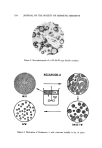
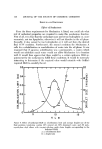
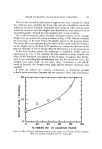
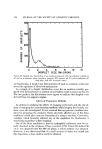
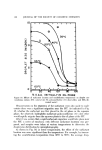
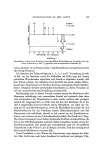
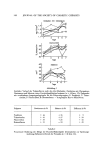
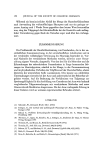
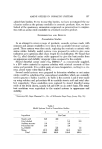
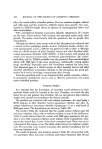
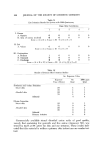
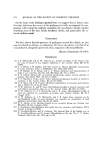
138 JOUBNAL OF THE SOCIETY OF COSMETIC CHEMISTS 15 Lfl N 55'C 60øC 0 2-0 40 60 % S. AA. 30øC INITIALLY IN OIL PHASE Figure 16. Effects of suffactant location and emulsification temperature on droplet size (emulsions contain 30% mineral oil, 5% polyoxyethylene (6) oley] ether, and 65% de- ionized water) Measurements on the migration of the surfactant were also made to make certain there was a significant migration near the PIT. As indicated in Fig. 15, whether the surfactant was first placed in the oil phase or the aqueous phase, the relatively hydrophi]ic surfactant po]yoxyethylene (6) oleyl ether would rapidly migrate from the aqueous phase to the oil phase at the PIT. After it was certain that a rapid surfactant migration would take place near the PIT, a series of emulsions with different surfactant locations was pre- pared, and samples were taken at various temperatures to determine the droplet size distribution by microphotography. As shown in Fig. 16, at lower temperatures, the effect of the surfactant location was more significant than the temperature. For example, by increas- ing the emulsification temperature oerom 30'C to 55'C, the average drop-
Purchased for the exclusive use of nofirst nolast (unknown)
From: SCC Media Library & Resource Center (library.scconline.org)