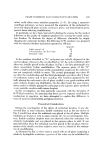
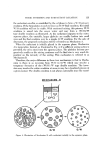
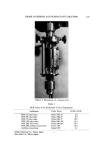
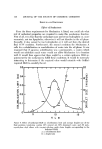
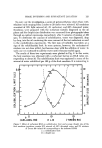
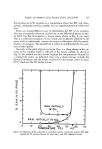
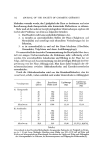
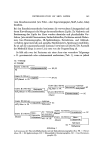
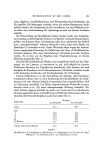
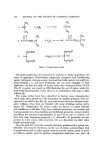
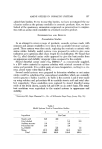
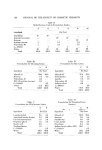
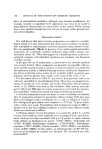
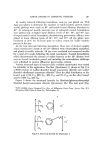
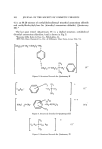
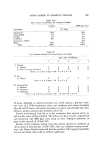
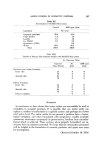
AMINE OXIDES IN COSMETIC SYSTEMS 161 At weekly intervals following inoculation, each jar was plated via TGE Agar pour plates to determine the numbers of viable bacteria present. Initial weekly platings were made at 104 and tenfold serial dilutions therefrom to 10 '6. At subsequent weekly intervals, jars of untreated control formulations were plated only at higher serial dilution levels of 10 -4, 10 -5, and 10 -6. Jars of experimental treated formulation demonstrating preservation efficacy were plated at lower dilution levels of 104, 10 -2, and 10 -a. All the plates were incubated at 37øC for 7g hours prior to colony counts for viable bacteria present in the jars. At the four intervals following inoculation, those jars of treated samples which showed zero counts at the 10 -• dilution were reinoculated, incubated, and plated at weekly intervals. All jars were incubated and examined weekly for a total of 8 weeks following the intial inoculation. Treated formulations which demonstrated the absence of viable bacteria at the 10 '• dilution level over an 8-week incubation period and including the reinoculation challenge were adjudged to contain efficacious preservation systems. Various structural types of commercially available quaternaries were tested for suitability in this application. The first (Quaternary I), shown in Fig. g, is a 50:50 mixture of n-alkyl dimethyl benzyl ammonium chloride and n-alkyl dimethyl ethylbenzyl ammonium chloride.* Here the alkyl distribution on the benzyl quat is 5% C12 , 60% C•4, 30% C•6, and 5% C•s on the ethyl benzyl quat it is 68% C•2, 32% Figure 3 shows the structural formula for diisobutylphenoxyethoxyethy] dimethyl benzyl ammonium chloride (Quaternary II).? The next quat (Fig. *BTC 2125M, Onyx Chemical Co., Div. of Millmaster Onyx Corp., Jersey City, N.J. pHyamine 1622, Rohm & Haas Co., Philadelphia, Pa. -•-CH 2 - CH3 • CH 3 Figure 2. Structural formula for Quaternary I

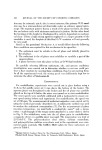
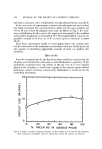
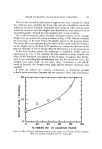
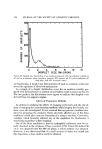
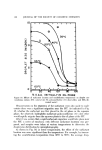
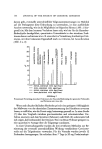
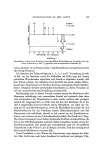
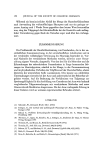
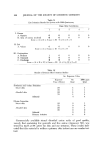
162 JOURNAL OF THE SOCIETY OF COSMETIC CHEMISTS 4) is an 80:20 mixture of methyldodecylbenzyl trimethyl ammonium chloride and methyldodecylxylylene bis (trimethyl ammonium chloride) (Quaternary III).* The last quat tested (Quaternary IV) is a dialkyl structure, octy]dodecyl dimethyl ammonium chloriden,•' and is shown in Fig. 5. *Hyamine 2389, Rohm & Haas Co., Philadelphia, Pa. ?BT.C '812, Onyx Chemical Co., Div. of Millmaster Onyx Corp., Jersey City, N.J. •CH 3) 2 CH- CH2 -C (CH 3) 2 -CH2 I o CH 3 • (CH2) 2 -0- (CH2) 2 -•' [-CH2- CH 3 Figure 3. Structural formula for Quaternary II C12H25- -CII2-•-CI{ 3 •H 3 (CH ) 3N-CH2- C12H25 -CH2-N(CH3) 3 CH 3 Figure 4. Structural formula for Quaternary III 8 H17-•-C12 H25 CH 3 Figure 5. Structural formula for Quaternary IV ++
Purchased for the exclusive use of nofirst nolast (unknown)
From: SCC Media Library & Resource Center (library.scconline.org)