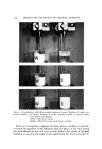
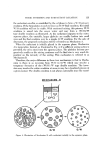
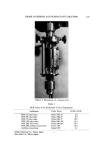
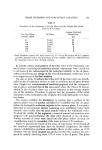
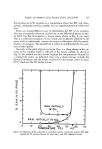
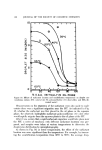
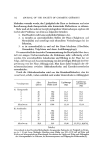
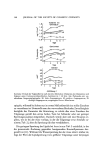
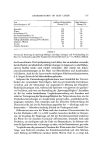
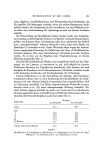
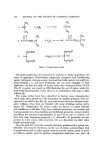
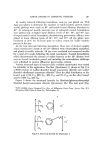
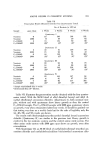
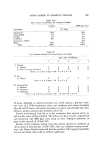
PHASE INVERSION AND SURFACTANT LOCATION ß .'.q.•.'•i• •. ' ß .•' ...: . . •.. ß Figure 5. Photograph of a torque meter Table I HLB Values of the Suffactants Used in Experiments Surfactants Trade Name Gri•n's HLB 127 POE (2) oleyl ether POE (6) oleyl ether POE (7) oleyl ether POE (10) oleyl ether POE (20) oleyl ether POE (20) sorbitan monooleate Sorbitan monooleate _ Nikko Chemical Co., Tokyo, Japan Kao-Atlas Co., Tokyo, Japan Nikkol BO-2 a Nikkol BO-6 a Ni'kkol BO-7 a Nikkol BO-10 a Nikkol BO-20 a Tween 80 t' Arlacel 80 •' 4.9 9.9 10.7 12.4 15.3 15.0 4.3

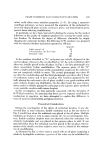
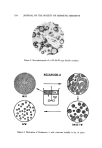
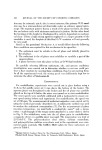
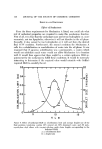
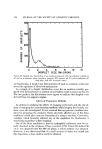
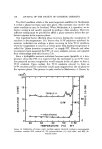
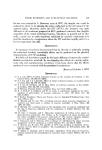
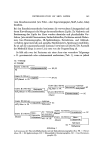
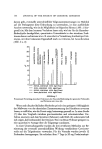
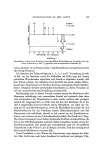
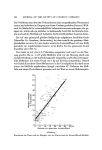
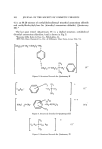
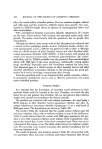
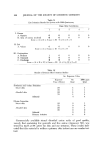
19.8 JOURNAL OF THE SOCIETY OF COSMETIC CHEMISTS PtESULTS AND DISCUSSION Effect o[ Su•actants From the three requirements for Mechanism A listed, one could ask what sort of surfactant properties are required to make this mechanism function. First of all, it is clear that the surfactant must not be too hydrophilic or, more accurately, not too lipophobic otherwise it will not dissolve in the oil phase. Secondly, it also cannot be too hydrophobic or it will not form the desired final O/W emulsion. Furthermore, the second condition for Mechanism A calls for a solubilization or emulsification of water into the oil phase. It was reasoned that if aqueous solubi]ization was a prerequisite, a system which would not solubilize much water would not allow Mechanism A to function well. It would then appear that there might be a certain optimum HLB re- quirement for the surfactant to fulfill these conditions. It would be extremely interesting to determine if the required value would coincide with Grifiln's required HLB to emulsify the oil. 0.5 0.2 0 0 I [ ! •''1 I I I I I 'l I ' I 5 I0 15 H L B 2O Figure 6. Effect of surfactant HLB on solubilization limit and average droplet size of the final emulsion (emulsions contain 36% mineral oil, 60% deionized water, and 4% poly- oxyethylene oleyl ethers with varying ethylene oxide chain lengths corresponding to the indicated HLB) /x = solubilization limit O = droplet size
Purchased for the exclusive use of nofirst nolast (unknown)
From: SCC Media Library & Resource Center (library.scconline.org)