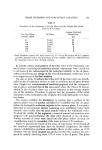
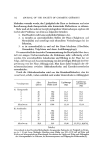
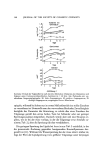
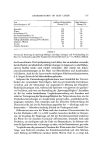
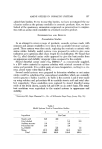
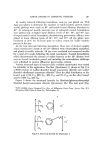
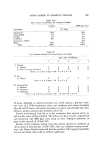
AMINE OXIDES IN COSMETIC SYSTEMS 157 added their burden. To try to ease this burden, we have investigated the use of amine oxides as the primary emulsifier in cosmetic products. Also, we have looked at the quaternary ammonium compounds as preservatives in con]unc- tion with an amine oxide emulsifier in a finished cosmetic product. EXPERIMENTAl. AND RESULTS Formulation Studies In an attempt to cover a range of products, cosmetic systems made with nonionic and anionic emulsifiers were taken from available literature and pre- pared. These systems were then made, replacing the nonionic or anionic with amine oxides. Initially, model systems were prepared in order to give some indication as to optimum alkyl chain length for emulsification. We found that the C•s alkyl dimethyl amine oxide appeared to give the best results from an appearance and stability viewpoint when compared to the controls. Stearyl dimethyl amine oxide (C•s DMAO),* as commercially supplied, is a 25% active material in aqueous soluti.on with minimal amounts of free amine and peroxide. It is a white paste at room temperature, me]ting to a vis- cous, almost water white fluid at 50 øC. Several model systems were prepared to determine whether or not amine oxides could be substituted for conventional emulsifiers which are currently used in practice (Tables I and II). In Table I, the controls i and 3 were made up using s.orbitan and polysorbate 60 to emulsify stearic acid and cetyl alco- hol, respectively. These emulsifiers were replaced by stearyl dimethyl amine oxide at the levels shown, namely 2.5 and 1.0% on an active basis. The resul- tant emulsions were equivalent to the control systems in appearance and stability. *Ammonyx SO, Onyx Chemical Co., Div. of Millmaster Onyx Corp., Jersey City, N.J. Table I Model Systems Used in Formulation Studies 1 2 3 Ingredient Per Cent Stearic acid 8.0 8.0 Cetyl alcohol ...... •](• •](• Sorbitan stearate 9..0 ... 9..0 ... Polysorbate 60 3.0 3.0 ... C• DMAO ... •'.• ... 1.0 Water 87.0 89.5 90.0 94.0 Total 100.0 100.0 100.0 100.0

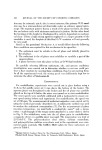
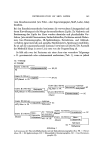
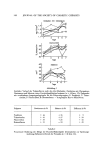
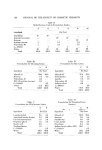
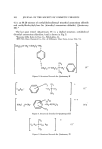
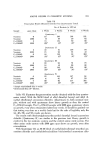
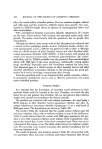
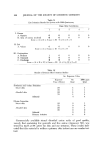
158 JOURNAL OF THE SOCIETY OF COSMETIC CHEMISTS Table II Model Systems Used in Formulation Studies 5 6 7 8 9 Ingredient Per Cent Petrolatum 10 10 ......... Isopropyl myristate ...... 10 10 ... Beeswax ............ 10 Sorbitan stearate 3 ... 1.5 ... 1.5 Polysorbate 60 2 ... 3.5 ... 3.5 C• DMAO ... 1 ... I ... Water 85 89 85 89 85 Total 100.0 100.0 100.0 100.0 100.0 1 89 100.0 Table III Table IV Formulation for Cleansing Cream Formulation for Skin Lotion A B C Ingredient Per Cent Ingredient _ Mineral oil 50.0 50.0 Mineral oil Beeswax 7.0 7.0 Cetyl alcohol Polysorbate 40 2.0 ... Lanolin PEG 20 sorbitan beeswax 8.0 ... Polysorbate 80 C• DMAO ... 2.5 Sorbitan oleate Water 33.0 40.5 C•, DMAO Total 100.0 100.0 Water Total Per Cent 35.O 35.O 1.0 1.0 1.0 1.0 5.4 ... 2.6 ... 2.5 100.0 100.0 Table V Formulation for TEA Stearate Lotion E F Ingredient Per Cent Lanolin alcohol 5.0 5.0 Acetylated lanolin alcohol 2.0 2.0 Glycerol monostearate 1.0 1.0 Propylene glycol 1.0 1.0 Stearic acid 5.0 ... Triethanolamine 1.0 C,, DMAO ... •'.• Water 85.0 88.5 Total 100.0 100.0 Table VI Formulation for Cleansing Cream (Anionic) Ingredient Mineral oil Beeswax Paraffin wax Cetyl alcohol Petrolatum Sodium lauryl sulfate (30%) C• DMAO Water Total G Per H Cent 52.0 52.0 5.6 5.6 5.0 5.0 3.0 3.0 8.4 8.4 10.0 ... ... 2.5 16.0 23.5 100.0 100.0
Purchased for the exclusive use of nofirst nolast (unknown)
From: SCC Media Library & Resource Center (library.scconline.org)