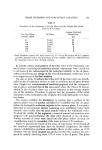
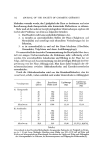
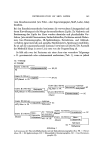
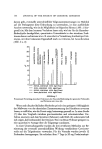
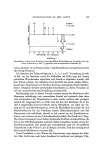
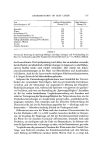
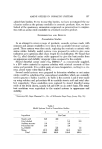
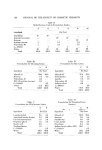
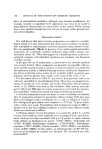
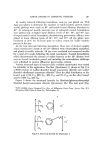
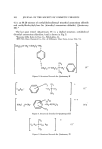
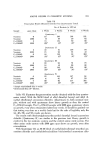
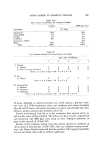
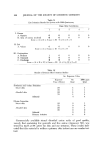
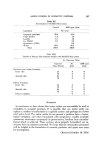
AMINE OXIDES IN COSMETIC SYSTEMS 159 In model systems 5-10 (Table II), petrolatum, isopropyl myristate, and beeswax, respectively, were emulsified using 1% active C1• DMAO (systems 6, 8, and 10) in place of a combination of sorbitan stearate and polysorbate 60 at a total 5% active level, as shown in systems 5, 7, and 9. Since the results of this work looked encouraging, we then investigated more complex systems which had combinations of ingredients. Again C•s DMAO was used as the sole emulsifier. In the simple cleansing cream shown in Table III, made from mineral oil and beeswax, C•s DMAO (formula B) replaced the polysorbate 40 and poly- ethlene glycol 20 sorbitan beeswax emulsifiers of formula A. The finished product retained its consistency and stability when compared to the control, and 2.5% active amine oxide was used as compared to 10% active emulsifier level in the control. A skin lotion (Table IV) containing mineral oil, cetyl alcohol, and lanolin had 8.0% total active of polysorbate 80 and sorbitan oleate in formula C re- placed with 2.5% active C•s DMAO, as shown in formula D. In this system we also found that the active level of amine oxide could be lowered to 1% while still retaining stability. In Table V, formula E is a TEA stearate lotion containing lanolin alcohol, acetylated lanolin alcohol, and glycerol monostearate. As shown in formula F we again used 2.5% active C•s DMAO in place of the soap. Formula G in Table VI is an anionic cleansing cream in which 3% active sodium lauryl sulfate was used to emulsify mineral oil, beeswax, paraffin wax, cetyl alcohol, and petrolatum. Again, 2.5% active C•s DMAO was substituted and an excellent emulsion resulted as listed in formula H. In preparing the control systems, conventional manufacturing procedures were followed. We blended the oil phase ingredients, heating until all solid constituents were melted, and maintained the temperature at 65øC. The water phase was heated to 70øC and added to the oil phase. Nonionic emulsifiers were included in the oil phase. Where soap prepared in situ was the surfactant, the stearic acid was included in the oil phase and triethanola- mine in the water phase. Sodium lauryl sulfate was included in the water phase in the one system in which it was used. In working with the amine oxides we added the amine oxide to the aqueous phase, and heated it to 65øC to melt and solubilize the amine oxide. The water phase was then added to the oil phase. The pH was adiusted to 7.0 in all systems except the soap-based controls. Our work has shown that optimum restfits are achieved with stearyl di- methyl amine oxide, although there undoubtedly are systems where other alkyl chain lengths or structural types may be best. It was found that cetyl dimethyl amine oxide had utility, and that blends of lower amine oxides (C•2, for example) could be used with C•s DMAO to modify properties such as viscosity. These amine oxides can be used in

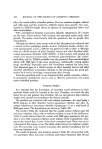
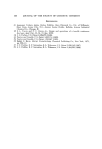
160 JOURNAL OF THE SOCIETY OF COSMETIC CHEMISTS place of conventional emulsifiers, although some formula modification, for example, viscosity or ingredient level adiustment, may have to be made to bring physical characteristics to match those of the control. When starting from a new product concept however, the use of amine oxides presents new areas of investigation. Preservation Studies It is well known that most cosmetic preparations are subject to microbio- logical attack. It is also documented that oil-in-water emulsions are particu- larly susceptible to contamination and those prepared using nonionic emu]si- tiers are exceptionally difficult to preserve. Even well-accepted preservative compounds are occasionally rendered ineffective when sudden massive con- tamination occurs (6). When this happens in a finished product, recall is ne- cessitated, company and individual reputations are tarnished, and thousands of dollars are lost. In the past, the use of quaternaries as preservatives for cosmetic products was severely limited. These compounds are generally incompatible with an- ionics and the amount of quat to nonionic in nonionic systems is so small that the quaternary activity is inhibited through nonionic interference. Experience has shown us that the amine oxides do not markedly inhibit quaternary per- formance and two patents were issued on the basis of this work (7, 8). The skin lotion shown in Table IV was known from previous work to be extremely susceptible to microbiological attack. This lotion was prepared con- sisting of mineral oil, cetyl alcohol, and lanolin. Polysorbate 80 and sorbitan oleate, or C•s DMAO were used as the emulsifiers. Both systems were pre- pared with 0 and 2000 ppm of various quaternaries and tested for preserva- tion capabilities. Testing was carried out using the following procedure. A microbial background count was made on each formulation immediately after its preparation and prior to preservation efficacy testing. TGE Agar pour plates were prepared with 1-ml aliquots of a •0 and •A00 dilution of formula- tion. Background pour plates were incubated at 37øC for 72 hours before colony counts were made. Formulations with background counts of 1000 or- ganisms/ml or less were adjudged adequate for preservation efficacy testing, which was carried out as follows: A 100-gram aliquot of each formulation was aseptically added to a sterile 8-ounce wide-mouth jar three replicates were so prepared from each formu- lation. Each jar was then inoculated with 5 ml of pooled •A0 sterile nutrient broth cultures of Staphylococcus aureus (ATCC #6538), Escherichia coli (ATCC # 11229), Pseudomonas aeruginosa ( ATCC# 10145), Enterobacter aerogenes (ATCC #13048), Proteus mirabills (ATCC #9921), and Bacillus cereus (ATCC #6462). In this matter, an initial inoculum of 106-107 bac- teria/ml of inoculated iar content was obtained. The inoculated jars were stored at 25øC.
Purchased for the exclusive use of nofirst nolast (unknown)
From: SCC Media Library & Resource Center (library.scconline.org)