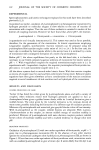
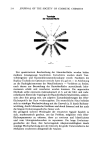
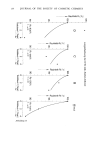
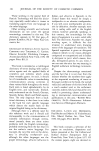
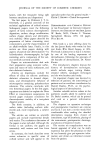
188 JOURNAL OF THE SOCIETY OF COSMETIC CHEMISTS O O 'r lOO 90 80 70 60 50 40 30 20 lO o -lO -2o -30 -30 -20 -10 ß ß ß ß ß ß ß ***** , / * * ! I I I I I [ I I ! I I i 0 10 20 30 40 50 60 70 80 90 100 % REDUCTION AT 0% RH Figure 6. A scattergram of per cent reduction in Trans Film Moisture Loss rate at 20% plotted against the rate of 096 for the same samples. this line such that the percent reduction in TFML at 209/0 RH is greater than that at 0% RH. This is most likely due to the effect of relative humidity on the untreated film and decreasing gradient on the product. The net combination of effects could explain this result. A few samples fall quite far below the line, indicating an increase in the percentage of reduction of trans film moisture loss with increased relative humidity. This may be due to plasticization of the product film by the water in the air stream. CORRELATION OF IN VIVO AND IN VITRO RESULTS To date, we have evaluated a few products both in vitro and in vivo [measured as in (1)]. Figure 7 shows the correlation observed. We do feel that ultimately, even though this correlation is quite high, a good in vitro performer should be evaluated in vivo. In the past, our in vivo measurements (1, 11) have been made on the medial forearm which normally has a rate of 0.2 to 0.4 mg/cm2/hr. Figure 3 shows that these results correlate with the in vitro results there is a much lower % reduction, however, in the case of the in vivo results. We feel that this is most likely due to the lower base rate in this area. In addition, we have never seen dry skin in this area. We feel that movement of the in vivo test to a higher rate area such as the back of the hand, which is also a dry skin area, may provide a better test site.

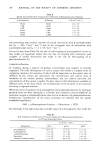
TRANSEPIDERMAL MOISTURE LOSS 189 lOO 80 I:J 60 c -I o :• 4o l • 2o o ro=0.90 Go =0.97 -20 -20 0 20 40 60 80 100 % REDUCTION IN VlVO Figure 7. The per cent reduction determined at 0% RH (©) and 20% RH (&) in vitro as a function of the percent reduction determined at 0% RH in vivo. R = correlation coefficient. CONCLUSIONS We have described an in vitro method for evaluating the occlusivity of materials, and have shown its temperature and relative humidity dependency. In our hands, this has proved to be a useful screening tool to be used before attempting in vivo experimenta- tion with a product. The method appears to correlate well with in vivo studies results suggest, however, that moving the in vivo test site to a true dry skin site such as the hand could be advantageous in evaluating the real occlusive potential of products and materials. We have also shown that products can respond differently under the influence of different relative humidities. REFERENCES (1) G. R. Berube and M. Berdick, Transepidermal moisture loss. II. The significance of the use thickness of topical substances. J. Soc. Cosmet. Chem., 25,397-406 (1974). (2) D. Spruit and K. E. Malten, Water vapour loss and skin barrier. An evaluation of some new findings, Trans. St. John's Hosp. Dermatol. Soc., 57 167-176 (1971). (3) D. Spruit and H. E. Herweyer, The ability of the skin to change its insensible perspiration, Dermatologica, 134, 364-70 (1967). (4) K. A. Grice, H. Sattar, M. Sharratt and H. Baker, Skin temperature and transepidermal water loss,J. Invest. Dermat., 57, 108-110 (1971).
Purchased for the exclusive use of nofirst nolast (unknown)
From: SCC Media Library & Resource Center (library.scconline.org)