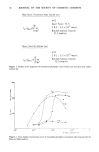
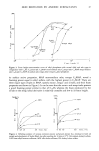
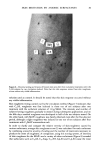
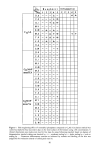
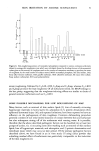
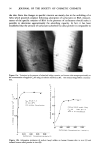
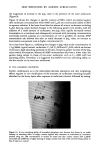
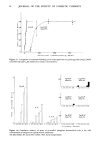
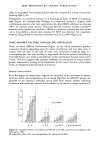
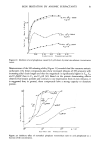
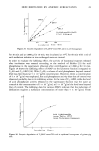
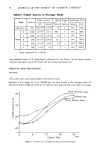
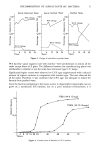
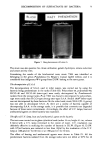
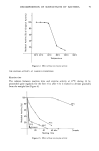
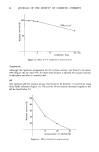
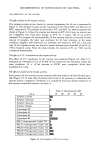
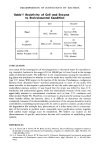
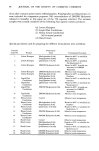
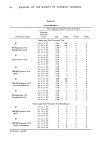
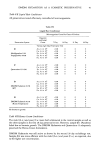
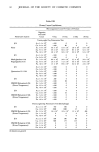
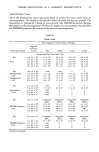
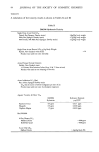
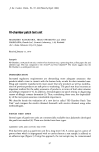
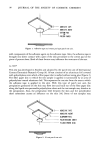
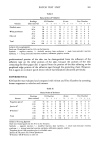
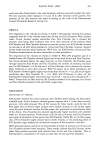
SKIN IRRITATION BY ANIONIC SURFACTANTS 55 the magnitude of increase in the [trip value in the presence of the same surfactants (Figure 9). Figure 10 shows the changes in specific rotation of BSA, which are plotted against their surfactant concentrations when MAP and C•0AS are continuously added to BSA in aqueous solution. It has been found that for almost all anionic surfactants including C•0AS, the [cr]D values showed changes in the following pattern (13) initially, with the addition of a small amount of surfactants, the [cr]• value rapidly decreased toward levorotation to a minimum and subsequently increased with increasing concentrations and finally reached a plateau at a concentration of 1.0-1.5 g/100ml. In contrast, MAP monosodium salt showed that after an initial decrease in [cr]• value, no increase in levorotation was present even at higher concentration (1). As is clear from Figure 11, exhibiting the changes in [cr]• value at the concentration of 1.5 g/100ml, typical anionic surfactants, C•2AS , C•2AOS and C•2SAS , which are known (7) to have a high adsorbing potential on the skin, showed a greater increase of the value toward levorotation, whereas all MAP monosodium salts have a lower value, the pattern being similar to those of non-ionic surfactants such as C•2-14EO with less adsorbing ability. Therefore, it is suggested that MAP's have less adsorbing ability on the skin similar to the non-ionic surfactants. IN VIVO ADSORBING PROPERTIES Further confirmation as to the relationship between adsorptive and skin roughening effects requires in vivo clarification of the amounts of surfactants remaining actually adsorbed on the horny layers after exposure to surfactant solution followed by rinsing. Figure 14. In vivo adsorbing ability of monoalkyl phosphate onto forearm skin shown by an visible intensity of adsorbing effect of indigo carmine applied after treatment of surfactants by circulation method using the 1.096 concentration. It should be noted that skin surface treated with C•2MAP monoTEA salt (AMP) has a higher staining of inidgo carmine than that of ES, the level being similar to that of water as a control.

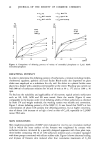
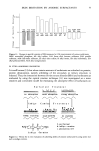
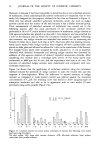
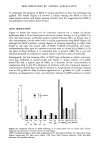
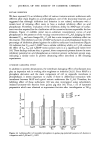
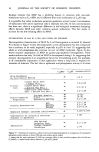
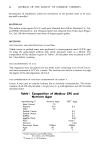
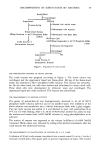
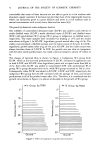
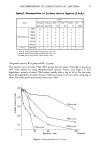
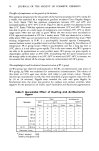
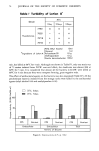
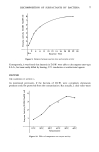
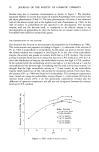
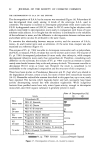
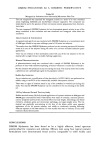
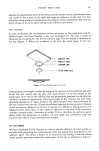
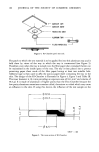
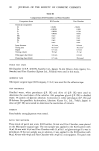
56 JOURNAL OF THE SOCIETY OF COSMETIC CHEMISTS However, in the past it has been impossible to determine the in vivo adsorbed amounts of surfactants, unless radioisotopically labeled surfactants are employed. Our in vivo study (14), designed for this purpose, ultilized the fact that as illustrated in Figure 12, when skin has already adsorbed surfactant molecules, acidic dye such as indigo carmine cannot stain the surface of the skin because it has a similar terminal group. Thus, measurement of adsorbed amounts of surfactants was carried out in the following manner: after the usual procedures of the circulation method were performed at 28 or 37øC and at definite concentration of surfactants, indigo carmine at 1.0% aqueous solution was placed in a tube with 1.5cm diameter, and was attached for ! min on the forearm area on which the circulation method was applied. Following this treatment, any indigo carmine not adsorbed was washed out by immersing the forearm 10 times into a water bath kept at 40øC. One hour after this washing process, horny layers stained with indigo carmine were stripped off with cyanoacrylate resin placed on slide glass and allowed to adhere for I min on the tested area of the forearm. The stripped horny layers were scrapped by knife, adjusted to 1.5 cm in diameter, dissolved with dimethyl formamide and ahering indigo carmine was desorbed by addition of 25% aqueous solution of dodecyl trimethyl ammonium chloride. After transfering this mixture into a centrifuge tube, pieces of the horny layers were sedimented at 3000 rpm for 10 min, and the supernatant was read at 615 nm. The amounts of adsorbed indigo carmine were determined and compared with non- surfactant treated area. Figure 13a shows that the application of surfactant solution using the circulation method reduces the potential of inidgo carmine to stain the treated skin and this response is dose-dependent. When the difference in stained amounts of indigo carmine as compared to water-treated control was plotted against the treatment concentration of C•2AS, the resulting curve was found to show Langmiur-type of adsorption isotherms and also to be in agreement with in vitro results (7) seen previously using callus powder (Figure 13b). 1.0 0.5 c 8 clo c12 c14 t• A s---• ::1• 2 hr after removal f--I 24 h r II cs qo q2 c,4 q6 t-L A S ----t C12 C14 C16 CI8 C 8 CI0 CI2 C14 C14 t"A O S "• t_ S O A P '• SAS Figure 15. Cutaneous reaction of various anionic surfactants on forearm skin following 24 hr closed patch test using 28 subjects. AS: alkyl sulfate, LAS: linear alkyl benzene slufonate, AOS: alfa-olefin sulfonate, Soap: sodium carboxylate, SAS: paraffin sulfonate.
Purchased for the exclusive use of nofirst nolast (unknown)
From: SCC Media Library & Resource Center (library.scconline.org)