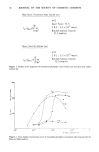
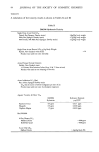
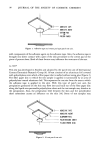
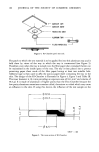
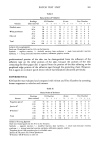
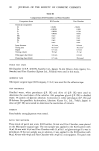
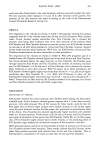
J. Soc. Cosmet. Chem., 31, 97-104 (March/April 1980) KI-chamber patch test unit MASAHIRO KUROKAWA, HISAO IWAMOTO and ISAO HASEGAWA, Kanebo Ltd., Cosmetic Laboratory, 3- 28, Kotobuki- cho 5-chome, Odawara City 250, Japan. Received January 15, 1979 Synopsis KI-Chamber, a new patch test unit, consists of an aluminum tray, a protecting sheet, a filter paper disc and adhesive tape. This was compared to the Al-test © and Finn Chamber ©. The results suggest that the KI-Chamber is a useful patch test unit. INTRODUCTION Increased regulatory requirements are demanding more adequate assurance that products which come in contact with the human body as safe for their intended uses. Drug and cosmetic manufacturers must assure that new products as well as modifica- tions of previous products are safe prior to marketing. The patch test thus becomes an important method for the safety assurance of products, in terms of both skin irritation and allergic response (1-4). In addition, dermatologists use patch testing in diagnosir•g causes of allergic contact dermatitis (5). Thus, considering these uses, the dependabil- ity of the test system assumes considerable importance. We describe herein the evaluation of a new device called "KI-Chamber Patch Test Unit" and compare the results obtained therewith with results obtained using other methodologies. PATCH TEST UNIT Several types of patch test units are commercially available since Jadassohn developed the patch test method (6). These are divided into three types. ADHESIVE TAPE AND COTTON PAD TYPE This has been used as a patch test unit for a long time (7,8). A cotton pad or a piece of porous sheet which is impregnated with or carries thereon a test sample is adhered to an adhesive tape (Figure 1). Using this approach, the test sample may be contaminated 97

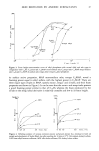
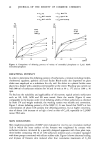
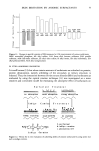
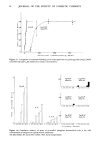
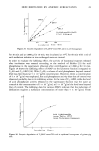
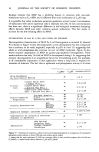
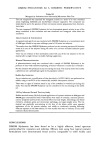
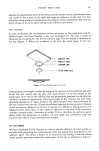
98 JOURNAL OF THE SOCIETY OF COSMETIC CHEMISTS • ADHESIVE TAPE ADHESIVE AGENT COTTON PAD oR FILTER PAPER i I Figure 1. Adhesive tape and cotton pad type patch test unit. with components of the adhesive agent on the adhesive tape. Also, the adhesive tape is brought into direct contact with a part of the skin proximate to the cotton pad or the piece of porous sheet. Both of these factors may influence the outcome of the test. AL-TEST © This test was developed in Sweden and adopted by the patch test unit of International Contact Dermatitis Research Group (9). Al-test consists of an aluminum foil covered with polyethylene onto which a filter paper disc is welled without using glue (Figure 2). The filter paper disc to which the test sample is applied is surrounded by an area of polyethylene-coated aluminum foil. This separates the test site from the area to which the adhesive tape is applied to the skin. With this type of patch test unit, the perspiration generated on the skin may flow into and back out of the filter paper disc along the liquid-non-permeable polyethylene sheet and the test sample may dissolve in the perspiration. Also, the perspiration held between the skin and the polyethylene sheet sometimes causes an influence on the skin (10). Some of test samples may ADHESIVE TAPE ADHESIVE AGENT ALUMINUM FOIL POLYETHYLENE SHEET FILTER PAPER DISC I. t Figure 2. Al-test patch test unit.
Purchased for the exclusive use of nofirst nolast (unknown)
From: SCC Media Library & Resource Center (library.scconline.org)