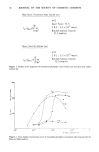
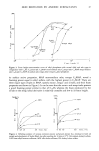
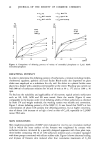
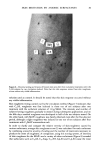
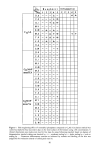
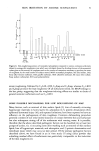
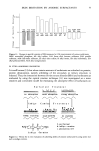
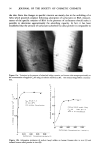
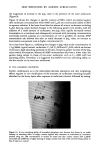
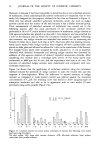
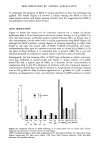
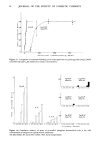
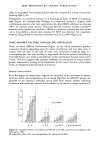
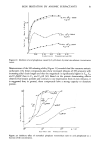
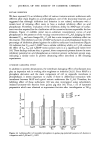
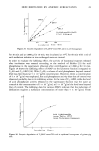
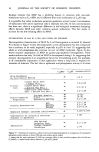
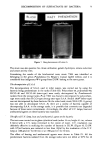
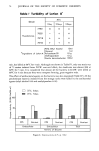
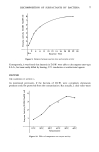
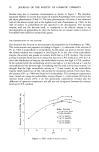
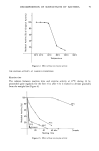
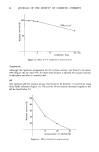
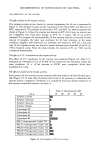
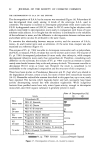
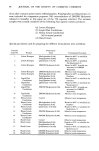
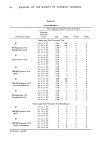
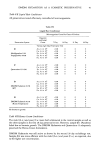
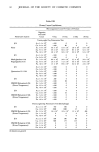
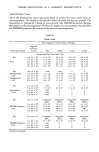
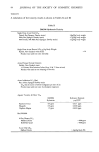
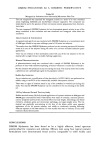
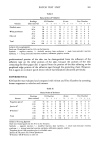
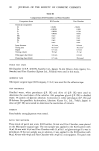
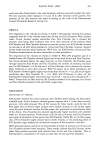
SKIN IRRITATION BY ANIONIC SURFACTANTS 49 Figure 6. Abnormal scaling and dryness of forearm skin seen after three cumulative treatments with 1.0% CvAS solution by our circulation method. Note that this skin response, termed here skin roughness, occurs without any visible inflammation. solution used as control. It should be noted that this skin response occurred without any visible inflammation. Skin roughness testing carried out by the circulation method (Figure 7) indicates that with C•2AS, roughness was first induced in three out of ten subjects after one treatment with the surfactant solution of 1.0 g/100ml. The intensity and number of subjects having roughness gradually increased during subsequent applications, and on the fifth day a marked roughness was developed in half of the ten subjects tested. On the other hand, with MAP, roughness was barely observed even after the five-day test period, although a slight roughness was induced in one out of ten subjects after four treatments with C•2MAP monosodium salt. In order to clarify and compare the relative severity of skin-roughness caused by various surfactants, average skin roughness score (1) was calculated for each surfactant by combining scores for severity of scaling and the number of treatments necessary to produce the onset of roughness. A comparison, using this scoring system, of intensity of skin roughness for the MAP's and a variety of other surfactants (Figure 8) revealed that surfactants such as C•2AS, C12-Soap, C12-2ES , CsLAS and C•2LAS cause the most

•..ud•j•a..• R o u g h n e s s Inflammatio54213]I I 2 3 4 15 O.K , -I- -- I -I- :1: F.K -- - -- + -I-I- G.I - - + -I- -H- M.Y -- -- K.M -- .4- _ .4_ _ CI2AS M.$ - - + + -I+. + + T.K - -I- :1: -I- -I-I- J.K - -I- -- 4- - H.A - $.W - - - + Q.K F.K -- -- G.I M.Y - - K.M - - cI2' - monoTEA T.K -- j.K -- H.A - $.W -- O.K ..... F.K - -- G.I + Ci2MAP M Y mono Na K. M M.$ .. T.K J.K H.A - $.W - Figure 7. Skin roughening effect of monoalkyl phosphates compared to C•2AS. Circulation method was carried out daily for four successive days on the inner surface of the forearm using 1.0% concentration. A clinical observation was made every day for five days by using following standard based on degrees of desquamation: marked scaling was denoted by -t- +, moderate scaling by +, slight scaling by _+ and no scaling by -. Cutaneous inflammatory reaction as indicated by redness and swelling of the skin was judged by the evaluation criteria of closed patch test (4). 50
Purchased for the exclusive use of nofirst nolast (unknown)
From: SCC Media Library & Resource Center (library.scconline.org)