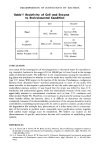
j. Soc. Cosmet. Chem., 31, 85-96 (March/April 1980) Evaluation of 1,3-dimethylol-5, 5-dimethyl hydantoin as a cosmetic preservative RICHARD J. SCHANNO, JACK R. WESTLUND and DONALD H. FOELSCH, Glyco Chemicals, Inc., 51 IVeaver St., Greenwich, CT 06830. Received May 24, 1979. Presented at the Annual Scientific Meeting, Society of Cosmetic Chemists, November 30-December I, I978, New York, New York. Synopsis Selecting a preservative for cosmetic formulations, from among 75 to 125 different preservative systems is an exceptionally difficult task. 1,3-Dimethylol-5,5-Dimethyl Hydantoin (DMDM Hydantoin, Glydant ©, trademark being applied for by Glyco Chemicals, Inc.) has been found to be effective against Gram-negative bacteria (Escherichia coli, Pseudomonas aeruginosa), a Gram-positive bacterium (Staphylococcus aureus), a mold (Aspergillus niger), and a yeast (Candida albicans) in three typical cosmetic formulations. In a fourth formulation, DMDM Hydantoin was ineffective in controlling fungi at high and low concentrations. Bacteria was effectively controlled at the higher concentration but not at the lower level. Data is presented indicating this activity throughout the expected shelf life of the product and also on rechallenge tests after a product is in use. The DMDH Hydantoin was found to be effective at low concentrations--generally 0.08-0.16% (weight)--in the formulations, and was not inactivated by relatively high concentrations (18%) of protein. The DMDM Hydantoin was found to be active and stable over a wide range of pH and temperature conditions. Its water solubility allows the DMDM Hydantoin to be incorporated in cosmetic formulations at room temperatures (high processing temperatures are not required), but it can be heated up to 80øC if necessary. Extensive toxicity and safety studies with DMDM Hydantoin have shown an excellent toxicological profile. Human repeated insult patch test and photosensitization data are presented. DMDM Hydantoin was found to be compatible with the anionic, nonionic and cationic ingredients used in the formulations tested. INTRODUCTION Preservatives play an essential role in protecting the safety of cosmetic products. Bacterial contamination of cosmetic products is a major concern of microbiologists, government officials and cosmetic chemists. The Federal Food, Drug and Cosmetic Act prohibits the introduction into interstate commerce of any food, drug, device or cosmetic that is adulterated. The presence of microorganisms in a cosmetic product, at the time of introduction into interstate commerce, would be an adulteration. In the context of toiletry and cosmetic products, pathogenic groups may include Pseudo- monas aeruginosa, Salmonella species, Escherichia coli and $typhylococcus aureus. Pseudo- 85

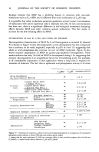
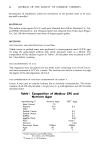
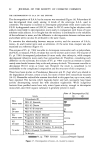
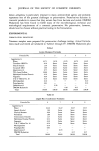
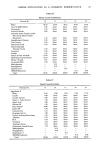
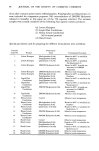
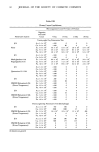
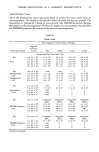
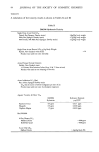
86 JOURNAL OF THE SOCIETY OF COSMETIC CHEMISTS monas aeruginosa is particularly resistant to many antimicrobial agents and probably represents one of the greatest challenges to preservatives. Preservatives function in cosmetic products to insure that they remain free from bacteria and molds. DMDM Hydantoin has been found to fulfill many of the microbiological, technical and toxicological requirements of a cosmetic preservative. No preservative, however, should ever be chosen without practical testing in the formulation. EXPERIMENTAL FORMULATION PROCEDURE Nineteen samples were prepared for preservative challenge testing. Actual formula- tions made and tested are tabulated in Tables I through IV. DMDM Hydantoin plus Table I Lotion Shampoo Formulas Formula No. 1 2 3 4 5 Ingredients, % Water 63.72 63.55 63.55 63.70 63.65 Trisodium HEDTA 0.10 Same Same Same Same Glycol Stearate 1.50 Same Same Same Same Cocamide DEA 3.00 Same Same Same Same Quaternium-19 0.75 Same Same Same Same TEA Lauryl Sulfate 30.00 Same Same Same Same Hydrolyzed Animal Protein 0.20 Same Same Same Same Fragrance 0.50 Same Same Same Same D & C Yellow No. 10 0.10 Same Same Same Same Methylparaben 0.10 -- -- -- 0.10 Propylparaben 0.03 -- -- -- 0.10 Quaternium-15 - 0.30 - - - DMDM tiydantoin -- -- 0.30 0.15 -- Total 100.00 100.00 100.00 100.00 100.00 Table II Liquid Hair Conditioner Formulas Formula No. 6 7 8 9 Ingredients, % Water 93.39 93.37 93.37 93.37 Stearyl Alcohol 1.80 Same Same Same Glyceryl Stearate 0.90 Same Same Same Petrolatum 1.80 Same Same Same Cetrimonium Chloride 1.25 Same Same Same Hydrolyzed Animal Protein 0.33 Same Same Same Fragrance 0.30 Same Same Same D & C Yellow No. 10 0.10 Same Same Same Methylparaben 0.10 -- -- -- Propylparaben 0.03 -- -- -- Quaternium-15 - •0.15 - - DMDM Hydantoin -- -- 0.15 0.15 Total 100.00 100.00 100.00 100.00
Purchased for the exclusive use of nofirst nolast (unknown)
From: SCC Media Library & Resource Center (library.scconline.org)