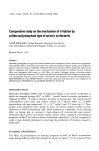
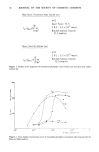
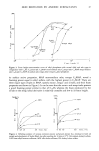
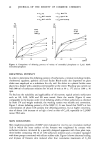
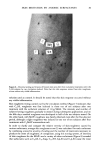
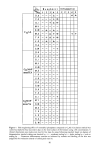
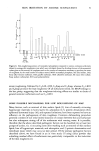
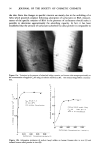
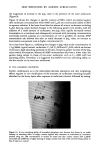
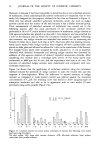
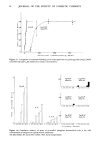
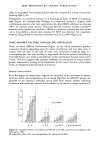
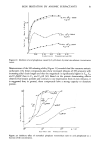
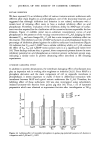
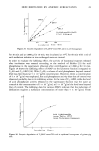
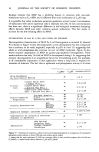
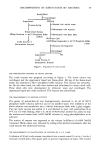
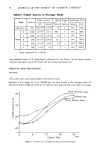
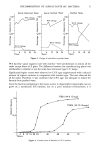
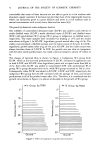
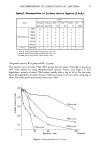
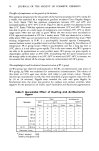
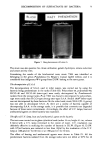
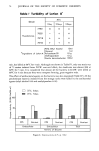
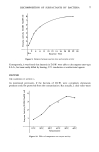
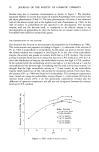
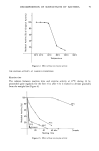
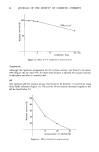
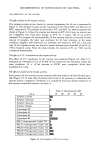
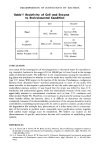
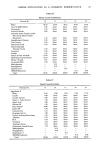
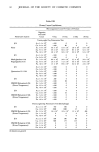
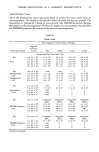
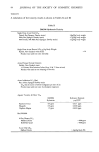
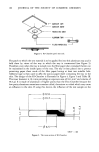
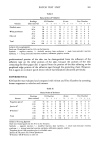
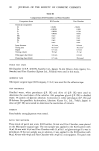
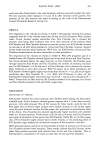
DECOMPOSITION OF SURFACTANTS BY BACTERIA 81 THE RESISTIVITY OF THE ENZYME The effect of heat on the enzyme activity The residual enzyme activity heated at various temperature for 10 rain is presented in Figure 12. The residual enzyme activity was found to be 97% at 60øC and 20% even at 80øC, respectively. The residual activities after 70øC and 80øC for arbitrary periods are shown in Figure 13. Unless the enzyme was heated at 80øC for 50 rain, its activity was not completely lost. Even after storage at 50øC for 3 weeks, 74% of its activity remained. To compare the thermostability of this enzyme with the commonly known enzyme of steapsin, the latter was examined for its heat tolerance at the same condition. Steapsin, with tributyrin as a substrate, was heated at 70øC for 5 min and only 4% of its lipase activity was found to remain whereas more than 80% of the Ps. sp. 77801 remained active. From the above results, the enzyme of Ps. sp. 77801 can be considered thermostable. The effect of U. V. irradiation on the enzyme activity The effect of U.V. irradiation on the enzyme was examined (Figure 14). After U.V. irradiation at 1700/aw/cm 2 for 24 hr 66% of the enzyme activity remained. Under the same condition, 2.0 x 10⁷/ml bacteria in D.I.W. were completely killed after irradiation for 2 min. The effect of alcohol on the enzyme activity Forty percent of the enzyme activity remained after the addition of ethyl alcohol up to 10% (Figure 15). At least 30% of alcohol was found to be necessary to deactivate the enzyme activity completely. Therefore, it is considered that such alcohol tolerance of this enzyme caused the haziness of Lotion A. S.A.A. Sorbitan Laurate Sorbitan Palmitate Sorbitan Stearate Sorbitan Oleate Polysorbate-20 Polysorbate-40 Polysorbate-60 Polysorbate-80 PEG-5 Hydrogenated Castor Oil PEG-10 Hydrogenated Castor Oil PEG-20 Hydrogenated Castor Oil PEG-40 Hydrogenated Castor Oil PEG-60 Hydrogenated Castor Oil Rate of Decomposition (%) 10 20 30 40 50 I i i i i v/////////////////////////A Figure 16. Decomposition of S.A.A. by enzyme

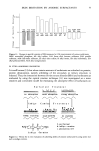
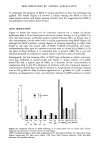
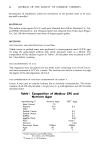
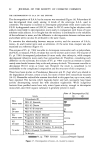
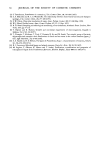
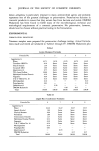
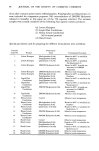
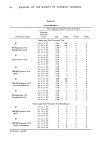
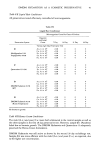
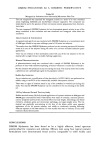
82 JOURNAL OF THE SOCIETY OF COSMETIC CHEMISTS THE DECOMPOSITION OF S.A.A. BY THE ENZYME The decomposition of S.A.A. by the enzyme was examined (Figure 16). Polysorbate-20 was decomposed most easily among 13 kinds of the ester-type S.A.A. used in cosmetics. The enzyme is inclined to deocmpose polysorbate series more easily than P.E.G. hydrogenated castor oil (H.C.O.) series. In H.C.O. series higher ethylene oxide adducts were liable to decomposition more easily in comparison with those of lower ethylene oxide adducts. It is thought that the tendency is attributable to the solubility of the surfactant in water, and the difference in decomposition between sorbitan series and sorbate series can also be attributed to the same reason. To examine the relationship between enzyme activity and the structure of S.A.A., mono-, di- and tri-ester were used as substrates. At the same time, steapsin was also examined as a reference (Figure 17). The enzyme of Ps. sp. 77801 was able to decompose mono-ester such as polysorbate- 20, P.E.G.-10 stearate, P.E.G.-10 oleate but not the all-ester and tri-ester. The enzyme of Ps. sp. 77801 decomposed polysorbate-20 more easily than tributyrin, while steapsin decomposed tributyrin more easily than polysorbate-20. Therefore, considering such difference on the substrate, the enzyme of Ps. sp. 77801 must be an esterase to attack mainly ester bonds between fatty acids and primary alcohols. This esterase was able to decompose H.C.O. series at lower rate. However the result is considered to be attributable to the complicated composition and the structure of this compound. There have been studies on Pseudomonas fluorescens and Ps. fragi which are related to the degradation of butter, cream or lard, but most of these were extracellular enzymes (10-12). Heatstable endocellular esterase described in this paper has, up to now, rarely been reported. The bacteria which degrades butter and lard, necessarily have lipase activity decomposing natural fats with abundant triglyceride. While indigenous bacteria from purified water have only minor lipase activity, enough to decompose mono-ester, since little organic substance is generally present in water. S.A.A. Polysorbate-20 PEG PEG-10 Stearate Mono-ester PEG-10 Oleate PEG PEG-10 Di-stearate Di-ester PEG-10 Di-oleate PG Propylene Glycol Stearate Mono-ester Propylene Glycol Oleate PG Propylene Glycol Di-stearate Di-ester Propylene Glycol Di-oleate PEG-10 Trimethylol Propane Tri-stearate Tri-ester PEG-5 Glyceryl Tri-stearate Tri-butyrin • Ps. sp. 77801 Esterase Rate of Decomposition (%) 10 20 I I • •Steapsin (Lipase) Figure 17. Decomposition of mono-, di-, tri-ester by enzyme
Purchased for the exclusive use of nofirst nolast (unknown)
From: SCC Media Library & Resource Center (library.scconline.org)