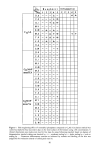
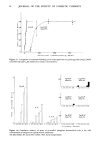
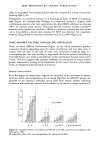
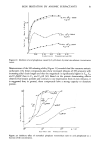
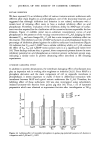
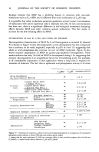
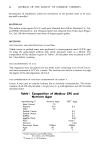
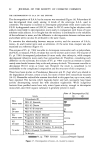
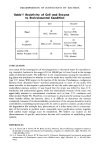
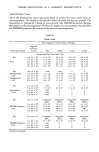
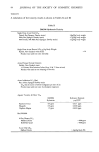
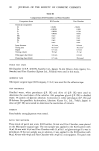
68 JOURNAL OF THE SOCIETY OF COSMETIC CHEMISTS deterioration of solubilizers, unless the sterilization of the purified water to be used was well controlled. MATERIALS The surface-active agents (S.A.A.) used were obtained from Nihon Emulsion Co., Ltd. and Nikko Chemical Co., Ltd. Steapsin (lipase) was obtained from Tokyo kasei Kogyo Co., Ltd. All other chemicals used were of reagent-grade quality. METHODS THE ISOLATION AND IDENTIFICATION OF BACTERIA Viable counts in purified water were performed in casein-peptone-starch (C.P.S.) agar (7) using the spread-plate method with sterile deionized water as a diluent. The composition of this medium is given in Table I. All the plates were incubated at 25øC for 7 days before counting. THE DECOMPOSITION OF S.A.A. Test organisms were inoculated into the sterile tubes containing 5 ml of 0.1% S.A.A., and were incubated at 25øC for 3 weeks. The haziness was used as a measure to judge the degree of the decomposition of S.A.A. THE CONFIRMATION OF THE HAZY PHENOMENON OF LOTION A Lotion A was used to examine haziness due to bacterial contamination. This lotion contains 10 ml 95% ethyl alcohol, 1 ml glycerol, 0.1 g methylparaben and 100 ml sterile aleionized water. Table I Composition of Medium CPS and Nutrient Agar Ingredients(g/I) Nutrient Agar CPS '1 Agar Meat Extract 7.0 Peptone 10.0 0.5 NaCI 3.0 Soluble Casein 0.5 Soluble Starch 0.5 K2HPO4 0.2 MgSO4.7H20 0.05 FeCI3 trace '2 Glycerol 1.0ml Deionized Water 1000ml 1000ml Agar 20 20 pH 7 7 '1 Casein-peptone-starch (CPS) medium (by Collins and Willoughby) *24 drops of a 0.01%solution

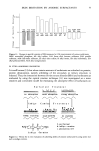
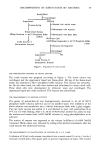
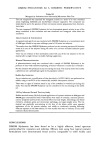
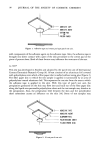
DECOMPOSITION OF SURFACTANTS BY BACTERIA 69 Broth(100ml) I Centrifuged I • Supernatant PPt(CelI) -Freeze-drying Freeze-dried Matters 200mg Dissolved in M/15 Phosphate Buffer Crude Enzyme A (Extracellular Enzyme) --Washed with sterile water -Dehydrated with Acetone (pHS.2) •Dehydrated with Ethyl Ether PPt.(Dried Cell) Cell(100mg) Suspended in M/15 Phosphate Buffer (10ml) --Ultrasonic Disintegration --Centrifuged ! i Supernatant PPt. Crude Enzyme B (Endocellular Enzyme) Figure 1. Preparation of crude enzyme THE PREPARATION METHOD OF CRUDE ENZYME The crude enzyme was prepared according to Figure 1. The broth culture was centrifuged and the supernatant liquid was freeze-dried. 200 mg of the freeze-dried matter was dissolved in M/15 phosphate buffer solution. This enzyme was extracellu- lar. On the other hand, the cells were washed and dehydrated to obtain dried cells. These dried cells were disintegrated by ultrasonic wave and centrifuged. The supernatant liquid was crude enzyme B. This enzyme was endocellular. THE MEASUREMENT OF ENZYME ACTIVITY Five grams of polysorbate-20 was homogeneously dissolved in 10 ml of M/t5 phosphate buffer solution (pH 8.2) and l0 ml distilled water. Five milliliters of the above solution was transferred into a lO0-ml Erlenmeyer flask with a glass stopper. Two ml crude enzyme was added to it and allowed to react with polysorbate-20 at 37øC for 2 hr with shaking. After 2 hr, 30 ml of 99.5% ethyl alcohol was added to stop the reaction and titrated with 0.05N NaOH solution by using phenolphthalein as an indicator. The activity of esterase was expressed as the volume (milliliters) of 0.05N NaOH consumed. Blank values were obtained by adding ethyl alcohol immediately after the crude enzyme was added and titrating. THE MEASUREMENT OF INACTIVATION OF ENZYME BY A U.V. LAMP A solution of 20 ml crude enzyme was placed into a quartz vessel (2 cm by 2 cm by 4 cm) and covered with a thin quartz plate to prevent evaporation of water. The enzyme
Purchased for the exclusive use of nofirst nolast (unknown)
From: SCC Media Library & Resource Center (library.scconline.org)