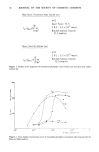
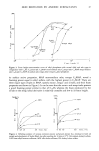
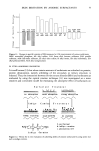
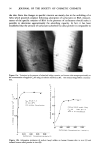
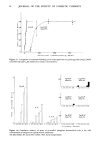
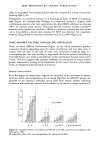
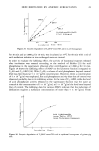
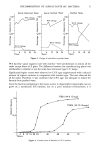
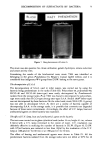
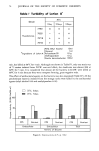
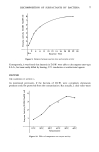
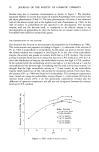
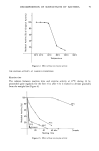
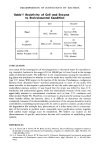
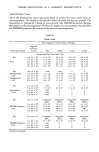
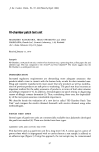
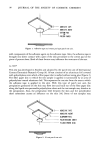
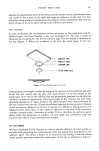
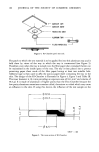
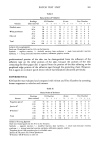
48 JOURNAL OF THE SOCIETY OF COSMETIC CHEMISTS © C12 AS ,• C12 MAP TEA • C10MAP mono Na ß C12 MAP diNa ß C12 MAP mono Na o C•8 MJ•P mono Na m lOO -- o 30rain at 4ffC 300 rpm UV (7ø lOO • 5o ß o o 0 0,2 05 10 0 (SAAV.) 30min at 40øC 1300 rpm 0.2 0.5 1•0 (SAA*/) Figure 5. Comparison of defatting potency of variety of monoalkyl phosphates to C•2AS. MAP: monoalkyl phosphate DEFATTING POTENCY In order to determine the defatting potency of surfactants, a mixture including triolein, cholesterol, squalene, palmitic acid and Sudan Black-acidic dye deposited on glass slides was employed as a substitute for oily soil. Six slides in a plastic holder were placed in a beaker with a stainless steel propeller at the center. Washing was carried out with 900 ml of surfactant solution for 10 and 30 min at 40 _+ iøC and at 1300 _+ 50 rpm. To find out the suitability and applicability of this system, typical anionic surfactants such as AS, LAS, AOS and ES were tested. Since the results (Figure 4) were comparable to the known order (2) of defatting ability of these surfactants as checked by both UV and weight methods, the washing system was reliable and convenient. Figure 5 shows defatting potency of the MAP (1). It was found that MAP's at low concentration of about 0.2% possess low defatting potency, but at higher concentra- tion of about 1.0% increase to as high a level as that of C•2AS, especially in Cx2MAP mono-TEA salts. SKIN ROUGHNESS Skin roughness properties of MAP were evaluated in vivo by our circulation method (3,4) in which the inner surface of the forearm was roughened by contact with surfactant solution circulated by a specially designed apparatus with three glass caps, three bottles containing 150 ml of 1.0% surfactant solution and a circulator equipped with three pumps connected with silicon rubber tube. Figure 6 shows abnormal scaling and dryness of forearm skin induced after four cumulative treatments of C•2AS

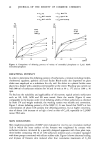
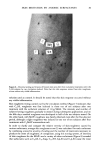
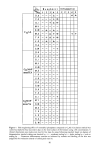
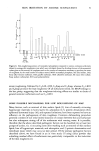
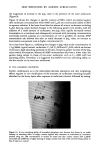
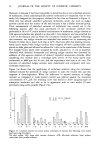
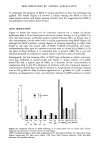
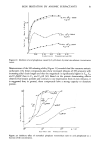
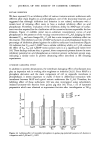
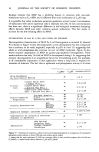
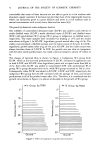
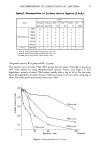
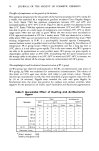
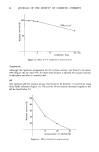
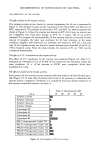
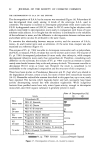
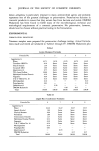
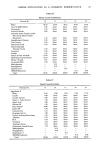
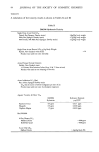
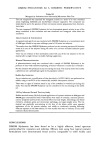
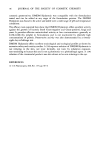
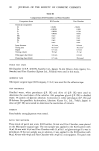
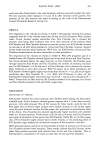
SKIN IRRITATION BY ANIONIC SURFACTANTS 49 Figure 6. Abnormal scaling and dryness of forearm skin seen after three cumulative treatments with 1.0% CvAS solution by our circulation method. Note that this skin response, termed here skin roughness, occurs without any visible inflammation. solution used as control. It should be noted that this skin response occurred without any visible inflammation. Skin roughness testing carried out by the circulation method (Figure 7) indicates that with C•2AS, roughness was first induced in three out of ten subjects after one treatment with the surfactant solution of 1.0 g/100ml. The intensity and number of subjects having roughness gradually increased during subsequent applications, and on the fifth day a marked roughness was developed in half of the ten subjects tested. On the other hand, with MAP, roughness was barely observed even after the five-day test period, although a slight roughness was induced in one out of ten subjects after four treatments with C•2MAP monosodium salt. In order to clarify and compare the relative severity of skin-roughness caused by various surfactants, average skin roughness score (1) was calculated for each surfactant by combining scores for severity of scaling and the number of treatments necessary to produce the onset of roughness. A comparison, using this scoring system, of intensity of skin roughness for the MAP's and a variety of other surfactants (Figure 8) revealed that surfactants such as C•2AS, C12-Soap, C12-2ES , CsLAS and C•2LAS cause the most
Purchased for the exclusive use of nofirst nolast (unknown)
From: SCC Media Library & Resource Center (library.scconline.org)