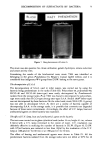
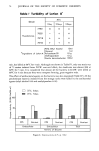
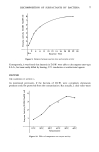
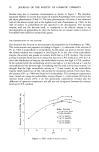
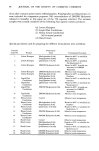
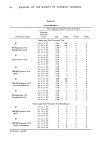
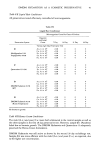
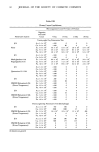
96 JOURNAL OF THE SOCIETY OF COSMETIC CHEMISTS cosmetic preservatives. DMDM Hydantoin was compatible with the formulations tested and can be added at any stage of the formulation process. The DMDM Hydantoin was found to be active and stable over a wide range of pH and temperature conditions. The efficacy tests reported here show that DMDM Hydantoin offers excellent activity against the growth of bacteria (both Gram-negative and Gram-positive), fungi and yeast. It provides effective antimicrobial activity at low concentrations--generally at 0.15%-0.30% (by weight) in formulations and is not inactivated by relatively high concentrations of protein. Preservative activity was also demonstrated by a twenty- eight day rechallenge test. DMDM Hydantoin offers excellent toxicological and ecological profiles as shown by extensive safety and toxicity studies. A 55% aqueous solution of DMDM Hydantoin is not irritating to the skin, not toxic dermally, not toxic by inhalation exposure, non-sensitizing to human skin and is not a phototoxic or a photoallergic agent. A 1.0% solution of the commercial product was also shown to be non-irritating to the eye. REFERENCES (1) U.S. Pharmacopeia, XIX, Revo 1975, pp. 587-8.

J. Soc. Cosmet. Chem., 31, 97-104 (March/April 1980) KI-chamber patch test unit MASAHIRO KUROKAWA, HISAO IWAMOTO and ISAO HASEGAWA, Kanebo Ltd., Cosmetic Laboratory, 3- 28, Kotobuki- cho 5-chome, Odawara City 250, Japan. Received January 15, 1979 Synopsis KI-Chamber, a new patch test unit, consists of an aluminum tray, a protecting sheet, a filter paper disc and adhesive tape. This was compared to the Al-test © and Finn Chamber ©. The results suggest that the KI-Chamber is a useful patch test unit. INTRODUCTION Increased regulatory requirements are demanding more adequate assurance that products which come in contact with the human body as safe for their intended uses. Drug and cosmetic manufacturers must assure that new products as well as modifica- tions of previous products are safe prior to marketing. The patch test thus becomes an important method for the safety assurance of products, in terms of both skin irritation and allergic response (1-4). In addition, dermatologists use patch testing in diagnosir•g causes of allergic contact dermatitis (5). Thus, considering these uses, the dependabil- ity of the test system assumes considerable importance. We describe herein the evaluation of a new device called "KI-Chamber Patch Test Unit" and compare the results obtained therewith with results obtained using other methodologies. PATCH TEST UNIT Several types of patch test units are commercially available since Jadassohn developed the patch test method (6). These are divided into three types. ADHESIVE TAPE AND COTTON PAD TYPE This has been used as a patch test unit for a long time (7,8). A cotton pad or a piece of porous sheet which is impregnated with or carries thereon a test sample is adhered to an adhesive tape (Figure 1). Using this approach, the test sample may be contaminated 97
Purchased for the exclusive use of nofirst nolast (unknown)
From: SCC Media Library & Resource Center (library.scconline.org)