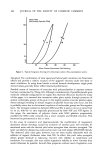
288 JOURNAL OF THE SOCIETY OF COSMETIC CHEMISTS for the system of interest, we qualitatively select a formulation. It is at this point that optimization can become a useful tool--to quantitate a formulation that has been qualitatively determined. Optimization is not a screening technique. The word "optimize" means to make as perfect, effective or functional as possible. There must be, and there is, a better method than trial and error to determine the best formulation and process. In development projects, we generally experiment, by a series of logical steps, carefully controlling the variables, and changing one at a time, until a satisfactory system is produced. And it is satisfactory but how close is it to the best or the optimum? And how do we know? The techniques of optimization will tell us mathematically (1). OPTIMIZATION PROBLEMS There are two general types of optimization problems--the constrained and the unconstrained. Constraints are those restrictions placed upon the system due to physical limitations or perhaps simple practicality (e.g., economic considerations). In unconstrained optimization problems, there are no restrictions. For a given formula- tion one might say: make the hardest tablet possible, or make lotion with the lowest degree of caking. The constrained problem, on the other hand, would be stated: make the hardest tablet possible, but it must disintegrate in less than fifteen minutes, or the lotion must have minimum caking but it must be pourable. It is obvious that the unconstrained optimization problem is almost nonexistent. There are always restrictions which the formulatot wishes to place or must place on his system and many of these restrictions are competing. We must keep in mind that not only are the restrictions competing, but also that an ingredient or processing step which may have beneficial effects on one property is very often detrimental to another and we must balance these effects. It is sometimes necessary to trade off properties i.e., to sacrifice one characteristic for another. Thus, the primary objective may not be to optimize absolutely, but to compromise effectively and thereby produce the best formulation under a given set of restrictions. An additional complication in the pharmaceutical and cosmetic fields is that formulations are not usually simple systems. They often contain many ingredients and variables which may interact with one another to produce unexpected, if not unexplainable, results. The development of a solid, semisolid, or liquid formulation and the associated process usually involve a number of variables. Mathematically, they can be divided into two groups--independent and dependent. The INDEPENDENT VARIABLES are the formulation and process variables directly under the control of the formulator. These might include the level of a given ingredient or the mixing time for a given process step. The DEPENDENT VARIABLES are the responses or the characteristics of the resulting product. These are a direct result of any change made in the formulation or process. To study formulations in a rational manner, we must be able to distinguish between the two. The techniques most widely used for optimization may be divided into two general categories: one, where experimentation continues as the optimization study proceeds and a second, where the experimentation is completed before the optimization takes

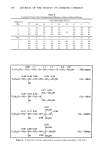
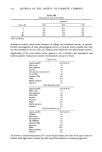
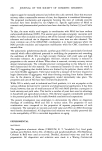
OPTIMIZATION TECHNIQUES 289 place. The first type is represented by EVOLUTIONARY OPERATIONS (EVOP) and the SIMPLEX METHOD, which I will mention only briefly and the second by the more classical MATHEMATICAL and SEARCH METHODS. Although there are really no limitations to the area of applicability, my feeling is that the first type is more applicable to a production environment and the second is more applicable to a research environment. In the EVOP and Simplex Methods, the process and formulation are allowed to evolve to the optimum by small changes made from batch to batch. At no time, however, is the product allowed to be outside of specifications. The EVOP procedure has been applied to a tablet formulation by Rubinstein (2) and the Simplex Method has been applied to an analytical method by Demig and King (3) and to a capsule formulation by Shek, Ghani and Jones (4). For the techniques of the second type, the experimentation is completed before optimization takes place. In this type of method, the objective is to be able to predict properties of the product, and to do this, a model (or an equation) is required. Because equations to predict most properties for drug and cosmetic products are not known, and cannot, at present, be generated from first principles, it is necessary to generate these equations empirically. The steps involved in this type of optimization procedure are listed below: 1. Select variables (independent, dependent) 2. Perform set of statistically designed experiments 3. Measure properties of interest (dependent variables) 4. Generate predictor equation (statistical model) 5. Optimize (with or without constraints) a. mathematical calculations b. graphical observation c. searches EXPERIMENTAL DESIGN The second of these steps requires some form of experimental design. Experimental design covers a whole field, available in the literature (5) and I will mention only one type but in selecting the appropriate design, in general, one must choose experiments such that: 1. The entire area of interest is covered and 2. Analysis of results allows separation of variables. The method of experimentation is usually some form of factorial design i.e., it is not sufficient to change one variable at a time. We need to be more efficient, and we need to see interactions between factors. It should be noted that the experimental design is dependent on the number of independent variables one has chosen to study. These are the factors--those things under the formulators control. Table I shows a full 2 3 factorial experimental design (3 factors, 2 levels) and there are 8 possible trials i.e., all possible combinations of the high and low levels of the factors, designated as + ! and -1. Geometrically this can be represented by a cube (Figure 1)
Purchased for the exclusive use of nofirst nolast (unknown)
From: SCC Media Library & Resource Center (library.scconline.org)