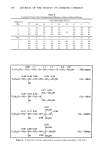
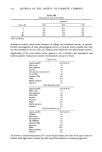
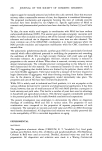
PHOTOTOXIC ACTIVITY OF FRAGRANCES 311 Phantolid to produce inhibition in the yeast system. Our consultants called Phantolid a "non-absorber in the UVA range." Yet, Phantolid was positive in hairless mice at 10% and at 1% in our yeast assay. Predictions on the reaction of Phantolid based on absorption performance would have led to an error in prediction of the phototoxic potential and therefore suggest that UV absorption alone is not a sufiqcient predictor of phototoxicity. Table III shows post-validation test results in the yeast system compared to results on Table III Validation Experiments: Fragrance Chemicals--No Prior Knowledge Of Phototoxic Status Test Concentration In Percent (Response: +, -) In Vitro Human Mouse Skin Skin Yeast Screen Coumarin Replacement Composite 15 (-) 15 (-) 10 (+) 1 (-) Alpha-Terpenyl Methyl Ether 6.25 (-) 5 (-) 10 (+) 1 (-) Isocyclamone E 12.5 (-) 10 (-) 10 (+) 1 (-) Methyl Carbopolycylic Substituted Dimer 1 (-) 5 (--) 10 (--) 1 (-) Citralva 7 (-) 7 (-) 10 (+) 1 (-) Fig Leaf Absolute NT • 0.1 (+) 0.01 (+) 0.001 (-) 8-Methoxypsoralen NT 0.005 (+) 0.0001 (+) 0.00001 (--) •Not tested. human and mouse skin. These data show the yeast assay has at the very least, a built in safety margin of sensitivity relative to results in vivo. However, the data are inadequate to establish the extent of this margin because only two of the concentrations tested were positive on skin. Fig leaf absolute was positive in mice at 0.1% and in vitro at 0.01%. 8-MOP was positive in mice at 0.005% and in vitro at 0.0001%. The data indicate a sensitivity differential of 10 to 50X in favor of the in vitro system. The testing of additional chemicals (Table IV) also showed that in these cases the screen was more sensitive than the human model. Studies are continuing to quantirate this sensitivity differential. Table V shows the utility of the test in analyzing the effect of structure modification on photoreactivity. 6-Methylcoumarin, being an unsaturated cyclic molecule known to be photoreactive was readily detected in the in vitro system. The saturated analogues methyloctahydrocoumarin, transoctahydrocoumarin and 6-methyloctahydrocoumarin were not reactive at the highest concentration tested, 10%. DISCUSSION In commercial usage, the incidence of significant dermal reactions to fragrance materials is low. This is partly due to the prior identification of active molecules such as 5-methoxypsoralen (the cause of Berloque dermatitis) and partly due to the systematic screening by RIFM of new or suspect materials in the hairless mouse

312 JOURNAL OF THE SOCIETY OF COSMETIC CHEMISTS Table IV Validation Experiments: Fragrance Chemicals--No Prior Knowledge Of Phototoxic Status Test Concentration In Percent (Response: +, -) In Vitro Human Skin Yeast Screen Ocmea 0.1 (-) 0.01 (-) Jasmea H 0.1 (-) 0.01 (-) Heliotropine 0.1 (--) 0.01 (-) Dihydromyrcenal 1.0 (-) 0.1 (-) Wetrahydromugol 5.5 (-) 0.1 (-) Lyral 13.75 (-) 1 (-) Dimyrcetal 12 (-) 1 (-) Indisan 2 (-) 10 (-) Disubstituted Carbo- polycylic Derivative 5 ( - ) 1 ( - ) Unsaturated Branched Chain Ketone 15 (--) 1 (--) o. 1 (+) 0.1 (+) o. 1(+) i (+) I (+) lO (+) lO (+) 10 NT • lO (+) lO (+) •Not tested. dermal system. This method of identifying phototoxic molecules has most recently been used to study oil of Verbena and Fig Leaf Extract which may have significant phototoxic activity (personal communication with Dr. D. Opdyke). Information from studies like these may be used to suggest concentration limits below which clinically significant phototoxic irritation is unlikely to occur alternatively, such information may be used to suggest a ban on use in exceptional cases. There were several fundamental reasons for our interest in Daniels' procedure. First, like many of our colleagues, we were charged with the photo-safety testing of large numbers of fragrance chemicals and formulations which, in contrast to pharmaceuti- cals, have a small individual profit margin. These realities emphasized the need to develop low cost screening procedures in order to maintain our responsibility to protect the human volunteers as well as the consumers. The generation of congeners Table V Example of Structural Modifications Affecting Photoreactivity • Inhibition Of Yeast Test Chemical & Phototoxic Concentration Structure UV-Exposed No UV (1%) 6-Methylcoumarin •/•o Yes No Yes Isomer Mix of 5 or 7- No No No Methyloctahydrocoumarin Transoctahydrocoumarin No No No 6-Methyloctahydrocoumarin •o No No No •8-Methoxypsoralen at 10 4% in the methanol vehicle was the concurrent control in every test plate.
Purchased for the exclusive use of nofirst nolast (unknown)
From: SCC Media Library & Resource Center (library.scconline.org)